Zobacz w skali 1:1 Zobacz w AR Przełącz na wersję drukowaną Kup ręcznie malowany obraz Wyślij
Szczegóły Przewodnik Dodaj do ulubionych Pobierz plik obrazu Podobne obiekty RTG Pokaz slajdów Statystyki

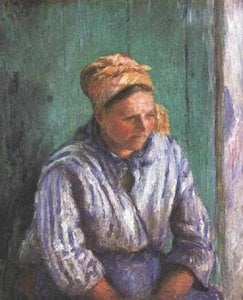
La Mere Gaspard

Captured in Impressionist style by Camille Pissarro, ‘La Mere Gaspard’ portrays a serene domestic scene with soft hues and gentle brushstrokes—a timeless portrait inviting you to explore the beauty of everyday life.

Camille Pissarro – pionier impresjonizmu i neoimpresjonizmu. Jego obrazy przedstawiają życie codzienne, krajobrazy i pejzaże. Wpływ na Cézanne'a, Van Gogha i innych! Odkryj jego świat.

Kup wysokiej rozdzielczości, ulepszony obraz cyfrowy o jakości znacznie przewyższającej podgląd online.

Każdy plik jest starannie przygotowywany przez naszych specjalistów przy użyciu zaawansowanych narzędzi oraz profesjonalnej, ręcznej retuszy. Dbamy o to, aby każdy obraz cechował się wyjątkową ostrością, precyzyjnym odwzorowaniem kolorów i subtelnymi detalami.

Ostateczny plik dostarczany jest drogą mailową w ciągu 72 godzin, zoptymalizowany do natychmiastowego wykorzystania w profesjonalnych zastosowaniach redakcyjnych i poligraficznych. To ta sama jakość, której ufają czołowe studia projektowe, wydawnictwa oraz galerie sztuki.

Obraz cyfrowy

Pobierz plik o wysokiej rozdzielczości do osobistego użytku, druku oraz projektów kreatywnych. ( Przełącz na wersję drukowaną Kup ręcznie malowany obraz)

Cena całkowita

$ 24,90

W każdym zamówieniu na obraz cyfrowy znajduje się

Profesjonalna dostawa cyfrowa z gwarancją

Wybierając WahooArt.com, nie otrzymujesz jedynie obrazu – otrzymujesz profesjonalnie udoskonalone cyfrowe dzieło sztuki, stworzone z najwyższą precyzją i objęte gwarancją satysfakcji. Oto wszystko, co automatycznie dołączane jest do Twojego zamówienia:

shipping_icon
Błyskawiczna dostawa e-mailowa

Plik z obrazem cyfrowym w wysokiej rozdzielczości zostanie przesłany na Twój adres e-mail w ciągu 72 godzin od złożenia zamówienia – gotowy do natychmiastowego użycia.

canvas_icon
Plik cyfrowy ulepszony przez AI

Twoja grafika została profesjonalnie zoptymalizowana przy użyciu zaawansowanych narzędzi AI oraz ręcznej edycji, co zapewnia maksymalną szczegółowość, klarowność i wierność kolorów.

insurance_icon
Bezpłatna dożywotnia ponowna dostawa

Przypadkowo usunąłeś lub zgubiłeś swój plik? Bez obaw – prześlemy go Tobie ponownie w dowolnym momencie, bez żadnych opłat.

tax_icon
Bez opłat importowych – zawsze

Ciesz się swoją sztuką natychmiast, bez żadnych opłat celnych, należności ani kosztów dostawy – pliki cyfrowe są zawsze wolne od podatku.

color_icon
Gwarancja odwzorowania kolorów

Dzięki zastosowaniu profesjonalnych narzędzi i procesów zarządzania barwą zapewniamy, że Twoje cyfrowe zdjęcie odzwierciedla oryginalne kolory tak wiernie, jak to tylko możliwe.

return_icon
100 dni na satysfakcję

Jeśli nie będziesz zadowolony ze swojego cyfrowego obrazu, poprawimy go lub zwrócimy 100% kosztów w ciągu 100 dni – bez zbędnych pytań.

guarantee_icon
100% Gwarancja zwrotu pieniędzy

Nie jesteś zadowolony? Otrzymaj pełny zwrot kosztów w ciągu 100 dni od otrzymania pliku cyfrowego – bez zbędnych pytań.

discount_icon
Rabaty przy zamówieniach hurtowych

Kup 3 obrazy, oszczędź 10% - Kup 5, oszczędź 15% - Kup 10+, oszczędź 20%. Idealne do projektów kreatywnych, galerii i agencji.

Kluczowe informacje

  • Subject or theme: Woman at table
  • Notable elements or techniques: Soft brushstrokes, light & shadow
  • Movement: Impressionism
  • Dimensions: 55 x 45 cm
  • Medium: Oil on canvas
  • Artistic style: Domestic tranquility
  • Year: 1876

A Quiet Radiance: The Soul of La Mere Gaspard

In the heart of the Impressionist movement, where the frantic energy of modernizing Paris often took center stage, Camille Pissarro found profound beauty in the stillness of the domestic sphere. La Mere Gaspard, painted in 1876, serves as a breathtaking window into a private moment of tranquility. The painting invites us to sit beside a woman captured in a state of quiet repose, her figure anchored by a table laden with the simple provisions of daily life. A prominent basket rests upon her lap, acting as a focal point that grounds the composition in the tangible, earthy reality of the everyday. There is an undeniable intimacy here; through Pissarro’s eyes, we are not merely observers of a portrait, but guests in a sanctuary of warmth and comfort.

The atmosphere of the work is thick with a sense of peace, achieved through a masterful command of light and color. Rather than relying on the rigid, dark outlines of academic tradition, Pissarro employs the quintessential Impressionist technique of capturing the ephemeral. The palette is a harmonious dance of soft yellows, gentle greens, and ethereal blues, which blend seamlessly to create an illusion of shimmering luminescence. As light filters into the room, it dances across the textures of the woman's clothing and the surfaces of the scattered books, transforming a mundane interior into a space imbued with a spiritual, almost luminous, quality. This sensitivity to light ensures that the scene feels alive, as if the viewer has just stepped into the room at the exact moment the sun hit the canvas.

Technique and the Impressionist Legacy

To behold La Mere Gaspard is to witness the technical evolution of a master. Pissarro utilized an exquisite layering technique, applying thin glazes over underpaintings to build a depth of color that feels both translucent and substantial. His brushstrokes are visible—a hallmark of the movement—yet they are applied with such rhythmic intention that they convey a sense of fluidity rather than chaos. This delicate balance between texture and softness allows the viewer to feel the weight of the basket and the drape of the blanket around the woman's shoulders, while simultaneously experiencing the hazy, atmospheric quality of the room's air.

For the discerning collector or interior designer, this piece offers more than just aesthetic beauty; it offers an emotional anchor. The painting’s ability to evoke domestic serenity makes it a versatile masterpiece for any curated space. Whether placed in a sun-drenched morning room or a sophisticated study, the work brings with it a sense of historical weight and timeless calm. It stands as a testament to Pissarro's belief that there is profound dignity in the ordinary, reminding us that the most lasting art often emerges from the simplest moments of human existence.


Biografia artysty

A Life Rooted in Observation: The World of Camille Pissarro

Camille Pissarro, a name synonymous with both the birth and evolution of Impressionism, was an artist whose life mirrored the shifting landscapes he so devotedly captured on canvas. Born Jacob Abraham Camille Pissarro on July 10, 1830, in Charlotte Amalie, St. Thomas – then part of the Danish West Indies, now the US Virgin Islands – his origins were as diverse and vibrant as the scenes that would later define his artistic vision. His father, a Portuguese Jewish merchant with French nationality, and his mother, from a French-Jewish family on the island, instilled in him a unique cultural heritage. This upbringing, somewhat unconventional due to familial complexities, fostered an early sensitivity to the world around him, a quality that would become the cornerstone of his artistic practice. His initial formal training at the Savary Academy near Paris provided a foundation in traditional techniques, but it was his return to St. Thomas and subsequent work as a cargo clerk that truly ignited his passion for observation. The bustling harbor, the vibrant local life, and the raw beauty of the Caribbean landscape became his first subjects, shaping an eye keenly attuned to the nuances of everyday existence.

From Realism to Revolution: Artistic Development

Pissarro’s artistic journey was one of constant exploration and refinement. After a period assisting Danish painter Anton Melbye in Paris, he immersed himself in the works of masters like Gustave Courbet, Jean-Baptiste-Camille Corot, and Honoré Daumier – artists who championed realism and social commentary. He initially sought acceptance within the established art world, exhibiting at the Paris Salon, but soon found its constraints stifling. A pivotal moment came with his embrace of *plein air* painting—working outdoors directly from nature—a practice encouraged by Corot that would become central to Impressionism. This shift wasn’t merely technical; it represented a philosophical change, a desire to capture the fleeting effects of light and atmosphere, the very essence of a scene rather than its precise representation. He began experimenting with looser brushwork and brighter palettes, moving away from academic conventions towards a more subjective and expressive style. His early landscapes, though still grounded in realism, hinted at the revolutionary path he was about to forge. This period saw him grappling with finding his own voice amidst the burgeoning artistic ferment of Paris, a city undergoing rapid transformation that provided endless inspiration.

The Father Figure of Impressionism

Camille Pissarro wasn’t simply *an* Impressionist; he was arguably its most steadfast and unifying force. Uniquely, he exhibited at all eight Paris Impressionist exhibitions between 1874 and 1886, acting as a stabilizing presence within a group often characterized by internal disagreements and individual ambitions. He wasn’t merely present—he actively encouraged his fellow artists, offering support, guidance, and a much-needed sense of camaraderie. This earned him the affectionate nickname “the father figure” of the movement. His commitment to artistic freedom and innovation was unwavering, even in the face of critical scorn and public indifference. He believed in the power of collective action and championed the idea of artists exhibiting independently from the Salon’s restrictive rules. Beyond his own work, Pissarro's influence extended to a younger generation of artists, including Paul Cézanne, Vincent van Gogh, and Paul Gauguin, whom he mentored and profoundly impacted. He provided them with not only technical advice but also a philosophical framework for their artistic explorations. His willingness to experiment led him briefly into Neo-Impressionism, influenced by Georges Seurat and Paul Signac’s pointillist techniques, before ultimately returning to a more personal style that blended his earlier influences with new discoveries.

Landscapes of Life: Themes and Legacy

Pissarro's artistic output was remarkably diverse, yet consistently focused on the world around him. He is celebrated for his depictions of both rural and urban landscapes, often portraying scenes of everyday life—peasants working in fields, bustling Parisian streets, quiet village squares. His paintings weren’t simply picturesque views; they were social commentaries, reflecting his deep empathy for the working class and his commitment to depicting their lives with dignity and respect.
  • Landscapes: Renowned for capturing the beauty of both countryside and city life.
  • Scenes of Parisian Life: Vivid portrayals of a rapidly changing metropolis.
  • Peasant Life: Reflecting his social consciousness and empathy for the working class.
His later works, particularly those created during periods of political unrest or personal hardship, often carry a sense of melancholy and social critique. Pissarro’s legacy extends far beyond his beautiful paintings. He was a champion of artistic freedom, a mentor to generations of artists, and a pioneer in the development of modern art. His commitment to *plein air* painting revolutionized landscape art, while his willingness to experiment with different styles demonstrated his intellectual curiosity and unwavering dedication to his craft. Camille Pissarro’s art is not merely a record of the world as it was; it is a testament to the power of observation, empathy, and artistic innovation.

Kamille Pissarro

Kamille Pissarro

1830 - 1903 , Stany Zjednoczone Wyspy Dziewicze

Najważniejsze informacje

  • Artistic Movement Or Style: Impresjonizm, Neo-Impresjonizm
  • Artists Or Movements Influenced By This Artist:
    • Cézanne
    • Van Gogh
    • Gauguin
  • Artists Who Influenced This Artist:
    • Courbet
    • Corot
    • Daubigny
  • Date Of Birth: 10 lipca 1830
  • Date Of Death: 13 listopada 1903
  • Full Name: Camille Pissarro
  • Nationality: Dansk-Francuz
  • Notable Artworks:
    • Boulevard Montmartre
    • Norwood pod śniegiem
  • Place Of Birth: Charlotte Amalie, Francja