Podgląd w skali 1:1 Podgląd AR Zamów ręcznie malowaną reprodukcję Przejdź do wersji cyfrowej Wyślij jako kartkę
Szczegóły dzieła Przewodnik Dodaj do ulubionych Pobierz obraz Podobne obiekty RTG Pokaz slajdów Statystyki

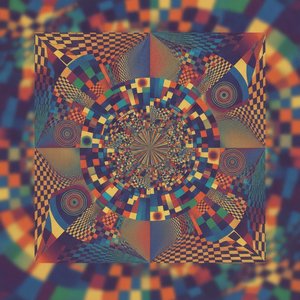
Arrest 2

Bridget Riley stworzyła „Arrest 2”, fascynujące dzieło Op Art – abstrakcyjną malowaną na płótnie kompozycję wypełnioną ruchomymi czarno-białymi paskami, która wywołuje iluzję głębi i ruchu oraz eksploruje związek między percepcją a rzeczywistością.

Explore Bridget Louise Riley's captivating Op Art paintings! Discover her dynamic geometric works & perceptual illusions that redefined modern art. UK-based artist (b. 1931).

Dzieło sztuki prezentowane na tej stronie podlega ochronie prawem autorskim, co oznacza, że nie mamy prawa do tworzenia ani sprzedaży jego identycznej reprodukcji. Ochrona ta jest egzekwowana na mocy umów międzynarodowych, takich jak Konwencja berneńska oraz przez przepisy prawa krajowego, w tym te określone w Prawo autorskie USA – Tytuł 17.

Metoda ta jest w pełni zgodna z przepisami prawa autorskiego, ponieważ nie polega na kopiowaniu ani powielaniu chronionego dzieła. Stanowi ona kreatywną reinterpretację – nowy obraz, który czerpie inspirację z oryginału, ale nie jest z nim tożsamy.

Giclée / Wydruk artystyczny

Wydruki giclée lub płótna o jakości muzealnej, szybka realizacja i szeroki wybór opcji wykończenia. ( Zamów ręcznie malowaną reprodukcję Przejdź do wersji cyfrowej)

Corner sample of the P118B picture frame: polistyren formowany, 5 cm wide and 3 cm thick
P118B zł10
Corner sample of the P118H picture frame: polistyren formowany, 5 cm wide and 3 cm thick
P118H zł10
Corner sample of the P118W picture frame: polistyren formowany, 5 cm wide and 3 cm thick
P118W zł10
Corner sample of the P438Z picture frame: polistyren formowany, 5.5 cm wide and 3.5 cm thick
P438Z zł10
Corner sample of the P508JH picture frame: polistyren formowany, 7 cm wide and 3.5 cm thick
P508JH zł12
Corner sample of the P508YH picture frame: polistyren formowany, 7 cm wide and 3.5 cm thick
P508YH zł12
Corner sample of the P805H picture frame: polistyren formowany, 5 cm wide and 3.5 cm thick
P805H zł10
Corner sample of the P805Z picture frame: polistyren formowany, 5 cm wide and 3.5 cm thick
P805Z zł10
Corner sample of the P919BZ picture frame: polistyren formowany, 7 cm wide and 3.5 cm thick
P919BZ zł10
Corner sample of the P919G picture frame: polistyren formowany, 7 cm wide and 3.5 cm thick
P919G zł10
Corner sample of the P919XJ picture frame: polistyren formowany, 7 cm wide and 3.5 cm thick
P919XJ zł10
Corner sample of the P959ZH picture frame: polistyren formowany, 5 cm wide and 3 cm thick
P959ZH zł10
Corner sample of the P968JZ picture frame: polistyren formowany, 6 cm wide and 4 cm thick
P968JZ zł12
Corner sample of the W106C picture frame: lite drewno, 5 cm wide and 3 cm thick
W106C zł8
Corner sample of the W218G picture frame: lite drewno, 5 cm wide and 3 cm thick
W218G zł10
Corner sample of the W218JH picture frame: lite drewno, 5 cm wide and 3 cm thick
W218JH zł8
Corner sample of the W218Y picture frame: lite drewno, 5 cm wide and 3 cm thick
W218Y zł10
Corner sample of the W307PJ picture frame: lite drewno, 6 cm wide and 3 cm thick
W307PJ zł10
Corner sample of the W316G picture frame: lite drewno, 6 cm wide and 3 cm thick
W316G zł10
Corner sample of the W316PJ picture frame: lite drewno, 6 cm wide and 3 cm thick
W316PJ zł8
Corner sample of the W316Y picture frame: lite drewno, 6 cm wide and 3 cm thick
W316Y zł10
Corner sample of the W398PJ picture frame: lite drewno, 5 cm wide and 3 cm thick
W398PJ zł8
Corner sample of the W4111J picture frame: lite drewno, 6.5 cm wide and 3.5 cm thick
W4111J zł10
Corner sample of the W500HY picture frame: lite drewno, 7 cm wide and 5 cm thick
W500HY zł15
Corner sample of the W500JH picture frame: lite drewno, 7 cm wide and 5 cm thick
W500JH zł15
Corner sample of the W692G picture frame: lite drewno, 8 cm wide and 4 cm thick
W692G zł12
Corner sample of the W849H picture frame: lite drewno, 5 cm wide and 3 cm thick
W849H zł8
Corner sample of the W940BG picture frame: lite drewno, 7.5 cm wide and 4.5 cm thick
W940BG zł15
Corner sample of the W953PJ picture frame: lite drewno, 6 cm wide and 3.5 cm thick
W953PJ zł8

Standardowy format
personalizowane
CM
INCH

Wybierz spośród naszych standardowych rozmiarów, które zachowują oryginalne proporcje dzieła sztuki.

szerokość
wysokość

Wpisz wymaganą szerokość i wysokość, aby dopasować grafikę do ramy lub ściany. Wydruk można jedynie przyciąć, nigdy nie powiększając go poza oryginalny obraz, dlatego format o innych proporcjach spowoduje utratę części kompozycji. Przed rozpoczęciem druku prześlemy Ci cyfrowy podgląd do zatwierdzenia. Obraz wyświetlany na tej stronie nie pokazuje rzeczywistego przycięcia — jedynie podgląd oddaje ten efekt.

Dostawa na cały świat () w ciągu 2 tygodni zamiast standardowych 4/5 tygodni. (26 Październik)

Bezpłatna ekspresowa wysyłka na cały świat
Wysokiej jakości płótno lniane
Pełne ubezpieczenie przesyłki
Gwarancja zwrotu należności celnych i podatków importowych
Gwarancja wiernego odwzorowania kolorów
100-dniowa polityka zwrotów (tylko w przypadku wad)
Gwarancja 100% zwrotu pieniędzy
Zniżka przy zakupie wielu sztuk

Suma całkowita

zł 261

Arrest 2

Giclée / Wydruk artystyczny

Wymiary reprodukcji

-

Cena całkowita

zł 261

Najważniejsze informacje

  • Location: Muzeum Sztuki Współczesnej w Kansas City
  • Dimensions: 1905 x 1949.45 cm
  • Notable elements or techniques: Iluzja optyczna, linie sinusoidalne
  • Artist: Bridget Riley
  • Artistic style: Abstrakcja
  • Year: 1965

Quiz o sztuce

Do każdego pytania dotyczy tylko jedna poprawna odpowiedź.

Pytanie 1:
Jak nazywa się obraz Bridget Riley?
Pytanie 2:
Jaki styl malarski charakteryzuje prace Bridget Riley?
Pytanie 3:
Czy obraz wykorzystuje technikę anamorfose?
Pytanie 4:
Jakie kolory dominują w obrazie?
Pytanie 5:
Co Riley określa jako naturę?

Bridget Riley: Architect of Illusion – Arrest 2

Bridget Louise Riley, born in London in 1931 and now residing across Cornwall, France, and London, is an artist whose work has fundamentally reshaped our understanding of perception. More than simply a painter, she’s an architect of illusion, meticulously crafting canvases that challenge the eye and invite prolonged contemplation. Her journey began not with geometric abstraction but with a grounding in traditional landscape painting, influenced by her childhood spent amidst the rugged beauty of Cornwall. However, it was a pivotal encounter with Jackson Pollock's vibrant energy at the Museum of Modern Art in 1958 – specifically, his use of pointillism – that irrevocably altered her artistic trajectory. This initial exposure sparked an intense investigation into the principles of visual perception, leading her to explore the fascinating interplay between color, form, and movement. Riley’s early work, spanning from 1958 to 1960, reveals a shift toward a bold experimentation with optical phenomena. Rejecting conventional representation, she embraced abstraction as a means of conveying complex emotional states—a deliberate departure from representational art that signaled the burgeoning interest in psychological exploration within the visual arts. “Arrest 2,” created in 1965, exemplifies this stylistic evolution perfectly. It’s a mesmerizing piece of Op Art – Optical Art – where Riley skillfully manipulates color and line to generate an illusion of movement and depth, mirroring the dynamism inherent in human experience.
  • Subject Matter: The artwork eschews recognizable imagery, focusing instead on pure abstraction. Riley sought to capture not what is seen but how it *feels*, prioritizing emotional resonance over literal depiction.
  • Style: Op Art’s core principle lies in exploiting visual illusions—specifically, anamorphic distortion—to create a paradoxical effect of spatial depth within a flat surface. This technique cleverly tricks the eye into perceiving contours and textures that aren't actually present.
  • Technique: Riley achieved this captivating illusion through meticulous application of acrylic paint on linen canvas. The artist’s precise brushstrokes ensure uniformity and consistency across the expansive pattern, reinforcing the visual impact of the artwork.
The composition itself is dominated by undulating black and white stripes—a motif that recurs throughout Riley's oeuvre. These lines aren’t merely decorative; they are conduits for conveying a profound sense of rhythm and tension. The subtle variations in line thickness contribute to the overall visual texture, enhancing the feeling of movement without resorting to overt gesture or brushwork. This deliberate restraint underscores Riley’s commitment to conveying emotion through controlled visual elements. Symbolic Significance: Beyond its aesthetic appeal, “Arrest 2” speaks to themes of disorientation and fascination—mirroring the experience of encountering a novel stimulus that disrupts our habitual perceptual processes. Riley's intention was not simply to create an image but to provoke contemplation about how we perceive reality and how art can engage us on a subconscious level. The artwork invites viewers to question their assumptions about visual representation and embrace the transformative potential of illusionary perception. Historical Context: Created during the height of the Op Art movement—a reaction against Surrealism and Expressionism—Riley’s work aligns with a broader artistic preoccupation with exploring the boundaries of sensory experience. The movement gained considerable traction in the mid-1960s, fueled by advancements in psychology and neuroscience that illuminated the complexities of human perception. Riley's contribution to this influential trend solidified her position as one of Britain’s foremost visual artists—a pioneer who continues to inspire contemporary painters and designers alike.

Pytania i odpowiedzi

Gdzie mogę kupić ręcznie malowaną reprodukcję dzieła „Arrest 2” – Bridget Louise Riley?

"Arrest 2" jest dostępny jako ręcznie malowana reprodukcja olejowa na płótnie lnianym. Zamówienie można złożyć na stronie Ręcznie malowana reprodukcja, wybierając preferowany rozmiar.

Co przedstawia „Arrest 2” – Bridget Louise Riley i jaki ma nastrój?

"Arrest 2" przedstawia abstract painting, optical illusion, geometric pattern, color rhythm, visual dynamics, spatial depth, contemporary art, a jego nastrojowy charakter można określić jako Pełen spokoju.

Czy dzieło „Arrest 2” – Bridget Louise Riley, znajdujące się w zbiorach Muzeum Sztuki Nelson-Atkins, może być legalnie reprodukowane?

Dzieło „Arrest 2” – Bridget Louise Riley, znajdujące się w zbiorach Muzeum Sztuki Nelson-Atkins, znajduje się w nadal objęte ochroną prawa autorskiego. Status ten określa, czy możliwe jest tworzenie reprodukcji obrazu.


Biografia artysty

Bridget Riley: Architect of Illusion

Bridget Louise Riley, born in London in 1931 and now residing across Cornwall, France, and London, is an artist whose work has fundamentally reshaped our understanding of perception. More than simply a painter, she’s an architect of illusion, meticulously crafting canvases that challenge the eye and invite prolonged contemplation. Her journey began not with geometric abstraction but with a grounding in traditional landscape painting, influenced by her childhood spent amidst the rugged beauty of Cornwall. However, it was a pivotal encounter with Jackson Pollock's vibrant energy at the Museum of Modern Art in 1958 – specifically, his use of pointillism – that irrevocably altered her artistic trajectory. This initial exposure sparked an intense investigation into the principles of visual perception, leading her to explore the fascinating interplay between color, form, and movement.

Riley’s early work, spanning from 1958 to 1960, reveals a shift towards a more stylized approach, incorporating elements of impressionism and semi-abstraction. Yet, it was her engagement with the burgeoning field of Op Art – a movement characterized by its deliberate manipulation of visual perception – that truly defined her artistic identity. Influenced profoundly by Victor Vasarely’s explorations of optical phenomena and the pioneering work of Georges Seurat, Riley began to experiment with creating dynamic patterns that induced a sense of disorientation and movement within the viewer's eye. This wasn’t merely about replicating an illusion; it was about actively engaging the brain in decoding visual information, pushing the boundaries of how we experience color and space.

The Birth of Op Art and Early Innovations

The mid-1960s marked a watershed moment for Riley's career. Her groundbreaking series of black and white paintings – works like *Drift No. 2* (1966) and *Nineteen Greys* (1968) – catapulted her to international prominence, establishing her as a leading figure in the Op Art movement. These pieces weren’t simply aesthetically pleasing; they were meticulously engineered to create an unsettling yet captivating effect on the viewer's eye. The seemingly simple arrangements of black and white lines and shapes generated a sense of vibration, depth, and even movement – a phenomenon that challenged conventional notions of static representation. Riley’s approach was deeply rooted in scientific principles, drawing upon research into color theory and visual psychology to achieve her desired effects.

Crucially, Riley's work wasn't isolated within the Op Art movement. She actively engaged with other artists exploring similar themes, including Victor Vasarely and Yaacov Agam, participating in the landmark “The Responsive Eye” exhibition at MoMA in 1965. This event served as a crucial platform for showcasing the burgeoning field of Op Art and solidifying Riley’s position within its ranks. The exhibition highlighted the shared interest among these artists – Vasarely, Riley, Agam, and others – in manipulating perception and creating immersive visual experiences.

Color, Curve, and Beyond

Following her initial success with black and white paintings, Riley began to incorporate color into her work in 1967. This transition marked a significant evolution in her artistic practice, allowing her to explore the complex relationships between hue, saturation, and value. Her stripe paintings of this period – such as *Gala* (1974) and *Entice 2* (1974) – demonstrated a masterful control over color gradients and patterns, creating mesmerizing visual effects that captivated viewers. Riley’s exploration didn't stop at stripes; she ventured into the realm of curves in the late 1970s, producing works like *Wave* (1978), which evoked a sense of undulating movement and fluidity.

Throughout the 1980s and 1990s, Riley continued to experiment with new forms and techniques. She incorporated diagonal lines into her compositions, resulting in a series known as rhomboid paintings – works that presented a dynamic interplay between straight and curved elements. Her travels to Egypt and India further influenced her artistic vision, leading to the creation of pieces like *Achæan* (1981), which drew inspiration from the intricate patterns and motifs of Islamic art, and *Nataraja* (1993), reflecting the vibrant colors and symbolism of Indian iconography. Riley’s work became increasingly lyrical and evocative, moving beyond purely optical effects to explore themes of rhythm, harmony, and visual poetry.

Legacy and Influence

Bridget Riley's impact on contemporary art is undeniable. Her pioneering work in Op Art fundamentally altered the way artists approached representation, demonstrating that perception itself could be a subject of artistic inquiry. Her meticulous attention to detail, combined with her deep understanding of visual psychology, resulted in paintings that are both intellectually stimulating and emotionally resonant. Riley’s influence extends far beyond the realm of painting; her ideas have been adopted by designers, architects, and fashion houses, demonstrating the enduring appeal of her innovative approach to visual communication.

Today, Bridget Riley remains a vital and influential figure in the art world. Her retrospective at the Tate Gallery in 2003 and another at the Musée d’Art Moderne de la Ville de Paris in 2008 served as powerful testaments to her enduring legacy. Her work continues to be exhibited worldwide, captivating audiences with its mesmerizing illusions and profound exploration of human perception.

Bridget Louise Riley

Bridget Louise Riley

1931 - , United Kingdom

Krótka nota

  • Full Name: Bridget Louise Riley
  • Nationality: British
  • Date Of Birth: 1931
  • Place Of Birth: United Kingdom
  • Notable Artworks:
    • Drift No. 2
    • Nineteen Greys
    • Achæan
    • Nataraja
  • Artistic Movement Or Style: Op Art
  • Artists Who Influenced This Artist:
    • Georges Seurat
    • Victor Vasarely
  • Artists Or Movements Influenced By This Artist:
    • Jackson Pollock
    • Pointillism
Odkryj dzieła sztuki uporządkowane według tematów, stylów i cech charakterystycznych.