Zobacz w skali 1:1 Zobacz w AR Kup ręcznie malowany obraz Przełącz na wersję cyfrową Wyślij
Szczegóły Przewodnik Dodaj do ulubionych Pobierz plik obrazu Podobne obiekty RTG Pokaz slajdów Statystyki

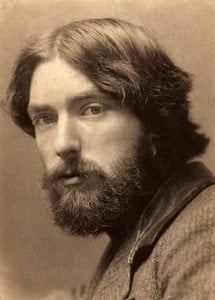
T. E. Lawrence

Admire Augustus Edwin John’s striking portrait of T.E. Lawrence, ‘Air Mechanic Shaw,’ capturing the iconic Arab Revolt leader's dignified presence. A masterpiece of Impressionism.

Augustus Edwin John (1878-1961) – walijski malarz znany z portretów i murali. Jego twórczość charakteryzuje się żywymi kolorami, ekspresją i oddaniem psychiki modeli. Uznawany za jednego z najważniejszych przedstawicieli postimpresjonizmu w Anglii.

Dzieło sztuki prezentowane na tej stronie podlega ochronie prawem autorskim, co oznacza, że nie mamy prawa do tworzenia ani sprzedaży jego identycznej reprodukcji. Ochrona ta jest egzekwowana na mocy umów międzynarodowych, takich jak Konwencja berneńska oraz przez przepisy prawa krajowego, w tym te określone w Prawo autorskie USA – Tytuł 17.

Metoda ta jest w pełni zgodna z przepisami prawa autorskiego, ponieważ nie polega na kopiowaniu ani powielaniu chronionego dzieła. Stanowi ona kreatywną reinterpretację – nowy obraz, który czerpie inspirację z oryginału, ale nie jest z nim tożsamy.

Giclée / Wydruk artystyczny

Wydruki giclée lub płótna o jakości muzealnej, szybka realizacja i szeroki wybór opcji wykończenia. ( Kup ręcznie malowany obraz Przełącz na wersję cyfrową)

Corner sample of the P118B picture frame: polistyren formowany, 5 cm wide and 3 cm thick
P118B zł10
Corner sample of the P118H picture frame: polistyren formowany, 5 cm wide and 3 cm thick
P118H zł10
Corner sample of the P118W picture frame: polistyren formowany, 5 cm wide and 3 cm thick
P118W zł10
Corner sample of the P438Z picture frame: polistyren formowany, 5.5 cm wide and 3.5 cm thick
P438Z zł10
Corner sample of the P508JH picture frame: polistyren formowany, 7 cm wide and 3.5 cm thick
P508JH zł12
Corner sample of the P508YH picture frame: polistyren formowany, 7 cm wide and 3.5 cm thick
P508YH zł12
Corner sample of the P805H picture frame: polistyren formowany, 5 cm wide and 3.5 cm thick
P805H zł10
Corner sample of the P805Z picture frame: polistyren formowany, 5 cm wide and 3.5 cm thick
P805Z zł10
Corner sample of the P919BZ picture frame: polistyren formowany, 7 cm wide and 3.5 cm thick
P919BZ zł10
Corner sample of the P919G picture frame: polistyren formowany, 7 cm wide and 3.5 cm thick
P919G zł10
Corner sample of the P919XJ picture frame: polistyren formowany, 7 cm wide and 3.5 cm thick
P919XJ zł10
Corner sample of the P959ZH picture frame: polistyren formowany, 5 cm wide and 3 cm thick
P959ZH zł10
Corner sample of the P968JZ picture frame: polistyren formowany, 6 cm wide and 4 cm thick
P968JZ zł12
Corner sample of the W106C picture frame: lite drewno, 5 cm wide and 3 cm thick
W106C zł8
Corner sample of the W218G picture frame: lite drewno, 5 cm wide and 3 cm thick
W218G zł10
Corner sample of the W218JH picture frame: lite drewno, 5 cm wide and 3 cm thick
W218JH zł8
Corner sample of the W218Y picture frame: lite drewno, 5 cm wide and 3 cm thick
W218Y zł10
Corner sample of the W307PJ picture frame: lite drewno, 6 cm wide and 3 cm thick
W307PJ zł10
Corner sample of the W316G picture frame: lite drewno, 6 cm wide and 3 cm thick
W316G zł10
Corner sample of the W316PJ picture frame: lite drewno, 6 cm wide and 3 cm thick
W316PJ zł8
Corner sample of the W316Y picture frame: lite drewno, 6 cm wide and 3 cm thick
W316Y zł10
Corner sample of the W398PJ picture frame: lite drewno, 5 cm wide and 3 cm thick
W398PJ zł8
Corner sample of the W4111J picture frame: lite drewno, 6.5 cm wide and 3.5 cm thick
W4111J zł10
Corner sample of the W500HY picture frame: lite drewno, 7 cm wide and 5 cm thick
W500HY zł15
Corner sample of the W500JH picture frame: lite drewno, 7 cm wide and 5 cm thick
W500JH zł15
Corner sample of the W692G picture frame: lite drewno, 8 cm wide and 4 cm thick
W692G zł12
Corner sample of the W849H picture frame: lite drewno, 5 cm wide and 3 cm thick
W849H zł8
Corner sample of the W940BG picture frame: lite drewno, 7.5 cm wide and 4.5 cm thick
W940BG zł15
Corner sample of the W953PJ picture frame: lite drewno, 6 cm wide and 3.5 cm thick
W953PJ zł8

Standardowy
na zamówienie
CM
INCH

Wybierz spośród naszych standardowych rozmiarów, które zachowują oryginalne proporcje dzieła sztuki.

szerokość
wysokość

Możesz wprowadzić własne wymiary, aby dopasować dzieło do konkretnej ramy lub przestrzeni. Jeśli wybrany rozmiar nie będzie odpowiadał proporcjom oryginalnego obrazu, przytniecie dzieło lub rozszerzymy obraz za pomocą odbicia lustrzanego lub jednolitego wypełnienia krawędzi. Przed rozpoczęciem produkcji prześlemy cyfrową wizualizację do Twojej akceptacji.
Prosimy pamiętać, że podgląd na ekranie nie odzwierciedla faktycznego przycinania ani rozszerzania. Tylko wizualizacja dokładnie pokaże końcową kompozycję.
Mimo dostępności niestandardowych rozmiarów, zalecamy wybór wymiaru z listy zdefiniowanej, aby zachować oryginalne proporcje.

Dostawa na cały świat () w ciągu 2 tygodni zamiast standardowych 4/5 tygodni. (13 Październik)

Bezpłatna ekspresowa wysyłka na cały świat
Wysokiej jakości płótno lniane
Pełne ubezpieczenie transportowe
Gwarancja zwrotu należności celnych i podatków importowych
Gwarancja idealnego odwzorowania barw
100-dniowy okres na zwrot dzieła w przypadku wykrycia wad produkcyjnych
Gwarancja 100% zwrotu pieniędzy
Oferta przy zakupie wielu sztuk

Cena całkowita

zł 256

T. E. Lawrence

Giclée / Wydruk artystyczny

Rozmiar reprodukcji

-

Suma do zapłaty

zł 256

Kluczowe informacje

  • Artist: Augustus Edwin John
  • Medium: Black chalk on wove paper
  • Influences:
    • John
    • Lawrence
  • Location: Ashmolean Museum, Oxford
  • Artistic style: Post-Impressionist

Quiz wiedzy o sztuce

Do każdego pytania dotyczy tylko jedna poprawna odpowiedź.

Pytanie 1:
What is the primary subject of Augustus Edwin John’s painting, ‘T. E. Lawrence’?
Pytanie 2:
The painting ‘T. E. Lawrence’ is primarily executed in which style?
Pytanie 3:
In what year was the painting ‘T. E. Lawrence’ created?
Pytanie 4:
Augustus Edwin John was a prominent artist associated with which artistic movement?
Pytanie 5:
What is the approximate size of the painting ‘T. E. Lawrence’?

A Soul Captured in Blue: The Enigmatic Portrait of T. E. Lawrence

In this evocative 1929 portrait, the celebrated Welsh artist Augustus Edwin John captures more than just a likeness; he distills the very essence of a legend. The subject, T. E. Lawrence—famously known as Lawrence of Arabia—is presented not through the lens of wartime heroism, but through a deeply intimate and psychological study. Clad in a dark blue military uniform adorned with subtle gold buttons, Lawrence sits with a gravity that commands the room. His gaze, directed steadily toward the viewer, creates an immediate and haunting connection, pulling the observer into a silent dialogue with one of the most complex figures of the twentieth century. The painting serves as a window into a man caught between his public identity as a military strategist and his private, contemplative nature.

The technique employed by John is a masterclass in post-impressionistic fluidity. Eschewing the rigid, photographic precision often found in traditional military portraiture, the artist utilizes visible, rhythmic brushstrokes that imbue the canvas with a sense of living energy. The rendering of Lawrence’s face is particularly masterful, using soft lines and delicate shading to create a lifelike, three-dimensional quality that feels both tender and resolute. This softness contrasts beautifully with the more abstract, gestural treatment of the background. By utilizing warm, minimalist tones behind the cool, deep blues of the uniform, John employs a sophisticated use of color temperature to push the subject forward, ensuring that the viewer's eye remains anchored to the psychological depth of the sitter’s expression.

Historical Resonance and Aesthetic Appeal

Created during a period of profound transition in the interwar years, this work carries the weight of history. Augustus Edwin John, a central figure in the British Bohemian movement, brings his characteristic flair for capturing character and bohemian spirit to this formal subject. The painting transcends its historical moment, offering a timeless aesthetic that resonates with the modern collector. For the interior designer, this piece offers a sophisticated focal point; its balanced composition and rich, tonal palette make it an ideal centerpiece for a study, a library, or a formal sitting room where conversation and contemplation are encouraged.

To possess a reproduction of this caliber is to invite a sense of historical prestige and artistic depth into a space. The interplay of light and shadow within the brushwork provides a tactile quality that mimics the movement of light across a physical canvas, making it an exquisite addition to any curated collection. Whether viewed as a tribute to the legendary Lawrence or as a testament to John's unparalleled ability to capture the human spirit, this portrait remains a profound exploration of identity, duty, and the enduring power of the painted image.

Pytania i odpowiedzi

Gdzie mogę zobaczyć podgląd dzieła "T. E. Lawrence"?

Podgląd dzieła „T. E. Lawrence” autorstwa Augustus Edwin John jest dostępny na stronie Podgląd danego utworu.

Jakie są wymiary oryginału "T. E. Lawrence"?

Wymiary zarejestrowane dla dzieła „T. E. Lawrence” autorstwa Augustus Edwin John to 66 x 50 cm. Reprodukcje można zamówić w innych rozmiarach, zachowując te same proporcje.

Jaka technika i styl charakteryzują „T. E. Lawrence” autorstwa Augustus Edwin John?

W "T. E. Lawrence" technika Acrylic On Canvas spotyka się z nurtem Post-Impressionism.

Jak intensywne są kolory dzieła "T. E. Lawrence"?

Kolor dzieła "T. E. Lawrence" charakteryzuje się nasyceniem na poziomie Subtle Color oraz intensywnością wynoszącą Balanced.

Jaki jest format i wymiary dzieła "T. E. Lawrence"?

Format dzieła "T. E. Lawrence" to Portrait, a wymiary oryginału to 66 x 50 cm. Obie te informacje są przydatne przy planowaniu reprodukcji.

Kiedy i z jakich materiałów wykonano "T. E. Lawrence"?

Technika wykonania dzieła „T. E. Lawrence” autorstwa Augustus Edwin John to Acrylic On Canvas, a datowanie pracy pochodzi z 1929.

Jakie miejsce w historii sztuki zajmuje "T. E. Lawrence"?

T. E. Lawrence” autorstwa Augustus Edwin John należy do nurtu Post-Impressionism, przypadającego na okres 19th Century. Razem nadają one dziełu jego miejsce w historii sztuki.

Do czego zaleca się wykorzystanie wydruku "T. E. Lawrence"?

Reprodukcja dzieła „T. E. Lawrence” autorstwa Augustus Edwin John jest polecana do Statement. Sugestia ta wynika z tematyki, nastroju oraz kolorystyki pracy.


Biografia artysty

A Welsh Bohemian: The Life and Art of Augustus Edwin John

Augustus Edwin John, a name synonymous with vibrant color and intensely personal portraits, emerged as one of the most distinctive figures in early 20th-century British art. Born on January 4, 1878, in Tenby, a charming coastal town nestled within the Pembrokeshire county of Wales, his life was a tapestry woven with artistic passion, bohemian adventures, and a profound connection to both the natural world and its marginalized communities. From his humble beginnings as the third child of Edwin William John, a solicitor, and Augusta Smith (who tragically died when he was just six years old), John’s early exposure to art—primarily through his elder sister Gwen’s drawing lessons—laid the foundation for a career that would challenge conventions and leave an indelible mark on the British artistic landscape.

Early Influences and Artistic Training

John's artistic journey began formally at the Tenby School of Art, where his innate talent quickly became evident. However, it was his enrollment at the Slade School of Fine Art in London in 1894 that truly shaped his development. Under the tutelage of Henry Tonks, a renowned and demanding instructor, John honed his draughtsmanship to an extraordinary degree, mastering the fundamentals of line, form, and perspective with remarkable precision. The Slade’s rigorous curriculum instilled in him a deep appreciation for academic tradition while simultaneously encouraging experimentation and innovation—a balance that would become characteristic of his artistic style. Crucially, during this period, John's exposure to the works of Old Masters like Peter Paul Rubens profoundly influenced his approach to composition, color, and dramatic lighting. Simultaneously, he absorbed the spirit of French Impressionists such as Matisse and Gauguin, embracing their use of vibrant hues and a rejection of traditional academic constraints. The subtle tonal harmonies of Puvis de Chavannes also resonated deeply with John’s aesthetic sensibilities, informing his ability to capture fleeting emotions and atmospheric effects. A pivotal moment arrived in 1897 when a diving accident in Tenby resulted in a severe head injury. This traumatic event dramatically altered John's personality, unleashing a newfound spontaneity and boldness that would become central to his artistic expression.

The Romani Connection and a Life Beyond the Studio

Following the Slade years, John embarked on a period of intense exploration, seeking inspiration beyond the confines of London’s art scene. He spent considerable time in France, immersing himself in the vibrant culture of Montmartre, and later found himself captivated by the landscapes and people of Provence. However, it was his encounter with the Romani (Gypsy) community that proved to be a transformative experience. Drawn to their nomadic lifestyle, rich traditions, and captivating spirit, John became deeply involved in documenting their lives through painting, photography, and extensive research. He traveled extensively throughout Europe and Britain, living alongside the Roma, learning their language, customs, and beliefs. This immersion profoundly impacted his art, imbuing it with a sense of freedom, wanderlust, and an appreciation for the beauty of the natural world—qualities that are particularly evident in works like *Air Mechanic Shaw* (1935), a powerful portrait of T.E. Lawrence capturing both his heroic stature and underlying vulnerability. His presidency of the Gypsy Lore Society further solidified his commitment to understanding and celebrating this often-misunderstood community.

A Portraitist of Distinction: Capturing the Essence of Character

While John’s engagement with Romani culture is undeniably significant, he is perhaps most celebrated for his extraordinary portraits. Possessing an uncanny ability to capture not just likeness but also the inner life of his subjects—their personality, mood, and fleeting emotions—John created some of the most psychologically astute and compelling portraits of the early 20th century. His style was characterized by a loose, expressive brushwork, vibrant colors, and a willingness to experiment with unconventional techniques. He famously described his approach as seeking an “instantaneous attitude,” striving to capture a momentary glimpse into the soul of his sitter. From aristocratic figures like Lord Leverhulme (whose notoriously unhappy portrait is a testament to John’s uncompromising honesty) to literary giants such as George Bernard Shaw and Dylan Thomas, John's portraits graced the walls of homes and galleries across Britain and beyond. Notable works include *Caspar* (1909), a poignant depiction of youthful innocence, and numerous studies of Gwen John, his sister and lifelong companion.

Legacy and Critical Reception

Throughout his career, Augustus Edwin John experienced both widespread acclaim and periods of critical fluctuation. Initially celebrated for his innovative oil sketching techniques and figure drawings, some critics later found his work to be overly flamboyant or lacking in painterly finesse. His service as a war artist during World War I, attached to the Canadian forces, yielded memorable portraits of soldiers, but an unfortunate incident led to his recall to England. Despite these challenges, John remained a significant force in British art history. He was one of the few artists of his time to achieve widespread public recognition and played a crucial role in popularizing Post-Impressionism within the United Kingdom. Awarded the Order of Merit in 1942, he also documented his life and artistic philosophy in two volumes of autobiography: *Chiaroscuro* (1952) and *Finishing Touches* (published posthumously in 1964). While his reputation waned somewhat after World War II, there has been a renewed appreciation for his work in recent years, particularly for the vibrancy and originality of his early pieces. Augustus Edwin John’s art continues to captivate and inspire, reminding us of the power of individual expression and the enduring allure of a life lived with passion and artistic integrity.

Augustus Edwin John

Augustus Edwin John

1878 - 1961 , Walia

Najważniejsze informacje

  • Artistic Movement Or Style: Postimpresjonizm
  • Artists Or Movements Influenced By This Artist: ['Nowoczesne malarstwo brytyjskie']
  • Artists Who Influenced This Artist:
    • Rubens
    • Matisse
    • Gauguin
  • Date Of Birth: 4 stycznia 1878
  • Date Of Death: 31 października 1961
  • Full Name: Augustus Edwin John
  • Nationality: Walijski
  • Notable Artworks:
    • Caspar
    • Air Mechanic Shaw
    • David John
  • Place Of Birth: Tenby, Walia
Odkryj dzieła sztuki uporządkowane według tematów, stylów i cech charakterystycznych.