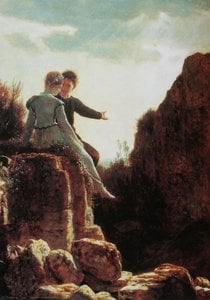
Centaur Watching Fish (1878) autorstwa Arnold Böcklin, ręcznie malowana reprodukcja olejowa wykonana przez mistrza
Podgląd w skali 1:1 Podgląd AR Przełącz na wydania drukowane Przejdź do wersji cyfrowej Wyślij jako kartkę
Szczegóły dzieła Przewodnik Dodaj do ulubionych Pobierz obraz Podobne obiekty RTG Pokaz slajdów Pytania i odpowiedzi Pobierz prezentację Statystyki

Centaur Watching Fish Ręcznie malowana reprodukcja obrazu olejnego

Wymiary
43.0 x 70.0 cm

Arnold Bocklin’s ‘Centaur Watching Fish’ (1878) is a haunting Symbolist oil painting of a melancholic centaur. Explore its Romantic style, earthy tones & contemplation.

Szwajcarski symbolista znany z Wyspy Umarłych. Odkryj jego mistyczne, mitologiczne arcydzieła już dziś.

Ręcznie malowana reprodukcja olejowa

Ręcznie malowany obraz olejny na płótnie, wykonany na zamówienie przez naszych artystów w wybranym przez Ciebie wymiarze i oprawie. ( Przełącz na wydania drukowane Przejdź do wersji cyfrowej)


Corner sample of the P118B picture frame: polistyren formowany, 5 cm wide and 3 cm thick
P118B zł10
Corner sample of the P118H picture frame: polistyren formowany, 5 cm wide and 3 cm thick
P118H zł10
Corner sample of the P118W picture frame: polistyren formowany, 5 cm wide and 3 cm thick
P118W zł10
Corner sample of the P438Z picture frame: polistyren formowany, 5.5 cm wide and 3.5 cm thick
P438Z zł10
Corner sample of the P508JH picture frame: polistyren formowany, 7 cm wide and 3.5 cm thick
P508JH zł12
Corner sample of the P508YH picture frame: polistyren formowany, 7 cm wide and 3.5 cm thick
P508YH zł12
Corner sample of the P805H picture frame: polistyren formowany, 5 cm wide and 3.5 cm thick
P805H zł10
Corner sample of the P805Z picture frame: polistyren formowany, 5 cm wide and 3.5 cm thick
P805Z zł10
Corner sample of the P919BZ picture frame: polistyren formowany, 7 cm wide and 3.5 cm thick
P919BZ zł10
Corner sample of the P919G picture frame: polistyren formowany, 7 cm wide and 3.5 cm thick
P919G zł10
Corner sample of the P919XJ picture frame: polistyren formowany, 7 cm wide and 3.5 cm thick
P919XJ zł10
Corner sample of the P959ZH picture frame: polistyren formowany, 5 cm wide and 3 cm thick
P959ZH zł10
Corner sample of the P968JZ picture frame: polistyren formowany, 6 cm wide and 4 cm thick
P968JZ zł12
Corner sample of the W106C picture frame: lite drewno, 5 cm wide and 3 cm thick
W106C zł8
Corner sample of the W218G picture frame: lite drewno, 5 cm wide and 3 cm thick
W218G zł10
Corner sample of the W218JH picture frame: lite drewno, 5 cm wide and 3 cm thick
W218JH zł8
Corner sample of the W218Y picture frame: lite drewno, 5 cm wide and 3 cm thick
W218Y zł10
Corner sample of the W307PJ picture frame: lite drewno, 6 cm wide and 3 cm thick
W307PJ zł10
Corner sample of the W316G picture frame: lite drewno, 6 cm wide and 3 cm thick
W316G zł10
Corner sample of the W316PJ picture frame: lite drewno, 6 cm wide and 3 cm thick
W316PJ zł8
Corner sample of the W316Y picture frame: lite drewno, 6 cm wide and 3 cm thick
W316Y zł10
Corner sample of the W398PJ picture frame: lite drewno, 5 cm wide and 3 cm thick
W398PJ zł8
Corner sample of the W4111J picture frame: lite drewno, 6.5 cm wide and 3.5 cm thick
W4111J zł10
Corner sample of the W500HY picture frame: lite drewno, 7 cm wide and 5 cm thick
W500HY zł15
Corner sample of the W500JH picture frame: lite drewno, 7 cm wide and 5 cm thick
W500JH zł15
Corner sample of the W692G picture frame: lite drewno, 8 cm wide and 4 cm thick
W692G zł12
Corner sample of the W849H picture frame: lite drewno, 5 cm wide and 3 cm thick
W849H zł8
Corner sample of the W940BG picture frame: lite drewno, 7.5 cm wide and 4.5 cm thick
W940BG zł15
Corner sample of the W953PJ picture frame: lite drewno, 6 cm wide and 3.5 cm thick
W953PJ zł8

Standardowy format
personalizowane
CM
INCH

Wybierz spośród naszych standardowych rozmiarów, które zachowują oryginalne proporcje dzieła sztuki.

szerokość
wysokość

Wpisz wymaganą szerokość i wysokość, aby obraz pasował do Twojej ramy lub ściany. Ponieważ jest to dzieło malowane ręcznie, w przypadku rozmiaru o innych proporcjach artysta może domalować nieco więcej wokół obrazu lub przyciąć jego fragmenty — wybór należy do Ciebie. Przed rozpoczęciem pracy prześlemy Ci cyfrową wizualizację do zatwierdzenia. Obraz widoczny na tej stronie nie przedstawia rzeczywistego efektu — jedynie wizualizacja oddaje realny rezultat.

Przykłady możliwych zmian: Zamień twarz na zdjęcie klienta; Dodaj zwierzę domowe (np. zamień kota na psa); Ukryj wiadomość w tle; Zmień krajobraz lub elementy tła.
Po złożeniu zamówienia zespół WahooArt.com skontaktuje się z klientem drogą mailową w celu uzyskania instrukcji i prześle wizualizację projektu

Dostawa na całym świecie () w ciągu 3–4 tygodni zamiast standardowych 5 tygodni. (16 Listopad). Bez kompromisów w kwestii jakości.

Bezpłatna ekspresowa wysyłka na cały świat
Wysokiej jakości płótno lniane
Pełne ubezpieczenie przesyłki
Gwarancja zwrotu należności celnych i podatków importowych
Gwarancja wiernego odwzorowania kolorów
100-dniowa polityka zwrotów (tylko w przypadku wad)
Gwarancja 100% zwrotu pieniędzy
Zniżka przy zakupie wielu sztuk

Suma całkowita

zł 1057

Centaur Watching Fish

Technika reprodukcji

Wymiary reprodukcji

-

Cena całkowita

zł 1057

Najważniejsze informacje

  • Artistic style: Romantic
  • Dimensions: 43 x 70 cm
  • Influences: Romanticism
  • Notable elements or techniques: Impasto technique
  • Medium: Oil on canvas
  • Title: Centaur Watching Fish

Quiz o sztuce

Do każdego pytania dotyczy tylko jedna poprawna odpowiedź.

Pytanie 1:
What artistic movement is ‘Centaur Watching Fish’ primarily associated with?
Pytanie 2:
The painting depicts a mythological creature – what is it?
Pytanie 3:
What technique is prominently used in Böcklin’s ‘Centaur Watching Fish’?
Pytanie 4:
Where was Arnold Böcklin born?
Pytanie 5:
What is the overall mood conveyed by the artwork’s composition and color palette?

A Silent Meditation on Nature and Mortality

In the quietude of Arnold Böcklin’s 1878 masterpiece, “Centaur Watching Fish,” the viewer is invited into a realm where the boundaries between the mythological and the terrestrial dissolve. This evocative oil on canvas, currently held in the prestigious Kunsthaus Zürich, serves as a profound gateway into the Symbolist movement—a period of art history dedicated to exploring the hidden psychological depths of the human soul. Rather than presenting a mere scene from ancient legend, Böcklin crafts an immersive experience that speaks to the universal themes of solitude and the silent, rhythmic pulse of the natural world. The centaur, a creature of dual nature, reclines upon a serene shoreline, his gaze fixed upon the movement beneath the water's surface, creating a moment of suspended animation that feels both eternal and fleeting.

The composition is masterfully orchestrated to evoke a sense of Romantic reverie. Utilizing a horizontal format, Böcklin emphasizes the reclining posture of the centaur, grounding the mythological figure within a landscape of soft sands and swaying grasses. The artist deliberately eschews the rigid precision of strict realism in favor of an emotional truth. Through the use of diffused lighting and gentle shadows, he establishes an atmosphere of melancholic stillness. This technique allows the viewer to feel the weight of the silence, as if the very air around the creature is heavy with contemplation. It is a painting that does not demand attention through spectacle, but rather earns it through a subtle, haunting intimacy.

The Mastery of Texture and Atmosphere

Technically, “Centaur Watching Fish” is a triumph of texture and perspective. Böcklin employs the impasto technique with remarkable skill, applying thick, deliberate layers of paint to render the coarse fur of the centaur’s equine half. This tactile richness provides a palpable sense of physicality, making the creature feel present and breathing within the frame. To balance this heavy texture, the artist utilizes atmospheric perspective to create an illusion of infinite depth. By reducing color saturation and softening the details of the distant horizon, he simulates a hazy, dreamlike distance that reinforces the theme of isolation. This method draws a direct lineage from the Romantic masters like Caspar David Friedrich, using the landscape as a mirror for spiritual introspection.

The color palette is a sophisticated arrangement of earthy tones—ochres, deep browns, and muted beiges—which lends the work an organic, timeless quality. These warm, grounded hues are contrasted by the subtle, shimmering light reflecting off the water, drawing the eye toward the focal point of the centaur’s quiet observation. For the collector or interior designer, this piece offers a unique aesthetic versatility; its somber yet tranquil mood provides a sophisticated anchor for a room, offering a sense of historical depth and intellectual gravity that more contemporary works may lack.

Symbolism: The Intersection of Myth and Being

Beyond its visual splendor, the painting functions as a complex symbolic tapestry. The centaur itself—a hybrid of human intellect and animal instinct—serves as a powerful metaphor for the duality of existence. As he watches the fish, there is a profound sense of the relationship between humanity and the untamed elements of nature. The act of watching becomes a meditation on mortality; the stillness of the figure suggests a resignation to the cycles of life and death that govern both man and beast. There is a touch of sadness in his solitude, yet it is a beautiful, dignified melancholy that celebrates the quiet dignity of existence.

For those seeking to bring a piece of this profound emotional landscape into their personal spaces, a high-quality reproduction of this work offers more than just decoration. It provides a window into a bygone era of artistic exploration, a constant reminder of the beauty found in silence and the enduring power of myth. Whether placed in a library, a study, or a curated gallery space, “Centaur Watching Fish” continues to provoke thought, inviting all who encounter it to pause, breathe, and reflect upon the silent wonders of the world.

Pytania i odpowiedzi

Czy dzieło „Centaur Watching Fish” – Arnold Böcklin, znajdujące się w zbiorach Kunsthaus Zürich, może być legalnie reprodukowane?

Status praw autorskich do dzieła „Centaur Watching Fish” – Arnold Böcklin jest jasny: utwór znajduje się w należy do domeny publicznej – autorskie prawa majątkowe wygasły. Jego obecność w Kunsthaus Zürich nie zmienia tego stanu rzeczy.

W jaki sposób nurt i epoka przenikają się w „Centaur Watching Fish” – Arnold Böcklin?

"Centaur Watching Fish" należy do nurtu Symbolism, a jego twórca tworzył w epoce – Wiek XIX.

Jaką kolorystykę wykorzystuje "Centaur Watching Fish"?

Paleta dzieła „Centaur Watching Fish” – Arnold Böcklin jest opisywana jako Earthy. Stanowi ona zwięzłe zestawienie barw użytych w pracy.


Biografia artysty

Cień Wyspy

Bazylea w Szwajcarii stanowi punkt wyjścia dla życia zdefiniowanego przez napięcie między tym, co namacalne, a tym, co spektralne. Urodzony 16 października 1827 roku przez Christiana Frederica Böcklina i Ursulę Lippe, młody człowiek ostatecznie wzniósł się ponad handel jedwabiem swojego ojca, by trafić do surowych murów Akademii w Düsseldorfie. Pod okiem Schirmera zaczął chłonąć język pejzażu – umiejętność, która w przyszłości miała posłużyć do mapowania geografii ludzkiej duszy. Nie malował on jedynie scenerii; on konstruował krainy, w których klasyka zderza się z makabrą.

Ruch od akademickiej dyscypliny Düsseldorfu ku światłu Paryża i antycznemu ciężarowi Rzymu wyznacza fundamentalną zmianę w jego wizji. W Luwrze chłonął historię mistrzów, lecz to atmosfera Włoch prawdziwie ukształtowała jego warsztat. Powrócił do Rzymu między 1862 a 1866 rokiem, w okresie, gdy jego paleta zaczęła faworyzować bardziej gwałtowne, ekspresyjne barwy. Nie była to jednak słoneczna, pełna blasku Italia renesansu, lecz miejsce głębokich cieni i mitologicznego ciężaru. Jego twórczość zaczęła skłaniać się ku alegorii, wykorzystując postaci z antyku do zgłębiania przytłaczającej, nieuniknionej obecności śmiertelności.

Architektura Snów

Pod koniec XIX wieku jego reputacja została ugruntowana przez specyficzną, niepokojącą obsesję. Między 1880 a 1886 rokiem stworzył pięć wersji Wyspy Umarłych. Dzieło to, zainspirowane angielskim cmentarzem we Florencji, gdzie pochowana została jego córka, stało się punktem centralnym ruchu symbolistycznego. To scena głębokiego bezruchu: skalista wysepka, ciemne cyprysy i łódź zbliżająca się do milczącego brzegu. Obraz ten nie tylko przedstawia miejsce; on ukazuje stan bycia. Ta zdolność do oddawania tego, co nieuchwytne – szeptów snów i ciężaru życia pozagrobowego – postawiła go w centrum nowej europejskiej wrażliwości.

Jego podejście techniczne często wykorzystywało gęsty, ekspresyjny impasto, szczególnie w takich dziełach jak La Guerre (1896). W tym płótnie drży chaos konfliktu. Unika on czystych linii tradycjonalizmu, wybierając zamiast tego gęstą, warstwową kompozycję, w której postaci ścierają się pośród kruszejącej architektury. Jest to wizceralna manifestacja destrukcji, gdzie zasłona między mitem a rzeczywistością rozpuszcza się w burzy cieni. Jego styl przenikał się z nurtem prerafaelitów, jednak pozostał odrębny, skupiony na mistycyzmie, który wydawał się jednocześnie starożytny i niepokojąco nowoczesny.

Dziedzictwo Wpływu

Oddziaływanie jego wyobraźni wykraczało daleko poza płótno, sięgając do audytywnej sfery muzyki późnego romantyzmu. Jego obrazy stanowiły wizualny bodziec dla kompozytorów, wywierając wpływ przede wszystkim na atmosferę twórczości Gustava Mahlera. Zdolność do budowania mostów między tym, co wizualne, a psychologiczne, sprawiła, że jego wpływ odczuli ci, którzy pragnęli reprezentować podświadomość. Jego zasięg dotknął kilku pokoleń artystów:

  • Hans Thoma, młodszy artysta zainspirowany jego symboliczną głębią.
  • Giorgio de Chirico, który odnalazł głębokie pokrewieństwo w izolacji kompozycji Böcklina.
  • Salvador Dalí i Max Ernst, którzy czerpali z jego umiejętności łączenia elementów komicznych z koszmarnymi.
  • Marcel Duchamp, który odnotował znaczący wpływ artysty na własny rozwój.

Zmarł w Fiesole we Włoszech, pozostawiając po sobie dorobek, który odmawiał łatwego sklasyfikowania. Był malarzem szwajcarskiego krajobrazu, rzymskiej tawerny i mitologicznego gaju, a jednak jego prawdziwym tematem pozostawała cicha, trwająca obecność nieznanego. Jego dzieła znajdują się w najważniejszych kolekcjach, w tym w Kunstmuseum w Bazylei oraz Kunsthaus Zürich, służąc jako punkty odniesienia dla tych, którzy badają przecięcia mitu i śmiertelności.

Arnold Böcklin

Arnold Böcklin

1827 - 1901 , Szwajcaria

Krótka nota

  • Artistic Movement Or Style: Symbolizm
  • Artists Or Movements Influenced By This Artist:
    • Hans Thoma
    • Giorgio de Chirico
    • Max Ernst
    • Salvador Dalí
    • Marcel Duchamp
  • Artists Who Influenced This Artist:
    • Eugene Delacroix
    • Jean-Baptiste-Camille Corot
  • Date Of Birth: 1827
  • Date Of Death: 1901
  • Full Name: Arnold Böcklin
  • Nationality: Szwajcar
  • Notable Artworks:
    • Wyspa Umarłych
    • Nimfa i Satyros
    • Safona
    • La Guerre
  • Place Of Birth: Bazylea, Szwajcaria
Odkryj dzieła sztuki uporządkowane według tematów, stylów i cech charakterystycznych.