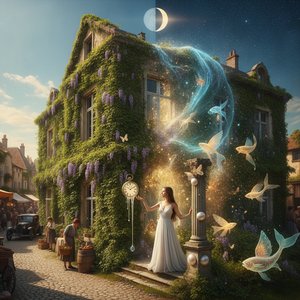
Antonio López García – The Father of Madrileño Hyperrealism
Antonio López García (Tomelloso, Ciudad Real, ur. 6 stycznia 1936) – malarz i rzeźbiarz, jeden z najważniejszych współczesnych artystów hiszpańskich. Reprezentant realizmu, który dzięki wiernemu odwzorowaniu i realności w swoich dziełach, jest określany jako ojciec madryckiej szkoły hiperrealizmu.
His early life was marked by a rural upbringing in Tomelloso, where he developed his artistic talent under the guidance of his uncle Antonio López Torres, a local landscape painter. Recognizing his nephew’s innate skill, Uncle Antonio instilled in him the importance of painting from nature and encouraged him to pursue his passion for art.
Early Training and Artistic Foundations
In 1949, at the age of 13, López García moved to Madrid to prepare for entrance exams at the prestigious Real Academia de Bellas Artes de San Fernando. There he completed his Fine Arts official curriculum between 1950 and 1955, earning numerous prizes during his time.
During his studies, he befriended Maria Moreno (whom he later married in 1961), Francisco López Hernández, Amalia Avia, and Isabel Quintanilla. These relationships contributed to the formation of a realist artistic group known as “Los Nuevos Realistas” (The New Realists) in Madrid.
Postwar Isolation and Influences
Madrid’s artistic landscape during the postwar period was largely isolated from the broader international art scene. López García relied on library resources at the academy to learn about contemporary art, gradually discovering artists like Picasso. He particularly admired Velázquez, a constant reference point for his work.
A significant influence on his artistic development came from his 1955 scholarship in Italy, where he traveled with Francisco López Hernández and studied Italian painting from the Renaissance period. This experience profoundly shaped his aesthetic sensibilities, fostering an admiration for masters like Tiepolo, Chardin, Dürer, and Degas.
The Surrealist Phase and Subsequent Developments
By 1957, López García’s work exhibited surreal qualities, characterized by floating figures and objects removed from their original contexts. This fantastical vein persisted until around 1964, demonstrating his willingness to explore diverse artistic styles.
However, a gradual shift occurred as he increasingly focused on the representation of objects independent of narrative content. He stated that “the physical world gained more prestige in my eyes.” The painting “Francisco Carretero and a. López García talking” (1959) exemplifies this move away from surrealism.
Hyperrealism and Persistent Observation
López García is often categorized as a hyperrealist due to the meticulous detail and precision in his depictions. Yet, he transcends mere replication, imbuing his work with emotional depth and artistic interpretation. He consistently portrays everyday subjects – humble people, buildings, plants, cluttered interiors—elevating the mundane through careful observation and skillful execution.
Many of his paintings are worked on for extended periods, sometimes over twenty years, reflecting a dedication to achieving the desired expressive intensity. He aims for “a pictorial reality” equivalent to what he observes. His versatility extends to pencil drawing, oil painting on board, carved wood sculpture, and bas relief in plaster.
Recognition and Legacy
Robert Hughes lauded López García as a master realist, recognizing his exceptional skill and profound understanding of form and light. “El Sol del Membrillo” (1992), Victor Erice’s film inspired by his painting, solidified his place in Spanish cultural history.
He is considered one of Spain's most important living artists, representing a significant contribution to contemporary realism—a testament to his unwavering commitment to portraying the world with accuracy and emotional resonance.



 Zobacz w skali 1:1
 Kup ręcznie malowany obraz
 Wyślij
 Udostępnij
 Szczegóły

 Pobierz plik obrazu
 Podobne obiekty
 RTG
RTG Pokaz slajdów
 Statystyki
 Czytaj więcej






































 Opcja ze szkłem jest dostępna wyłącznie w rozmiarach poniżej 110 cm