Podgląd w skali 1:1 Podgląd AR Przełącz na wydania drukowane Przejdź do wersji cyfrowej Wyślij jako kartkę
Szczegóły dzieła Przewodnik Dodaj do ulubionych Pobierz obraz Podobne obiekty RTG Pokaz slajdów Statystyki

Fruit litho

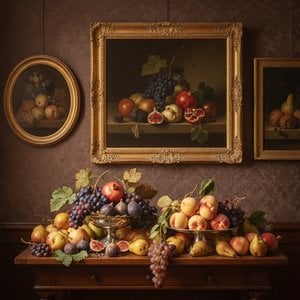
Alphonse Maria Mucha Early artistic talent evident from childhood. Brno Czech Republic 1860 1897 1939 A captivating Art Nouveau lithograph by Alphonse Mucha, featuring a woman adorned in a green dress and holding an abundance of vibrant fruit. This piece showcases Mucha's signature flowing lines, organic forms, and rich color palette – a testament to his mastery of the style. The Slavonic

Alfons Mucha (1860-1939) – czeski grafik i malarz, twórca Art Nouveau! Jego ikoniczne plakaty kobiet oraz monumentalny „Slav Epic” fascynują widzów i przypominają o bogatej historii sztuki słowiańskiej.

Ręcznie malowana reprodukcja olejowa

Ręcznie malowany obraz olejny na płótnie, wykonany na zamówienie przez naszych artystów w wybranym przez Ciebie wymiarze i oprawie. ( Przełącz na wydania drukowane Przejdź do wersji cyfrowej)

Corner sample of the P118B picture frame: polistyren formowany, 5 cm wide and 3 cm thick
P118B zł10
Corner sample of the P118H picture frame: polistyren formowany, 5 cm wide and 3 cm thick
P118H zł10
Corner sample of the P118W picture frame: polistyren formowany, 5 cm wide and 3 cm thick
P118W zł10
Corner sample of the P438Z picture frame: polistyren formowany, 5.5 cm wide and 3.5 cm thick
P438Z zł10
Corner sample of the P508JH picture frame: polistyren formowany, 7 cm wide and 3.5 cm thick
P508JH zł12
Corner sample of the P508YH picture frame: polistyren formowany, 7 cm wide and 3.5 cm thick
P508YH zł12
Corner sample of the P805H picture frame: polistyren formowany, 5 cm wide and 3.5 cm thick
P805H zł10
Corner sample of the P805Z picture frame: polistyren formowany, 5 cm wide and 3.5 cm thick
P805Z zł10
Corner sample of the P919BZ picture frame: polistyren formowany, 7 cm wide and 3.5 cm thick
P919BZ zł10
Corner sample of the P919G picture frame: polistyren formowany, 7 cm wide and 3.5 cm thick
P919G zł10
Corner sample of the P919XJ picture frame: polistyren formowany, 7 cm wide and 3.5 cm thick
P919XJ zł10
Corner sample of the P959ZH picture frame: polistyren formowany, 5 cm wide and 3 cm thick
P959ZH zł10
Corner sample of the P968JZ picture frame: polistyren formowany, 6 cm wide and 4 cm thick
P968JZ zł12
Corner sample of the W106C picture frame: lite drewno, 5 cm wide and 3 cm thick
W106C zł8
Corner sample of the W218G picture frame: lite drewno, 5 cm wide and 3 cm thick
W218G zł10
Corner sample of the W218JH picture frame: lite drewno, 5 cm wide and 3 cm thick
W218JH zł8
Corner sample of the W218Y picture frame: lite drewno, 5 cm wide and 3 cm thick
W218Y zł10
Corner sample of the W307PJ picture frame: lite drewno, 6 cm wide and 3 cm thick
W307PJ zł10
Corner sample of the W316G picture frame: lite drewno, 6 cm wide and 3 cm thick
W316G zł10
Corner sample of the W316PJ picture frame: lite drewno, 6 cm wide and 3 cm thick
W316PJ zł8
Corner sample of the W316Y picture frame: lite drewno, 6 cm wide and 3 cm thick
W316Y zł10
Corner sample of the W398PJ picture frame: lite drewno, 5 cm wide and 3 cm thick
W398PJ zł8
Corner sample of the W4111J picture frame: lite drewno, 6.5 cm wide and 3.5 cm thick
W4111J zł10
Corner sample of the W500HY picture frame: lite drewno, 7 cm wide and 5 cm thick
W500HY zł15
Corner sample of the W500JH picture frame: lite drewno, 7 cm wide and 5 cm thick
W500JH zł15
Corner sample of the W692G picture frame: lite drewno, 8 cm wide and 4 cm thick
W692G zł12
Corner sample of the W849H picture frame: lite drewno, 5 cm wide and 3 cm thick
W849H zł8
Corner sample of the W940BG picture frame: lite drewno, 7.5 cm wide and 4.5 cm thick
W940BG zł15
Corner sample of the W953PJ picture frame: lite drewno, 6 cm wide and 3.5 cm thick
W953PJ zł8

Standardowy format
personalizowane
CM
INCH

Wybierz spośród naszych standardowych rozmiarów, które zachowują oryginalne proporcje dzieła sztuki.

szerokość
wysokość

Wpisz wymaganą szerokość i wysokość, aby obraz pasował do Twojej ramy lub ściany. Ponieważ jest to dzieło malowane ręcznie, w przypadku rozmiaru o innych proporcjach artysta może domalować nieco więcej wokół obrazu lub przyciąć jego fragmenty — wybór należy do Ciebie. Przed rozpoczęciem pracy prześlemy Ci cyfrową wizualizację do zatwierdzenia. Obraz widoczny na tej stronie nie przedstawia rzeczywistego efektu — jedynie wizualizacja oddaje realny rezultat.

Przykłady możliwych zmian: Zamień twarz na zdjęcie klienta; Dodaj zwierzę domowe (np. zamień kota na psa); Ukryj wiadomość w tle; Zmień krajobraz lub elementy tła.
Po złożeniu zamówienia zespół WahooArt.com skontaktuje się z klientem drogą mailową w celu uzyskania instrukcji i prześle wizualizację projektu

Dostawa na całym świecie () w ciągu 3–4 tygodni zamiast standardowych 5 tygodni. (25 Październik). Bez kompromisów w kwestii jakości.

Bezpłatna ekspresowa wysyłka na cały świat
Wysokiej jakości płótno lniane
Pełne ubezpieczenie przesyłki
Gwarancja zwrotu należności celnych i podatków importowych
Gwarancja wiernego odwzorowania kolorów
100-dniowa polityka zwrotów (tylko w przypadku wad)
Gwarancja 100% zwrotu pieniędzy
Zniżka przy zakupie wielu sztuk

Suma całkowita

zł 1044

Fruit litho

Technika reprodukcji

Wymiary reprodukcji

-

Cena całkowita

zł 1044

Najważniejsze informacje

  • Notable elements: Fruit abundance
  • Year: 1897
  • Artistic style: Organic forms, flow
  • Title: Fruit litho
  • Dimensions: 44 x 66 cm

Quiz o sztuce

Do każdego pytania dotyczy tylko jedna poprawna odpowiedź.

Pytanie 1:
Which artistic movement is most closely associated with Alphonse Mucha’s style, as exemplified by this ‘Fruit Litho’?
Pytanie 2:
The painting prominently features a woman holding fruit. What is a common characteristic of Mucha’s depictions of women?
Pytanie 3:
In what year was this artwork created?
Pytanie 4:
The color palette of the ‘Fruit Litho’ is characterized by which of the following?
Pytanie 5:
Alphonse Mucha’s early artistic education took place at:

A Moment of Abundance: Mucha’s ‘Fruit Litho’ – A Window into Art Nouveau

This exquisite 1897 lithograph by Alphonse Maria Mucha, measuring 44 x 66 cm, offers a captivating glimpse into the heart of Art Nouveau. More than just a depiction of fruit, it's an embodiment of the movement’s core tenets – a celebration of natural forms, flowing lines, and a profound sense of romanticism. The painting portrays a woman, elegantly dressed in a vibrant green gown, surrounded by a profusion of apples. These aren’t merely scattered objects; they are carefully arranged to create a visual symphony of color and texture, dominated by rich reds, oranges, yellows, and greens that evoke the bounty of autumn and the idealized beauty Mucha so often sought to capture.

The Artist's Vision: Mucha and the Prague Studio

Born in Brno, Czech Republic, in 1860, Alphonse Maria Mucha’s artistic journey began with a traditional education at the Academy of Fine Arts in Prague. However, he quickly recognized the limitations of academic constraints, seeking instead to forge his own path. His relocation to Paris in 1887 proved pivotal, allowing him to immerse himself within the burgeoning Parisian art scene and ultimately develop his signature Art Nouveau style. Mucha’s work was frequently commissioned for posters and decorative panels, reflecting a desire to integrate art into everyday life – a key principle of the movement. His studio became a hub for talented artisans, including illustrators and designers, contributing to the widespread dissemination of his aesthetic.

Symbolism and Technique: A Dance of Line and Color

Mucha’s technique is immediately recognizable through its fluid lines and meticulous attention to detail. The lithograph showcases a masterful use of shading and texture, creating an almost tactile quality within the image. Notice how the apples themselves are rendered with a delicate realism, yet possess an inherent sense of movement – a hallmark of Art Nouveau's fascination with natural forms in motion. The woman’s pose is deliberately graceful, echoing the flowing drapery so characteristic of Mucha’s work and reflecting the influence of artists like Pierre-Auguste Renoir. The bowl of fruit isn’t simply a still life; it represents abundance, fertility, and perhaps even a subtle allusion to classical themes of plenty – frequently explored in Art Nouveau.

Historical Context: A Flowering of Style

Created in 1897, ‘Fruit Litho’ sits squarely within the peak of Mucha's artistic prominence. This period coincided with the success of his 'Salon des Cent' exhibition in 1898, which catapulted him to international fame and solidified his reputation as a leading figure in Art Nouveau. The piece reflects the broader cultural trends of the late 19th century – a reaction against industrialization and a renewed interest in decorative arts and craftsmanship. It’s a testament to Mucha's ability to synthesize classical influences with modern sensibilities, creating an image that is both timelessly beautiful and deeply rooted in its historical context. This lithograph offers a tangible connection to a pivotal moment in art history, inviting viewers to experience the elegance and enchantment of Alphonse Maria Mucha’s vision.

Pytania i odpowiedzi

Z której epoki pochodzi "Fruit litho"?

"Fruit litho" pochodzi z epoki 19th Century.

Czy "Fruit litho" wpisuje się w typową tematykę twórczości Alfons Mucha?

Powracające motywy w twórczości Alfons Mucha obejmują czech art nouveau influence, idealized feminine beauty, symbolic fruit imagery, salon des cent style, recurring female figures; „Fruit litho” koncentruje się na fruit abundance, woman figure, art nouveau style, color palette, mucha artwork, still life scene, idealized woman.

W którym roku i w ramach jakiego nurtu powstało dzieło "Fruit litho"?

„Fruit litho” – Alfons Mucha datowane jest na 1897 rok i reprezentuje nurt Art Nouveau.


Biografia artysty

Wczesne Lata i Edukacja

Alphonse Maria Mucha urodził się 15 lipca 1860 roku w Ivancice, małym miasteczku w Morawskiej Brandenburgii (dzisiejsza Czechia). Już od najmłodszych lat wykazując talent artystyczny, Mucha fascynował się malarstwem i dekoracjami. Początkowo uczył się rysunku samodzielnie, a następnie studiował na Akademii Sztuk Pięknych w Pradze, choć szybko znużyło go tradycyjne podejście do sztuki. W 1887 roku przeniósł się do Paryża, aby realizować swoje własne wizje artystyczne i odnaleźć swój unikalny styl.

Styl Artystyczny i Znaczące Dzieła

Muchy twórczość charakteryzuje się wyjątkowym stylem Art Nouveau – secesją, który łączy w sobie eleganckie linie, organiczne formy i wrażenie ruchu. Był pod wpływem takich artystów jak Pierre-Auguste Renoir i Gustave Moreau, a jego prace często odzwierciedlają piękno i delikatność, które były popularne w tamtych czasach. Jednym z najbardziej rozpoznawalnych elementów jego stylu jest przedstawianie idealizowanych kobiet w płynnych szatach, otoczonych bujnymi kwiatami i liśćmi – symbolami kobiecości, natury i piękna. Mucha był mistrzem w tworzeniu kompozycji, które emanowały harmonią i subtelnym wdziękiem.

Do jego najważniejszych dzieł należą:

  • Powstanie Słowiańskie – obraz, który łączy tradycyjne motywy słowiańskie z nowoczesnymi elementami Art Nouveau, ukazując bogatą historię i kulturę regionu.
  • Salon des Cent – monumentalna instalacja wystawowa, która zapoczątkowała jego międzynarodową karierę.
  • Obrazy inspirowane dziełami Gustava Moreau, takimi jak Córki Tespia i Szaleńczą Drużynę Gobelinów – świadectwo jego fascynacji symbolizmem i literaturą.
  • Ilustracje oparte na obrazie Młyniarki Leniny autorstwa Sir Huberta von Herkomera – przykład połączenia sztuki i codziennego życia.

Sukces z Sarah Bernhardt

Przełom w karierze Muchy nastąpił dzięki współpracy z słynną aktorką Sarah Bernhardt. W 1894 roku zaprojektował dla niej plakat do spektaklu Gismonda, który natychmiast stał się hitem i zapewnił mu uznanie publiczne oraz możliwość dalszej pracy z Bernhardt. Wraz z aktorką stworzył serię efektownych plakatów, które stały się synonimem Art Nouveau w Paryżu. Współpraca ta nie tylko przyniosła mu sławę, ale także otworzyła drogę do realizacji ambitnych projektów artystycznych.

Wsparcie Charlesa Richarda Crane’a i Slav Epic

W 1903 roku Mucha otrzymał wsparcie finansowe od amerykańskiego przemysłowca Charlesa Richarda Crane'a, który był pasjonatem kultury słowiańskiej. Dzięki temu mógł podjąć się monumentalnego projektu – stworzenia serii 20 obrazów przedstawiających epikę słowiańską, znanej jako Slav Epic (1912-1930). Praca nad tymi dziełami zajęła mu wiele lat i stała się jego najważniejszym osiągnięciem artystycznym. Slav Epic to nie tylko monumentalne dzieło sztuki, ale także świadectwo pasji Muchy do historii i kultury swojego regionu.

Późniejsze Lata i Dziedzictwo

Po I wojnie światowej Mucha kontynuował swoją twórczość, projektując znaczki pocztowe, banknoty oraz dokumenty rządowe dla nowo powstałej Czechosłowacji. Zmarł 14 lipca 1939 roku w Pradze, pozostawiając po sobie bogate dziedzictwo artystyczne i wpływ na rozwój Art Nouveau. Jego prace znajdują się w muzeach i kolekcjach na całym świecie, a jego styl inspiruje kolejne pokolenia artystów.

Alfons Mucha

Alfons Mucha

1860 - 1939 , Czechy

Krótka nota

  • Artistic Movement Or Style: Secesja, Art Nouveau
  • Artists Or Movements Influenced By This Artist:
    • Pro-Rafaelská škola
    • Rossetti
  • Artists Who Influenced This Artist:
    • Renoir
    • Moreau
  • Date Of Birth: 15 lipca 1860
  • Full Name: Alphonse Maria Mucha
  • Nationality: Czeski
  • Notable Artworks:
    • Slavský vzpour
    • Salon des Cent
    • Dcery Tespia
    • La Ribambelle des Gobelins
    • Rozklaďáci
  • Place Of Birth: Brno, Czechy