


 PastelWallArt
 189819th Century
 8.0 x 7.0 cm
 Metropolitan Museum of Art
Ręcznie malowany obraz olejny na płótnie, wykonany na zamówienie przez naszych artystów w wybranym przez Ciebie wymiarze i oprawie. ( Zamów wydruk Kup obraz wysokiej rozdzielczości)





























Wybierz spośród naszych standardowych rozmiarów, które zachowują oryginalne proporcje dzieła sztuki.

Możesz wprowadzić własne wymiary, aby dopasować obraz do konkretnej ramy lub przestrzeni. Jeśli wybrany rozmiar nie będzie odpowiadał proporcjom oryginału, przytniecie dzieło sztuki lub rozszerzymy je o dodatkowe elementy, ręcznie domalowane przez artystę. Przed rozpoczęciem produkcji wyślemy projekt cyfrowy do Twojej akceptacji.
Należy pamiętać, że podgląd na ekranie nie odzwierciedla rzeczywistego przycinania ani rozszerzania obrazu. Tylko projekt dokładnie pokaże ostateczną kompozycję.
Choć oferujemy możliwość zamówienia niestandardowych rozmiarów, zalecamy wybór wymiaru z gotowej listy, aby zachować oryginalne proporcje dzieła.
Dostawa na całym świecie () w ciągu 3–4 tygodni zamiast standardowych 5 tygodni. (6 Wrzesień). Bez kompromisów w kwestii jakości.


Miss T.
Wymiary reprodukcji

In the grand tapestry of American art history, few threads are as finely woven or as exquisitely detailed as those spun by Alice Beckington. Born in St. Charles, Missouri, on July 30, 1868, Beckington emerged from the American Midwest to become a luminous figure in the specialized world of miniature portraiture. Her journey was one of profound movement—from the burgeoning artistic energy of New York to the prestigious ateliers of Paris, and eventually to the serene summer colonies of Massachusetts. This geographical and cultural odyssey allowed her to synthesize American sensibility with the refined technical mastery of the French tradition, creating a body of work that captures the intimate essence of her subjects with unparalleled grace.
Beckington’s artistic foundation was laid at the Art Students League of New York, where she studied under the guidance of influential masters such as J. Carroll Beckwith and Kenyon Cox. These early mentors provided her with a rigorous understanding of form and classical composition. However, it was her subsequent pilgrimage to Paris that would truly refine her hand. Immersed in the atmosphere of the Académie Julian, she learned under luminaries like Jules Joseph Lefebvre and Jean-Joseph Benjamin-Constant. It was within the studio of Charles Lasar that Beckington found her true calling: the delicate, demanding medium of miniature painting. This period in France instilled in her an appreciation for the subtle interplay of light and color, a hallmark of the Impressionistic influences that would permeate her more expansive works.
To look upon a Beckington miniature is to witness a triumph of patience and precision. Working often with watercolor on ivory, she possessed the rare ability to breathe life into minuscule surfaces, capturing the soulful gaze of a sitter or the soft texture of lace with breathtaking clarity. Her technical prowess was not merely a personal achievement but a professional standard that she sought to elevate within the American art community. As a founder and long-serving president of the American Society of Miniature Painters, she played a pivotal role in legitimizing the medium and fostering a community for fellow miniaturists.
Her career was marked by significant accolades that recognized her skill on both domestic and international stages:
Beyond her individual triumphs, Beckington was a vital part of the Scituate Art Colony in Massachusetts, a vibrant gathering of women artists who sought to create a unique seasonal community. Alongside peers such as Theodora W. Thayer, she contributed to a movement that blended professional rigor with a shared social identity. Her influence also extended to the next generation; from 1905 to 1916, she served as an instructor at the Art Students League, passing on the secrets of miniature painting to aspiring talents.
The works of Alice Beckington reside today in some of the world's most esteemed institutions, serving as enduring witnesses to her artistry. The Metropolitan Museum of Art holds precious examples of her skill, such as her poignant 1913 watercolor portrait of her mother, while the Smithsonian American Art Museum preserves portraits of her pupils, reflecting her role as both artist and mentor. Her ability to capture the ephemeral—a fleeting expression, a soft shadow, a momentary glance—ensures that her legacy remains as vibrant as the pigments she once carefully applied to ivory.
Though she passed away in La Jolla, California, in 1942, the historical significance of Beckington cannot be overstated. She was more than a painter of small things; she was a pioneer who navigated the complexities of being a woman artist in a changing era, carving out a space for herself through sheer technical brilliance and institutional leadership. Her life remains a testament to the power of detail, proving that even within the smallest frame, an artist can capture the vastness of the human spirit.

1868 - 1942 , United States of America
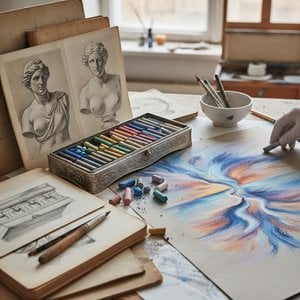
Explore the ethereal beauty of pastel art. Discover how Impressionist masters used soft hues and velvety textures to capture light. A professional guide for art enthusiasts seeking to understand, collect, and appreciate the delicate magic of this timeless medium.

Elevate your artistic practice with this expert guide to mastering the line. Discover advanced techniques in graphite, charcoal, and contour drawing designed for art students seeking technical precision and expressive depth in their fine art studies.

 Podgląd w skali
 Wyślij jako kartkę
 Udostępnij
 Szczegóły dzieła

 Pobierz
 Podobne obiekty
 RTG
RTG Pokaz slajdów
 Rozwiń treść







 Opcja ze szkłem jest dostępna wyłącznie w rozmiarach poniżej 110 cm


