Zobacz w skali 1:1 Zobacz w AR Przełącz na wersję drukowaną Przełącz na wersję cyfrową Wyślij
Szczegóły Guide Dodaj do ulubionych Pobierz plik obrazu Podobne obiekty RTG Pokaz slajdów Statystyki

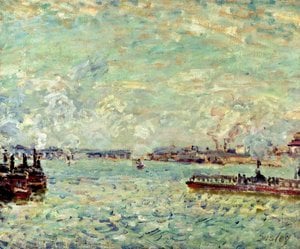
Grand Jatte

Sisley was born in Paris to British parents and spent his life immersed in capturing the beauty of French landscapes. His work is characterized by soft colors, delicate brushstrokes, and an emphasis on capturing the effects of light.

Alfred Sisley – francuski impresjonista, mistrz spokojnych krajobrazów i rzek. Uchwycił ulotne światło Francji z delikatną precyzją. Odkryj jego piękno!

Ręcznie malowana reprodukcja olejowa

Ręcznie malowany obraz olejny na płótnie, wykonany na zamówienie przez naszych artystów w wybranym przez Ciebie wymiarze i oprawie. ( Przełącz na wersję drukowaną Przełącz na wersję cyfrową)

P118B $10
P118H $10
P118W $10
P438Z $10
P508JH $12
P508YH $12
P805H $10
P805Z $10
P919BZ $10
P919G $10
P919XJ $10
P959ZH $10
P968JZ $12
W106C $8
W218G $10
W218JH $8
W218Y $10
W307PJ $10
W316G $10
W316PJ $8
W316Y $10
W398PJ $8
W4111J $10
W500HY $15
W500JH $15
W692G $12
W849H $8
W940BG $15
W953PJ $8

Standardowy
na zamówienie
CM
INCH

Wybierz spośród naszych standardowych rozmiarów, które zachowują oryginalne proporcje dzieła sztuki.

szerokość
wysokość

Możesz wprowadzić własne wymiary, aby dopasować obraz do konkretnej ramy lub przestrzeni. Jeśli wybrany rozmiar nie będzie odpowiadał proporcjom oryginału, przytniecie dzieło sztuki lub rozszerzymy je o dodatkowe elementy, ręcznie domalowane przez artystę. Przed rozpoczęciem produkcji wyślemy projekt cyfrowy do Twojej akceptacji.
Należy pamiętać, że podgląd na ekranie nie odzwierciedla rzeczywistego przycinania ani rozszerzania obrazu. Tylko projekt dokładnie pokaże ostateczną kompozycję.
Choć oferujemy możliwość zamówienia niestandardowych rozmiarów, zalecamy wybór wymiaru z gotowej listy, aby zachować oryginalne proporcje dzieła.

Przykłady możliwych zmian: Zamień twarz na zdjęcie klienta; Dodaj zwierzę domowe (np. zamień kota na psa); Ukryj wiadomość w tle; Zmień krajobraz lub elementy tła.
Po złożeniu zamówienia zespół WahooArt.com skontaktuje się z klientem drogą mailową w celu uzyskania instrukcji i prześle wizualizację projektu

Dostawa na całym świecie () w ciągu 3–4 tygodni zamiast standardowych 5 tygodni. (21 Wrzesień). Bez kompromisów w kwestii jakości.

why_choose_icon
Bezpłatna ekspresowa wysyłka na cały świat
why_choose_icon
Wysokiej jakości płótno lniane
why_choose_icon
Pełne ubezpieczenie transportowe
why_choose_icon
Gwarancja zwrotu należności celnych i podatków importowych
why_choose_icon
Gwarancja idealnego odwzorowania barw
why_choose_icon
100-dniowy okres na zwrot dzieła w przypadku wykrycia wad produkcyjnych
why_choose_icon
Gwarancja 100% zwrotu pieniędzy
why_choose_icon
Oferta przy zakupie wielu sztuk

Cena całkowita

$ 272

reproduction

Grand Jatte

Technika wykonania

Rozmiar reprodukcji

-

Suma do zapłaty

$ 272

Kluczowe informacje

  • Medium: Oil on canvas
  • Notable elements: River scene, people, horse
  • Location: Musée d'Orsay, Paris
  • Year: 1873
  • Artistic style: Soft colors, brushstrokes
  • Artist: Alfred Sisley
  • Influences: Light and landscape

Quiz wiedzy o sztuce

Do każdego pytania dotyczy tylko jedna poprawna odpowiedź.

Pytanie 1:
Alfred Sisley is most closely associated with which artistic movement?
Pytanie 2:
The painting 'Grand Jatte' primarily depicts:
Pytanie 3:
What is a key characteristic of Alfred Sisley's artistic style, as described in the text?
Pytanie 4:
The presence of a horse in 'Grand Jatte' suggests which aspect of the scene?
Pytanie 5:
Alfred Sisley's dual heritage (British-French) had what impact on his life?

A Moment of Rural Tranquility: Exploring Alfred Sisley’s Grand Jatte

The Musée d'Orsay holds within its walls a treasure that embodies the very essence of Impressionism – Alfred Sisley’s Grand Jatte. Painted in 1873, this seemingly simple depiction of a riverside scene is far more than just a landscape; it’s a carefully constructed tableau of light, atmosphere, and quiet observation, inviting us into a fleeting moment of rural serenity. Sisley, born in Paris to British parents, navigated a life that straddled two cultures, ultimately finding his true home and artistic voice within the vibrant heart of France. His dual heritage subtly informed his perspective, lending a certain understated elegance to his work – an appreciation for both the bustling energy of urban life and the profound peace of the countryside.

Sisley’s genius lay in his ability to capture the ephemeral qualities of light and color. He wasn't interested in rendering precise details or dramatic narratives; instead, he sought to convey the *feeling* of a place and time. His technique is characterized by loose, broken brushstrokes – almost shimmering fragments of paint applied with remarkable delicacy. Notice how he uses short, quick strokes to depict the dappled sunlight filtering through the trees, creating an illusion of movement and vibrancy. The colors are muted yet luminous, dominated by soft blues, greens, and ochres, reflecting the hazy atmosphere of a summer afternoon. This deliberate avoidance of sharp outlines and heavy modeling is a hallmark of Impressionism, prioritizing the subjective experience of perception over objective representation.

The Scene Unfolds: Composition and Narrative

Grand Jatte presents a scene brimming with subtle narrative possibilities. A modest house nestles beside the riverbank, suggesting a simple rural existence. Scattered throughout the composition are figures – men engaged in conversation, a young girl playing, and a horse tethered nearby – each seemingly absorbed in their own quiet pursuits. The arrangement isn’t overtly staged; it feels like a snapshot of everyday life, observed with an artist's discerning eye. There is a sense of gentle leisure, a suggestion that these individuals are taking a moment to appreciate the beauty of their surroundings. The horse, a common sight in rural France, adds to the authenticity and reinforces the painting’s connection to the land.

Interestingly, the title "Grand Jatte" refers to a type of Parisian pleasure boat, often used for leisurely excursions along the Seine. Sisley's choice of this term subtly elevates the scene beyond a mere landscape; it imbues it with an air of sophistication and social grace. The painting isn’t about grand events or heroic deeds; it’s about the quiet pleasures of rural life – a picnic, a conversation, a moment of connection with nature.

Impressionism's Echoes: Context and Influence

Grand Jatte was created during a pivotal period in art history—the rise of Impressionism. Sisley’s work exemplifies the movement’s core tenets: an emphasis on capturing fleeting moments, the subjective experience of light and color, and a rejection of traditional academic painting conventions. He shared a studio with Monet and Pissarro, engaging in lively discussions about technique and artistic vision. This exchange undoubtedly influenced his own approach, contributing to the distinctive character of his landscapes.

The painting’s popularity reflects the broader appeal of Impressionism – its ability to evoke emotion and capture the beauty of everyday life. It's a testament to Sisley’s skill that he could transform such a seemingly simple subject into a work of profound artistic merit, offering viewers a glimpse into a world of tranquility and understated elegance.

Bringing Grand Jatte Home: A High-Quality Reproduction

At WahooArt.com, we are proud to offer meticulously crafted reproductions of Alfred Sisley’s Grand Jatte. Our team of skilled artists painstakingly recreates the painting's delicate brushstrokes and nuanced color palette using only the finest archival materials. Each reproduction is a faithful representation of the original, capturing not just its visual appearance but also its emotional resonance.

Whether you’re an art collector, an interior designer seeking to add a touch of Impressionistic charm, or simply someone who appreciates the beauty of this timeless masterpiece, our Grand Jatte reproduction provides a stunning and accessible way to bring a piece of art history into your home. Explore our selection today: https://WahooArt.com/art/list/?Filter=8DNV6E-Alfred-Sisley-Grand-Jatte


Biografia artysty

A Life Immersed in Light and Landscape

Alfred Sisley, a name often whispered alongside those of Monet, Renoir, and Pissarro, occupies a unique and profoundly beautiful space within the Impressionist movement. Born in Paris on October 30, 1839, to British parents—William Sisley, a silk merchant, and Felicia Sell, a music enthusiast—he carried a dual heritage that subtly informed his artistic vision. Though he would spend nearly his entire life in France, Sisley retained British citizenship, a fact that brought him personal disappointment later in life when applying for French naturalization was refused. His early years were comfortably bourgeois, affording him the opportunity to pursue studies initially intended for a commercial career in London at the age of eighteen. However, the allure of art proved too strong, and he returned to Paris in 1861, embarking on formal training under Swiss artist Marc-Charles-Gabriel Gleyre at the École des Beaux-Arts. It was here, amidst the burgeoning artistic ferment of the era, that Sisley forged crucial friendships with Monet, Renoir, and Bazille—relationships that would profoundly shape his artistic trajectory. These companions shared a rebellious spirit, rejecting the rigid conventions of academic painting in favor of capturing the fleeting effects of light and atmosphere directly from nature.

The Quiet Master of Impressionism

Sisley’s dedication to *plein air* painting—working outdoors, directly observing the natural world—was unwavering. Unlike some of his contemporaries who experimented with diverse genres, Sisley remained steadfastly committed to landscape throughout his career. This focused devotion allowed him to refine a distinctive style characterized by tranquility, delicate color palettes, and a subtle rendering of light. His canvases are often awash in pale shades of green, pink, purple, dusty blue, and cream, creating an atmosphere of serene contemplation. While the early works remain largely lost to time, his mature paintings reveal a meticulous observation of nature combined with a poetic sensibility. He wasn’t interested in grand narratives or dramatic gestures; instead, he found beauty in the everyday—in the gentle flow of rivers, the dappled light filtering through trees, and the quiet charm of rural life. His early struggles for recognition were compounded by his father's financial difficulties following the Franco-Prussian War in 1870, forcing Sisley to rely solely on the sale of his art for sustenance—a precarious existence that shadowed much of his career. He was a true Impressionist, but one who often labored in relative obscurity during his lifetime.

Rivers, Canals, and the Essence of Place

Recurring themes permeate Sisley’s oeuvre, most notably his fascination with water. River landscapes became a signature subject, exemplified by his series of paintings created during a trip to England in 1874 along the Thames near Molesey. These works, capturing the tranquil beauty of the river and its surroundings, are considered among his finest achievements—a “perfect moment of Impressionism,” as art historian Kenneth Clark described them. He also developed a deep connection with Moret-sur-Loing, where he lived for many years, immortalizing its canals, bridges, and surrounding countryside in numerous canvases. Paintings like "Watermill near Moret," "Barges on the Loing Canal, Spring", and “Fields around the Forest” showcase his ability to imbue ordinary scenes with a sense of poetic grace. He didn’t merely depict these places; he captured their *essence*, conveying not just what they looked like but how they felt—the gentle breeze, the warmth of the sun, the quiet murmur of the water. This sensitivity to atmosphere and mood is perhaps Sisley's most enduring legacy.

Influences and a Lasting Legacy

Sisley’s artistic influences were multifaceted. Gleyre’s academic training provided a foundation in technique, while the camaraderie with Monet, Renoir, and Bazille fostered a shared commitment to Impressionist principles. He absorbed their emphasis on capturing fleeting moments of light and atmosphere but developed his own unique voice—one characterized by restraint and subtlety. Though he often labored in relative obscurity during his lifetime, Sisley’s work is now celebrated for its beauty, sensitivity, and unwavering dedication to portraying nature. His influence can be seen in the works of later landscape painters who sought to capture the ephemeral qualities of light and atmosphere with similar nuance. He was a true master of light, atmosphere, and the quiet poetry of the natural world.
  • Major Themes: Landscapes, riverscapes, canals, rural life, atmospheric effects.
  • Key Characteristics: Delicate color palettes, subtle rendering of light, tranquil mood, *plein air* painting.
  • Influences: Marc-Charles-Gabriel Gleyre, Claude Monet, Pierre-Auguste Renoir, Frédéric Bazille, Barbizon school painters.

A Biographical Sketch

Alfred Sisley was born in Paris on October 30, 1839, to affluent British parents. His father, William Sisley, was in the silk business, and his mother, Felicia Sell, was a cultivated music connoisseur. He spent his early years in London, studying for a career in commerce before returning to Paris in 1861 with a fervent desire to pursue art. It was at the École des Beaux-Arts that he encountered Gleyre and formed lasting friendships with Monet, Renoir, and Bazille—artists who shared his passion for capturing the fleeting effects of light and atmosphere. Sisley’s early works, though largely lost, demonstrated an emerging talent for depicting landscapes with a delicate touch and a keen eye for detail. The Franco-Prussian War significantly impacted his life, leading to financial hardship and forcing him to rely on the sale of his paintings for survival. Despite these challenges, he continued to paint tirelessly, developing his signature style—characterized by its tranquil mood, subtle color palettes, and masterful rendering of light. He spent much of his later years in Moret-sur-Loing, where he found inspiration in the surrounding countryside and created some of his most beloved works. Alfred Sisley died on January 29, 1899, in Moret-sur-Loing, leaving behind a legacy as one of the most serene and beautiful Impressionists. His paintings remain cherished for their ability to transport viewers to quiet corners of France—a testament to his lifelong dedication to capturing the essence of light and landscape.

Alfred Sisley

Alfred Sisley

1839 - 1899 , Francja

Najważniejsze informacje

  • Artistic Movement Or Style: Impresjonizm
  • Artists Or Movements Influenced By This Artist: ['Barbizon']
  • Artists Who Influenced This Artist:
    • Gleyre
    • Monet
    • Renoir
  • Date Of Birth: 1839-10-30
  • Date Of Death: 1899-01-29
  • Full Name: Alfred Sisley
  • Nationality: Brytyjsko-Francuz
  • Notable Artworks:
    • Kanał Saint-Martin
    • Mroźny dzień w Louveciennes
    • Regaty w Molesey
  • Place Of Birth: Paryż, Francja
Odkryj dzieła sztuki uporządkowane według tematów, stylów i cech charakterystycznych.