DARMOWA KONSULTACJA ARTYSTYCZNA

x
Zamów reprodukcję Zamów reprodukcjęKup cyfrowy obraz Kup cyfrowy obraz UdostępnijUdostępnij
Szczegóły dziełaSzczegóły dzieła Dodaj do ulubionych Dodaj do ulubionych PobierzPobierz Podobne obiektyPodobne obiekty RTGRTG Pokaz slajdówPokaz slajdów

Étagère

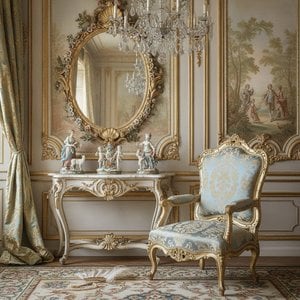
Elegancka francuska etagiera Alexandre Rouxa z XIX wieku – doskonały przykład stylu Rococo Revival. Dekoracja inspirowana XVIII wiecznym Paryżem, bogate ornamenty i lustro podkreślają piękno sztuki.

Alexandre Roux (1813-1886) was a renowned French cabinetmaker in New York, celebrated for exquisite Rococo Revival furniture. Discover his ornate designs & American Victorian masterpieces. #cabinetmaking #RococoRevival #VictorianFurniture

Giclée / Wydruk artystyczny

Druk giclée lub płótno o jakości muzealnej z szybką realizacją i szerokim wyborem opcji wykończenia.

P118B $10
P118H $10
P118W $10
P438Z $10
P508JH $12
P508YH $12
P805H $10
P805Z $10
P919BZ $10
P919G $10
P919XJ $10
P959ZH $10
P968JZ $12
W106C $8
W218G $10
W218JH $8
W218Y $10
W307PJ $10
W316G $10
W316PJ $8
W316Y $10
W398PJ $8
W4111J $10
W500HY $15
W500JH $15
W692G $12
W849H $8
W940BG $15
W953PJ $8

Standard
custom
CM
INCH

Wybierz spośród naszych predefiniowanych rozmiarów, które zachowują oryginalne proporcje dzieła sztuki.

szerokość
wysokość

Możesz wprowadzić własne wymiary, aby dopasować dzieło do konkretnej ramy lub przestrzeni. Jeśli wybrany rozmiar nie będzie odpowiadał proporcjom oryginalnego obrazu, przytniecie dzieło lub rozszerzymy obraz za pomocą odbicia lustrzanego lub jednolitego wypełnienia krawędzi. Przed rozpoczęciem produkcji prześlemy cyfrową wizualizację do Twojej akceptacji.
Prosimy pamiętać, że podgląd na ekranie nie odzwierciedla faktycznego przycinania ani rozszerzania. Tylko wizualizacja dokładnie pokaże końcową kompozycję.
Mimo dostępności niestandardowych rozmiarów, zalecamy wybór wymiaru z listy zdefiniowanej, aby zachować oryginalne proporcje.

Dostawa na cały świat () w ciągu 2 tygodni zamiast standardowych 4/5 tygodni. (12 Lipiec)

why_choose_icon
Bezpłatna ekspresowa wysyłka na cały świat
why_choose_icon
Wysokiej jakości płótno lniane
why_choose_icon
Pełne ubezpieczenie przesyłki
why_choose_icon
Gwarancja zwrotu należności celnych
why_choose_icon
Gwarancja pełnego zgodności kolorystycznej
why_choose_icon
Polityka 60-dniowego zwrotu (tylko w przypadku wad)
why_choose_icon
Gwarancja 100% zwrotu pieniędzy
why_choose_icon
Zniżka przy większych zamówieniach

Suma całkowita

-

reproduction

Étagère

Giclée / Wydruk artystyczny

Wymiary reprodukcji

-

Cena całkowita

-

Szybkie fakty

  • Notable elements or techniques: Intricate carvings; Glazing techniques
  • Subject or theme: Furniture decoration; Symbol of affluence
  • Artist: alexandre roux
  • Location: The Metropolitan Museum of Art
  • Dimensions: 86 x 79 1/2 x 31 3/4 in.
  • Title: Étagère
  • Influences: French Régence models

Quiz o sztuce

Na każde pytanie istnieje tylko jedna poprawna odpowiedź.

Pytanie 1:
What artistic style is prominently featured in Alexandre Roux’s étagère?
Pytanie 2:
The étagère at the Metropolitan Museum of Art shares a striking similarity with what other piece of furniture?
Pytanie 3:
What materials were primarily used in constructing Alexandre Roux’s étagère?
Pytanie 4:
The photograph depicts the étagère in what type of setting?
Pytanie 5:
What was a characteristic feature of Rococo Revival style furniture during the mid-nineteenth century?

Opis obiektu kolekcjonerskiego

Étagère – A Reflection of Rococo Elegance

The photograph depicts Alexandre Roux’s étagère—a masterpiece of French Rococo Revival style—displayed within the serene setting of The Metropolitan Museum of Art. This exquisite console table embodies the opulent aesthetic sensibilities of mid-nineteenth century America, capturing a moment frozen in time and reflecting the enduring fascination with aristocratic grandeur. Its meticulous craftsmanship speaks volumes about the artistic fervor of its era, transporting viewers back to a period defined by lavish ornamentation and refined taste.
  • Artist: Alexandre Roux
  • Born Year: 1813
  • Death Year: 1886
  • Birth City: Paris
  • Birth Country: France

Alexandre Roux’s journey began in the bustling ateliers of Paris, where he honed his skills as a cabinetmaker—a craft steeped in tradition and demanding unwavering precision. However, Roux's ambition extended beyond national borders; recognizing the burgeoning artistic landscape of America, he embarked on an audacious transatlantic voyage in 1844, establishing himself as a prominent figure in New York’s burgeoning furniture design scene.

Roux’s legacy isn’t merely one of technical prowess—though his mastery of woodworking is undeniable. Rather, it resides in his unwavering devotion to the Rococo Revival style—a movement that resurrected the flamboyant curves and floral motifs characteristic of eighteenth-century France. This stylistic choice profoundly influenced the interiors of affluent American homes during Roux's lifetime, shaping perceptions of beauty and sophistication.

Detailed Analysis: Form & Technique

The étagère itself is constructed primarily from rosewood, chestnut, poplar, and bird’s-eye maple—materials prized for their rich grain patterns and ability to achieve exceptional smoothness when polished. Roux’s artisans employed meticulous glazing techniques to imbue the wood surface with luminosity, enhancing its visual appeal and mirroring the ethereal glow of candlelight within aristocratic salons.

The table's design incorporates sweeping curves—particularly in the legs and decorative supports—creating a dynamic asymmetry that contrasts sharply with the rectangular shape of the shelves. These curvilinear forms echo the undulating lines favored by Rococo artists, symbolizing grace, movement, and an idealized vision of nature. Furthermore, intricate carvings adorn every surface, depicting stylized floral blossoms and cherubic figures—symbols of fertility, prosperity, and divine benevolence.

Historical Context & Symbolism

The Rococo Revival style emerged in the wake of the Napoleonic Wars, representing a deliberate reaction against the austere neoclassical ideals that had dominated European art and architecture for decades. Roux’s embrace of this aesthetic signaled a yearning for sensory pleasure—a desire to recapture the opulent splendor of the French monarchy and its court.

The étagère served as more than just a decorative object; it functioned as a visual declaration of status—a tangible emblem of wealth and refinement. Displayed prominently in grand parlors, it proclaimed the owner’s membership within the elite social stratum, reflecting the values of aristocratic culture: elegance, beauty, and erudition.

Emotional Resonance & Aesthetic Impact

Looking upon Roux’s étagère evokes a profound sense of nostalgia—a wistful contemplation of a bygone era characterized by unparalleled artistic achievement. Its meticulous craftsmanship and harmonious proportions inspire admiration for the skill and artistry of its creator, reminding us that beauty transcends time.

The piece embodies the Rococo Revival's core ethos: an idealized representation of nature infused with mythological symbolism—a testament to human creativity’s capacity to elevate the mundane into something sublime. It stands as a timeless exemplar of decorative art, continuing to captivate viewers with its exquisite detail and enduring elegance.

Size & Date

Unknown

Unknown

Podobne dzieła sztuki


Biografia artysty

Alexandre Roux: The Parisian Cabinetmaker Who Shaped American Style

Born in the heart of Paris in 1813, Alexandre Roux’s journey from a skilled craftsman to a celebrated furniture maker in New York City is a testament to ambition, talent, and an astute understanding of evolving aesthetic tastes. Initially trained within the traditional workshops of his native France, Roux’s career took a pivotal turn when he immigrated to America in 1844, establishing himself as a prominent figure in the burgeoning world of American furniture design. His legacy isn't defined by grand, revolutionary movements but rather by a consistent dedication to exquisite detail and a masterful command of the Rococo Revival style – a style that profoundly influenced the interiors of wealthy homes across the United States during the mid-19th century.

Roux’s early life instilled in him a deep appreciation for craftsmanship. While specific details about his family are scarce, it's clear he was raised within a lineage of artisans, absorbing techniques and an inherent understanding of materials. This foundation proved invaluable as he navigated the challenges of establishing a business in a new country. New York City, with its rapid growth and influx of European immigrants, presented both opportunities and competition. Roux quickly distinguished himself through his commitment to quality, utilizing premium materials like black walnut and incorporating intricate carvings that echoed the elegance of 18th-century France. His workshops became renowned for producing furniture that was not merely functional but also a statement of refined taste – a direct reflection of the Rococo Revival’s emphasis on ornamentation, curves, and luxurious finishes.

Notable Works and Artistic Style

Roux's work is characterized by an almost obsessive attention to detail. He wasn’t simply replicating historical styles; he was interpreting them with a distinctly American sensibility. His pieces often featured elaborate motifs – shells, scrolls, floral patterns – meticulously carved into the wood and finished with lustrous varnish. The “Parlor Cabinet,” perhaps his most celebrated creation, exemplifies this perfectly. This stunning piece showcases Roux's ability to seamlessly blend intricate designs with exquisite materials, creating a work that is both visually arresting and remarkably tactile. The inclusion of a bowl on one side and a mirror on the other adds an element of surprise and sophistication, demonstrating Roux’s understanding of how furniture could function as a sculptural object within a room.

Beyond the Parlor Cabinet, works like “Still Life Fish” offer further insight into Roux's artistic approach. While categorized as an oil painting, this piece reveals his keen eye for texture and light – qualities he undoubtedly translated to his furniture designs. The meticulous rendering of scales and reflections suggests a desire to capture not just the appearance but also the essence of the subject matter. This attention to realism, combined with a subtle impressionistic touch, sets Roux apart from purely academic painters.

Influence and Historical Context

Alexandre Roux’s rise coincided with a significant shift in American interior design. Following the War of 1812, there was a renewed interest in European styles, particularly those of the French monarchy. The Rococo Revival, characterized by its ornate detailing and emphasis on luxury, became immensely popular among wealthy Americans seeking to emulate the elegance of European aristocracy. Roux’s furniture played a crucial role in shaping this trend, providing a tangible link to the past while simultaneously reflecting the aspirations of the burgeoning American elite.

His work was showcased at the 1853 New York Crystal Palace Exhibition, a pivotal event that brought together innovations from across the globe. This exposure undoubtedly solidified Roux’s reputation and contributed to the growing demand for his furniture. The commission from the Astor family—a testament to his skill—further elevated his status within the American design community.

Legacy and Recognition

While Alexandre Roux may not be as widely recognized as some of his contemporaries, his contributions to American furniture design are undeniable. His pieces can be found in prestigious collections such as the Musée Baron Gérard in Bayeux, France, a testament to their enduring quality and artistic merit. The Metropolitan Museum of Art also holds an example of his work – a sideboard that provides valuable insight into his craftsmanship and stylistic choices. His influence extends beyond individual pieces; Roux helped establish a precedent for American furniture makers who sought to blend European tradition with local sensibilities, ultimately shaping the evolution of American design.

Alexandre Roux’s story is one of transatlantic ambition, artistic dedication, and a profound understanding of the power of beauty. His legacy lives on in the exquisite furniture he created – pieces that continue to inspire admiration for their craftsmanship, elegance, and enduring appeal.

alexandre roux

alexandre roux

1813 - 1886 , France

Kluczowe informacje

  • Artistic Movement Or Style: Rococo Revival, Victorian Furniture
  • Date Of Birth: 1813, Paris, France
  • Date Of Death: 1886
  • Full Name: Alexandre Roux
  • Nationality: French
  • Notable Artworks:
    • Parlor Cabinet
    • Still life fish
  • Place Of Birth: Paris, France
Odkryj dzieła sztuki uporządkowane według tematów, stylów i cech charakterystycznych.