DARMOWA KONSULTACJA ARTYSTYCZNA

x
Zamów wydruk Zamów wydrukZamów reprodukcję Zamów reprodukcję UdostępnijUdostępnij
SzczegółySzczegóły Dodaj do ulubionych Dodaj do ulubionych PobierzPobierz Podobne obiektyPodobne obiekty RTGRTG Pokaz slajdówPokaz slajdów

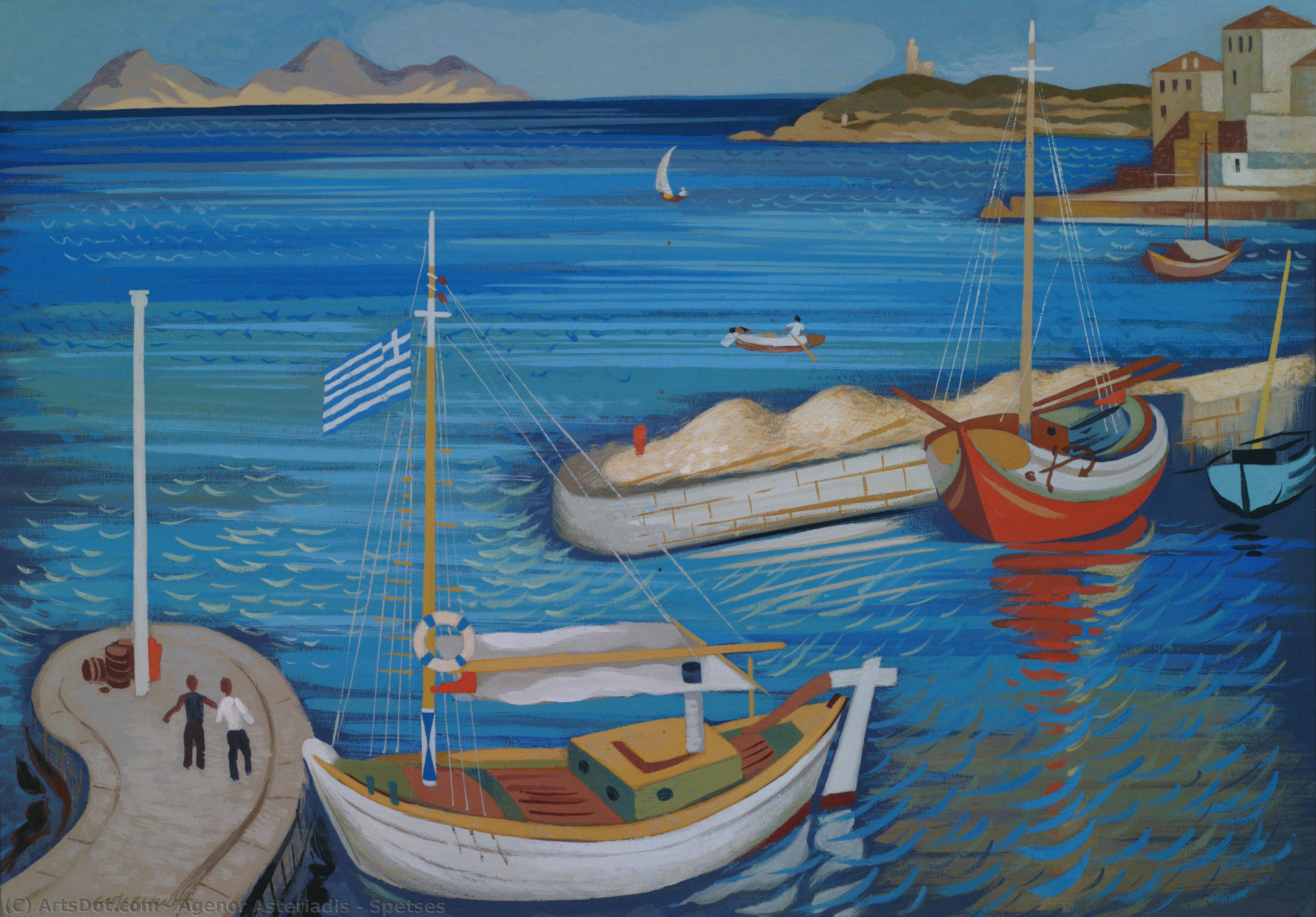
Spetses

Discover the captivating landscape paintings of Agenor Asteriadis, a renowned Greek artist celebrated for his watercolor & oil techniques. Explore his evocative depictions of Greece's beauty.

Kup wysokiej rozdzielczości, ulepszony obraz cyfrowy, znacznie lepszy niż podgląd online.

Każdy plik jest starannie przygotowywany przez naszych specjalistów przy użyciu zaawansowanych narzędzi oraz profesjonalnej, ręcznej retuszy. Dbamy o to, aby każdy obraz cechował się wyjątkową ostrością, precyzyjnym odwzorowaniem kolorów i subtelnymi detalami.

Ostateczny plik dostarczany jest drogą mailową w ciągu 72 godzin, zoptymalizowany do natychmiastowego wykorzystania w profesjonalnych zastosowaniach redakcyjnych i poligraficznych. To ta sama jakość, której ufają czołowe studia projektowe, wydawnictwa oraz galerie sztuki.

Obraz cyfrowy

Pobierz plik o wysokiej rozdzielczości do osobistego wyświetlania, druku oraz projektów kreatywnych.

Suma do zapłaty

$9.99

Zawarte w każdym zamówieniu na obraz cyfrowy

Profesjonalna dostawa cyfrowa, gwarantowana

Wybierając WahooArt.com, nie otrzymujesz jedynie obrazu – otrzymujesz profesjonalnie udoskonalone cyfrowe dzieło sztuki, stworzone z najwyższą precyzją i objęte gwarancją satysfakcji. Oto wszystko, co automatycznie dołączane jest do Twojego zamówienia:

shipping_icon
Błyskawiczna wysyłka e-mailowa

Plik z obrazem cyfrowym w wysokiej rozdzielczości zostanie przesłany na Twój adres e-mail w ciągu 72 godzin od złożenia zamówienia – gotowy do natychmiastowego użycia.

canvas_icon
Plik cyfrowy wzbogacony przez AI

Twoja grafika została profesjonalnie zoptymalizowana przy użyciu zaawansowanych narzędzi AI oraz ręcznej edycji, co zapewnia maksymalną szczegółowość, klarowność i wierność kolorów.

insurance_icon
Dożywotnia darmowa ponowna dostawa

Przypadkowo usunąłeś lub zgubiłeś swój plik? Bez obaw – prześlemy go Tobie ponownie w dowolnym momencie, bez żadnych opłat.

tax_icon
Bez opłat importowych – zawsze

Ciesz się swoją sztuką natychmiast, bez żadnych opłat celnych, należności ani kosztów dostawy – pliki cyfrowe są zawsze wolne od podatku.

color_icon
Gwarancja wierności kolorów

Dzięki zastosowaniu profesjonalnych narzędzi i procesów zarządzania barwą zapewniamy, że Twoje cyfrowe zdjęcie odzwierciedla oryginalne kolory tak wiernie, jak to tylko możliwe.

return_icon
60-dniowa gwarancja satysfakcji

Jeśli nie będziesz zadowolony ze swojego cyfrowego obrazu, poprawimy go lub zwrócimy 100% kosztów w ciągu 60 dni – bez żadnych pytań.

guarantee_icon
100% Gwarancja zwrotu pieniędzy

Nie zadowoleni? Otrzymaj pełny zwrot kosztów w ciągu 60 dni od otrzymania pliku cyfrowego – bez zbędnych pytań.

discount_icon
Rabaty na zamówienia hurtowe

Kup 3 obrazy, oszczędź 10% - Kup 5, oszczędź 15% - Kup 10+, oszczędź 20%. Idealne do projektów kreatywnych, galerii i agencji.

Podobne dzieła sztuki


Biografia artysty

Maurits Cornelis Escher: The Architect of Impossible Worlds

Born in Leeuwarden, Netherlands, in 1898, Maurits Cornelis Escher was a graphic artist whose singular vision defied conventional perception. For most of his life, he remained largely unrecognized within the established art world, yet today he is celebrated as one of the twentieth century’s most innovative and influential artists. Escher's work—a mesmerizing blend of meticulous detail, mathematical precision, and fantastical imagery—continues to captivate audiences worldwide, inviting us to question our understanding of space, perspective, and reality itself.

Escher’s early life was marked by a quiet intensity and a deep fascination with the natural world. His father, a tailor, and his mother, a milliner, instilled in him a respect for craftsmanship and an appreciation for beauty. After failing to secure admission to the Academy of Fine Arts in Amsterdam, Escher pursued studies in architecture at the Haarlem School of Architecture and Decorative Arts, where he discovered his true calling: printmaking. It was during this period that he began experimenting with woodcuts, lithographs, and mezzotints, techniques that would become central to his artistic practice.

Initially, Escher’s work drew inspiration from the landscapes and creatures of his native Netherlands – intricate depictions of insects, meticulously rendered Dutch windmills, and evocative studies of lichens. However, as he matured as an artist, his interests shifted towards more abstract concepts. He became increasingly intrigued by the mathematical possibilities inherent in visual representation, particularly the principles of tessellations (the tiling of a surface with repeating shapes), infinity, and symmetry. This fascination led him to collaborate with mathematicians like George Pólya, Roger Penrose, and Donald Coxeter, forging a unique intellectual partnership that profoundly influenced his artistic development.

The Impossible Made Real: Escher’s Signature Themes

Escher's most recognizable works are characterized by their paradoxical nature—images that appear to defy the laws of physics and logic. He masterfully manipulated perspective, creating illusions of depth and movement within confined spaces. His “impossible objects,” such as the famous "Hand with Reflecting Sphere" (1935) and "Drawing Hands" (1948), demonstrate his ability to depict figures that simultaneously exist in multiple dimensions or appear to fold back upon themselves. These works, alongside pieces like “Relativity” (1953) and “Waterfall” (1961), explore the fundamental principles of geometry and mathematics, revealing a deep understanding of concepts such as hyperbolic geometry and tessellations.

Beyond these iconic examples, Escher’s oeuvre encompasses a vast range of subjects. He frequently depicted animals in impossible situations—birds flying through solid walls, fish swimming through air—and explored the concept of infinity through intricate patterns that seem to stretch endlessly into the distance. His fascination with symmetry is evident in numerous works, where repeating motifs create mesmerizing visual rhythms and explore the beauty of balanced forms.

A Hidden Life: Escher’s Recognition and Legacy

Despite his growing popularity among scientists, mathematicians, and a wider public—particularly after Martin Gardner featured his work in *The Mathematical Games* column in 1966—Escher remained largely overlooked by the mainstream art world during his lifetime. It wasn't until the late twentieth century that his unique artistic vision began to receive the recognition it deserved. Retrospective exhibitions were held around the globe, showcasing the breadth and depth of his extraordinary talent.

Maurits Cornelis Escher died in Baarn, Netherlands, in 1972, leaving behind a legacy of over 300 prints and drawings. His work continues to inspire artists, designers, and mathematicians alike, serving as a testament to the power of imagination and the enduring fascination with the boundaries of perception. Today, Escher’s intricate creations are not only admired for their aesthetic beauty but also for their profound exploration of fundamental mathematical concepts—a true synthesis of art and science.

Influences and Artistic Connections

Escher's artistic journey was shaped by a diverse range of influences. He drew inspiration from the works of earlier masters, including Michelangelo, Leonardo da Vinci, Dürer, and Holbein, absorbing their techniques and stylistic approaches. However, he also found significant inspiration in the art of the East, particularly Japanese woodblock prints, which showcased intricate detail and a mastery of perspective. The work of Giorgio de Chirico, with its unsettling juxtapositions and dreamlike atmosphere, was another key influence on Escher’s development.

Crucially, Escher's intellectual life extended beyond the realm of art. He engaged in stimulating conversations with leading mathematicians such as George Pólya, Roger Penrose, and Donald Coxeter, seeking to understand the mathematical principles underlying his artistic creations. These collaborations not only deepened his understanding of geometry and tessellations but also informed the conceptual framework of his work.

Notable Works

  • Hand with Reflecting Sphere (1935): A classic example of Escher’s mastery of perspective and impossible objects, depicting a hand holding a sphere that appears to reflect itself endlessly.
  • Drawing Hands (1948): An iconic image showcasing the paradoxical nature of drawing—a figure seemingly creating itself from its own hands.
  • Relativity (1953): A complex lithograph illustrating the concept of relativity through a series of nested staircases and pathways, challenging our perception of space and time.
  • Waterfall (1961): A mesmerizing depiction of water flowing uphill, demonstrating Escher’s ability to manipulate perspective and create illusions of movement.

Further Exploration

To delve deeper into the life and work of Maurits Cornelis Escher, we recommend visiting the official website: M.C. Escher - The Official Website. You can also explore resources such as Wikipedia (https://en.wikipedia.org/wiki/M._C._Escher) and the Henry Moore Foundation website (https://henry-moore.org/).

agenor asteriadis

agenor asteriadis

1898 - 1977