Zobacz w skali 1:1 Zobacz w AR Kup ręcznie malowany obraz Przełącz na wersję cyfrową Wyślij
Szczegóły Przewodnik Dodaj do ulubionych Pobierz plik obrazu Podobne obiekty RTG Pokaz slajdów Statystyki

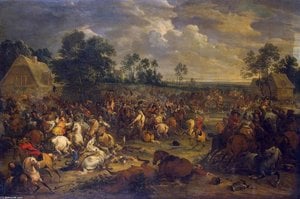
Cavalry Engagement

This reproduction is meticulously crafted by skilled artists, ensuring an authentic representation of Van der Meulen's original work. It serves as a valuable addition to any art collection or historical display.

Adam Frans van der Meulen – flamandzki malarz i projektant gobelinów, znany z dynamicznych scen bitew i glorifikacji panowania Ludwika XIV. Kluczowa postać w propagandzie monarchii francuskiej.

Giclée / Wydruk artystyczny

Wydruki giclée lub płótna o jakości muzealnej, szybka realizacja i szeroki wybór opcji wykończenia. ( Kup ręcznie malowany obraz Przełącz na wersję cyfrową)

P118B $10
P118H $10
P118W $10
P438Z $10
P508JH $12
P508YH $12
P805H $10
P805Z $10
P919BZ $10
P919G $10
P919XJ $10
P959ZH $10
P968JZ $12
W106C $8
W218G $10
W218JH $8
W218Y $10
W307PJ $10
W316G $10
W316PJ $8
W316Y $10
W398PJ $8
W4111J $10
W500HY $15
W500JH $15
W692G $12
W849H $8
W940BG $15
W953PJ $8

Standardowy
na zamówienie
CM
INCH

Wybierz spośród naszych standardowych rozmiarów, które zachowują oryginalne proporcje dzieła sztuki.

szerokość
wysokość

Możesz wprowadzić własne wymiary, aby dopasować dzieło do konkretnej ramy lub przestrzeni. Jeśli wybrany rozmiar nie będzie odpowiadał proporcjom oryginalnego obrazu, przytniecie dzieło lub rozszerzymy obraz za pomocą odbicia lustrzanego lub jednolitego wypełnienia krawędzi. Przed rozpoczęciem produkcji prześlemy cyfrową wizualizację do Twojej akceptacji.
Prosimy pamiętać, że podgląd na ekranie nie odzwierciedla faktycznego przycinania ani rozszerzania. Tylko wizualizacja dokładnie pokaże końcową kompozycję.
Mimo dostępności niestandardowych rozmiarów, zalecamy wybór wymiaru z listy zdefiniowanej, aby zachować oryginalne proporcje.

Dostawa na cały świat () w ciągu 2 tygodni zamiast standardowych 4/5 tygodni. (23 Wrzesień)

why_choose_icon
Bezpłatna ekspresowa wysyłka na cały świat
why_choose_icon
Wysokiej jakości płótno lniane
why_choose_icon
Pełne ubezpieczenie transportowe
why_choose_icon
Gwarancja zwrotu należności celnych i podatków importowych
why_choose_icon
Gwarancja idealnego odwzorowania barw
why_choose_icon
100-dniowy okres na zwrot dzieła w przypadku wykrycia wad produkcyjnych
why_choose_icon
Gwarancja 100% zwrotu pieniędzy
why_choose_icon
Oferta przy zakupie wielu sztuk

Cena całkowita

$ 68

reproduction

Cavalry Engagement

Giclée / Wydruk artystyczny

Rozmiar reprodukcji

-

Suma do zapłaty

$ 68

Kluczowe informacje

  • Artist: Adam van der Meulen
  • Medium: Oil on canvas
  • Influences: Louis XIV
  • Dimensions: 118 x 175 cm
  • Subject or theme: Military scene
  • Title: Cavalry Engagement
  • Location: Hermitage Museum

Quiz wiedzy o sztuce

Do każdego pytania dotyczy tylko jedna poprawna odpowiedź.

Pytanie 1:
What is the primary subject depicted in Adam Frans van der Meulen’s ‘Cavalry Engagement’?
Pytanie 2:
In what century was ‘Cavalry Engagement’ created?
Pytanie 3:
The painting utilizes a technique that creates depth and texture. What is this technique primarily referred to?
Pytanie 4:
Which of the following best describes Adam Frans van der Meulen’s artistic style as exemplified in ‘Cavalry Engagement’?
Pytanie 5:
The painting is currently housed in which museum?

A Chronicle of Power and Precision: Adam Frans van der Meulen’s Cavalry Engagement

Adam Frans van der Meulen's “Cavalry Engagement” isn’t merely a depiction of battle; it’s a meticulously crafted testament to the burgeoning power of Louis XIV, the ‘Sun King,’ and a stunning example of Baroque artistry. Completed in 1657 and currently residing within the hallowed halls of the Hermitage Museum in St. Petersburg, this oil on canvas painting transcends its historical subject matter to become a vibrant tableau of dynamic movement, opulent detail, and calculated propaganda. Van der Meulen, a key figure in shaping Louis XIV’s image, understood that visual narratives could be as potent as royal decrees, and “Cavalry Engagement” stands as a prime illustration of this strategic approach to art.

The scene unfolds with breathtaking immediacy – a chaotic yet controlled clash of cavalry. Horses, rendered with an almost palpable sense of energy, surge forward in various states of motion; riders, clad in the rich fabrics and gleaming armor characteristic of the period, engage in fierce combat. The artist’s mastery lies not just in capturing the physicality of the scene but also in conveying a profound sense of depth and texture. Light and shadow are deployed with masterful precision, carving out forms and directing the viewer's eye towards the heart of the action – a cluster of soldiers locked in deadly struggle. The attention to detail is remarkable; from the intricate stitching on the armor to the subtle variations in the horses’ manes and tails, every element speaks to Van der Meulen’s dedication to historical accuracy and his profound understanding of equestrian art.

Baroque Brilliance: Technique and Style

Van der Meulen's style is deeply rooted in the Baroque tradition, yet he possesses a distinctly individual voice. He employs a rich palette – deep reds, blues, and golds dominate, creating an atmosphere of dramatic intensity. The brushwork is loose and expressive, contributing to the sense of movement and immediacy. However, it’s not simply about capturing raw emotion; Van der Meulen meticulously builds up layers of paint, achieving remarkable detail in the rendering of textures – the polished steel of the armor, the flowing fabric of the clothing, and the muscular forms of the horses. The composition itself is carefully balanced, guiding the eye through the scene with a clear sense of hierarchy. The background landscape, though somewhat generalized, provides essential context, grounding the action within a recognizable, albeit idealized, setting.

  • Oil on Canvas: The medium lends itself perfectly to capturing both detail and luminosity, crucial elements in Van der Meulen’s style.
  • Dynamic Composition: The arrangement of figures creates a sense of movement and drama, pulling the viewer into the heart of the conflict.
  • Rich Color Palette: Deep reds, blues, and golds evoke a sense of power, wealth, and military might.

A Window to the 17th Century: Historical Context

“Cavalry Engagement” offers a valuable glimpse into the military practices and societal norms of the 17th century. The attire worn by the soldiers – armor, weaponry, and clothing styles – are all meticulously researched and faithfully reproduced, providing insights into the equipment and uniforms used during this period. Beyond its aesthetic qualities, the painting holds historical significance as a visual record of warfare and military strategy. It reflects the importance of cavalry in 17th-century conflicts, showcasing their role in flanking maneuvers and decisive charges. Furthermore, it’s important to consider that Van der Meulen wasn't simply documenting history; he was actively contributing to its narrative by creating images that glorified Louis XIV and his reign.

Bringing the Masterpiece Home: Reproductions for Today

WahooArt offers meticulously crafted hand-painted reproductions of “Cavalry Engagement,” allowing art lovers to experience the beauty and power of this iconic work in their own homes. Our skilled artists replicate Van der Meulen’s techniques with exceptional accuracy, capturing not only the visual details but also the emotional impact of the original painting. Whether you're a collector, an interior designer seeking a statement piece, or simply someone captivated by Baroque art, our reproductions provide a stunning and authentic representation of this remarkable masterpiece. Explore the collection at WahooArt.com to discover the perfect reproduction for your space.


Biografia artysty

A Life Dedicated to the Sun King

Adam Frans van der Meulen, a figure often overshadowed by the grander names of 17th-century art, nevertheless played a pivotal role in shaping the image of Louis XIV – the ‘Sun King’. Born in Brussels in 1632, his life wasn’t merely one of artistic creation; it was an active participation in the construction of royal propaganda. Van der Meulen rose from humble beginnings as a student under Peter Snayers, a master of battle scenes and courtly depictions, to become a central figure at the heart of Louis XIV's meticulously crafted image of power and divine right. His journey took him from the workshops of Flanders to the opulent courts of Paris, where he served as a key architect of the King’s visual legacy.

From Workshop to Parisian Court: A Master in the Making

Van der Meulen’s artistic education began within the traditional framework of a master-apprentice relationship. He entered the workshop of Peter Snayers, an established Antwerp painter specializing in battle scenes, hunting expeditions, and depictions of courtly life – subjects that would profoundly influence his own early work. Mastering the intricacies of portraying cavalry skirmishes and the dynamic energy of military engagements formed the foundation of his artistic skillset. The meticulous detail with which he rendered armor, horses, and the expressions of soldiers demonstrated a deep understanding of both technical skill and dramatic composition. Becoming a master within the Brussels Guild of Saint Luke in 1651 signified his growing competence, but it was an invitation from Paris in 1664 that irrevocably altered the course of his career. Jean-Baptiste Colbert, Louis XIV’s formidable Superintendent of Buildings, Arts and Manufactures, recognized Van der Meulen's talent for capturing movement and detail – qualities essential for immortalizing the king’s military triumphs. Colbert tasked him with contributing to a series of tapestries – ambitious projects intended as potent symbols of royal authority and national pride. This marked his entry into the orbit of Charles Le Brun, the court painter and director of the newly established Gobelins Manufactory, where Van der Meulen would become an integral part of a team dedicated to visually constructing the myth of Louis XIV.

The Art of Propaganda: Tapestries and Military Campaigns

Van der Meulen’s role at the Gobelins was multifaceted. He wasn't merely executing designs; he was actively involved in conceptualizing and realizing complex narrative cycles. The “History of the King” series, depicting Louis XIV’s military conquests, stands as a testament to his skill. He meticulously documented the king’s campaigns – accompanying Louis on expeditions to Flanders and Burgundy, sketching scenes of battles, sieges, and strategic maneuvers. These drawings served as the basis for paintings that were then translated into the intricate designs woven into the tapestries. Collaboration was key; Van der Meulen frequently worked alongside other Flemish artists like Adriaen Frans Boudewijns and Abraham Genoels, who contributed their expertise in landscape design and engraving. The “Maison Royales” series, showcasing the opulent palaces of Louis XIV, further demonstrated his versatility and ability to capture both the grandeur of architecture and the refined elegance of courtly life. His work wasn’t simply about depicting events; it was about constructing a carefully curated image of power, control, and divine right. The annual increases in his wages at the Gobelins reflect not only his artistic skill but also his growing importance to the propagandistic aims of the French monarchy.

Style, Influence, and Lasting Legacy

Van der Meulen’s artistic style is characterized by a dynamic energy and meticulous attention to detail. His battle scenes aren't static representations; they convey the chaos, drama, and sheer scale of warfare. He possessed an exceptional ability to portray horses with realism and grace – a skill that earned him considerable acclaim and was highly valued in the context of military painting. The figures are often rendered with a sense of movement and immediacy, capturing the fleeting moments of action and the intensity of combat. However, it’s crucial to remember that his work wasn’t solely about artistic merit. It served a clear propagandistic purpose, glorifying Louis XIV's reign and projecting an image of invincibility. This focus on realism, combined with a deliberate emphasis on spectacle, significantly impacted the development of military painting in France. He established a style that would be emulated by subsequent generations of artists. Beyond his paintings, his designs for tapestries contributed to the flourishing of tapestry production during Louis XIV’s reign, solidifying France's position as a leading center for this luxurious art form. Recognized for his contributions, Van der Meulen received numerous honors – a royal privilege allowing engravings of his works, appointment as “Ordinary Painter to the King” in 1673, and admission to the prestigious Royal Academy of Painting and Sculpture without having to submit a traditional reception piece – a testament to his established reputation. Adam Frans van der Meulen died in Paris in 1690, leaving behind a legacy not just as a skilled artist but as an instrumental figure in shaping the visual narrative of one of Europe’s most powerful monarchs. His detailed depictions of battles, landscapes, and courtly life continue to offer valuable insights into the era and stand as enduring examples of Baroque artistry serving a potent political purpose.

Current Meta Description:

Adam Frans van der Meulen (1632-1690) was a Flemish Baroque painter renowned for his dynamic battle scenes & landscapes glorifying Louis XIV's triumphs, shaping the 'Sun King’s' image and influencing French military art.

Current Meta Keywords:

Adam Frans van der Meulen, Adam-François van der Meulen, Flemish painter, Baroque art, Battle painting, Louis XIV, Military art, Tapestry design, 17th century painting, Horse painting
Adam Frans van der Meulen

Adam Frans van der Meulen

1632 - 1690 , Belgia

Najważniejsze informacje

  • Artistic Movement Or Style: Barok
  • Artists Or Movements Influenced By This Artist: ['Francuska sztuka']
  • Artists Who Influenced This Artist: ['Pieter Snayers']
  • Date Of Birth: 1632, Bruksela
  • Date Of Death: 1690, Paryż
  • Full Name: Adam Frans van der Meulen
  • Nationality: Flamandzki
  • Notable Artworks:
    • Historia Króla
    • Pałace
  • Place Of Birth: Bruksela, Belgia