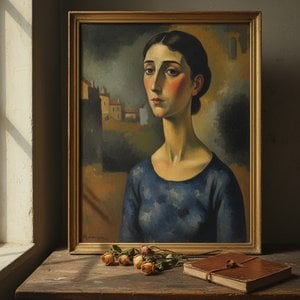
A Transatlantic Brushstroke: The Life and Art of Thomas Sully
Thomas Sully’s journey is a remarkable tale – one that transcends mere geography, becoming a vibrant tapestry woven from artistic influences, cultural shifts, and the burgeoning spirit of America. Born in 1783 under the skies of Horncastle, Lincolnshire, England, his life wasn't simply defined by birth; it was shaped by an itinerant childhood, culminating in his arrival in Charleston, South Carolina, at the tender age of nine. This early exposure to a transient theatrical world—his parents were actors—instilled within him a keen understanding of capturing fleeting expressions and embodying character – skills that would prove invaluable as he transitioned from the stage to the canvas. Initially drawn to the allure of performance himself, briefly pursuing a career as a tumbler, Sully’s innate talent for observation and representation soon found its true expression in painting. An apprenticeship with an insurance broker provided him with a foundational understanding of detail and precision, but it was his subsequent mentorship by Charles Fraser and later Jean Belzons that ignited the flame of his artistic passion, particularly within the realm of miniature painting – a discipline he mastered before expanding his scope to larger, more ambitious works.From Miniature to Monumental: Forging an American Style
Sully’s artistic development wasn't confined by national borders; it was a dynamic process of assimilation and adaptation. A pivotal moment arrived in 1808 when he embarked on a period of study in London with Benjamin West, a celebrated figure in the British art world. While West’s influence undoubtedly shaped his early technique, it was the profound impact of Thomas Lawrence that truly resonated with Sully. Lawrence's elegant style – characterized by its masterful use of light and texture, and his remarkable ability to capture both likeness and character – became a cornerstone of Sully’s artistic philosophy. Upon returning to America in 1809, he carried this aesthetic with him, earning the moniker “the Sir Thomas Lawrence of America.” However, Sully didn't simply emulate; he skillfully adapted and refined these influences, forging a distinctly American style that blended European sophistication with a uniquely New World sensibility. His portraits weren’t merely photographic reproductions; they were imbued with a sense of warmth, dynamism, and psychological depth – reflecting the evolving identity of the nation itself. He possessed an extraordinary ability to capture not just outward appearances but also the inner lives of his subjects, imbuing each portrait with a palpable sense of personality.The Influence of London: A Refined Technique
Sully’s return to England in 1809 and again in 1837 proved crucial to his artistic evolution. These visits weren't merely nostalgic trips; they were deliberate opportunities for refinement and learning. His time with Benjamin West provided a solid grounding in traditional techniques, while his interactions with Thomas Lawrence exposed him to the latest innovations in portraiture – particularly the use of loose brushwork and atmospheric effects. He meticulously studied the works of other masters, absorbing their insights and incorporating them into his own practice. The experience broadened his technical skills and deepened his understanding of composition, color theory, and light. He returned to America with a renewed sense of confidence and a more sophisticated artistic vision, ready to tackle larger-scale projects and explore new avenues of expression.A Portrait of an Era: Notable Works and Subjects
Sully’s prolific output spanned over seven decades, during which he created an astonishing number of portraits – estimates range from 2,300 to over 3,000! His subjects reflected the diverse tapestry of American society at the time. He painted prominent figures such as Thomas Jefferson, John Quincy Adams, Andrew Jackson, and numerous members of the wealthy elite in Philadelphia and beyond. His most celebrated work, *The Passage of the Delaware* (1819), stands as a testament to his ability to capture dramatic historical events with both artistic flair and technical skill. The painting depicts George Washington leading his troops across the icy Delaware River on Christmas night – an iconic moment that embodies the spirit of American independence. Beyond these grand historical scenes, Sully’s portraits captured the essence of countless individuals, preserving their likenesses for posterity and offering a glimpse into the lives and personalities of those who shaped the nation's destiny.Legacy and Enduring Influence
Thomas Sully’s legacy extends far beyond his impressive body of work. He was not only a gifted painter but also a dedicated teacher, mentoring numerous aspiring artists and contributing to the development of American portraiture. His influence can be seen in the works of later generations of painters, who drew inspiration from his masterful technique and his ability to capture the human spirit. Furthermore, Sully’s commitment to cultural enrichment is evident in his involvement with the Musical Fund Society of Philadelphia – a testament to his belief that art should serve as a catalyst for social progress. His paintings continue to be exhibited in museums across the United States, captivating audiences with their beauty, elegance, and enduring power. Thomas Sully remains a pivotal figure in American art history—a painter who skillfully blended European sophistication with uniquely American sensibilities, leaving behind a rich legacy of portraits that capture the essence of an era.Spørsmål og svar
Hvilke farger brukte Thomas Sully oftest?
Thomas Sully sin fargebruk i verkene oppført på denne nettsiden kan studeres på kunstnerens Fargepalettens sjel-side.
Hvor finner jeg Thomas Sully sine kunstverk gruppert etter fargepalett?
For å finne verk av Thomas Sully i en bestemt fargepalett, bruk kunstnerens Etter fargepalett-side.
Hvor kommer Thomas Sully fra?
Thomas Sully ble født i Storbritannia.