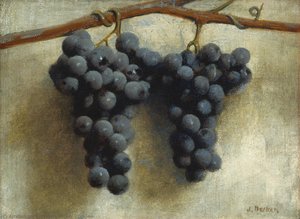
Joseph Decker: A Painter of Delicate Still Lifes
Joseph Decker (1853 – 1924) emerged from the burgeoning artistic landscape of late Victorian America, establishing himself as a distinctive voice within the broader movement of Art Renewal Center. Though largely unrecognized during his lifetime, Decker’s oeuvre—primarily comprised of meticulously rendered still lifes—continues to captivate collectors and scholars alike with its serene beauty and masterful execution. His work embodies a profound connection to nature and an unwavering commitment to capturing fleeting moments of tranquility.
Early Life and Artistic Training
Born in Germany, Decker immigrated to the United States around 1879, settling primarily in Pasadena, California. Details regarding his formative years remain somewhat elusive, yet biographical accounts suggest a childhood steeped in artistic appreciation—likely fostered by his father, who was himself a painter. This early exposure undoubtedly instilled within Decker a lifelong fascination with color and form, shaping the trajectory of his artistic pursuits. Formal training received at Pratt Institute in Brooklyn solidified his technical skills, equipping him with the foundational knowledge necessary to achieve his signature style.
The Art Renewal Center Influence
Decker’s artistic sensibilities were profoundly impacted by the Art Renewal Center (ARC), founded in 1978 by Harold Bloom and Robert Blumenfeld. ARC championed a revival of Old Master techniques—specifically glazing, layering, and meticulous detail—inspiring Decker to refine his approach and prioritize capturing the luminous quality characteristic of Renaissance paintings. This stylistic convergence cemented Decker’s place within a movement dedicated to honoring artistic tradition and elevating visual art as a conduit for spiritual contemplation.
Style and Technique: Capturing Light and Atmosphere
Decker's distinctive style is immediately recognizable by its ethereal glow—a hallmark achieved through his masterful use of glazing techniques. He painstakingly built up layers of translucent pigment, allowing underlying colors to subtly illuminate each other, creating an illusion of depth and luminosity that transcends mere representation. His subjects – often fruits, flowers, or simple objects arranged in carefully considered compositions – are depicted with astonishing precision, capturing the subtle nuances of texture and light. The artist’s palette favored muted tones—primarily ochres, siennas, and umbers—reflecting a deliberate aesthetic choice rooted in the contemplative spirit of his era.
Notable Works and Legacy
Among Decker's most celebrated paintings are “Still Life with Apples,” “Winter Landscape,” and “Fruit Basket.” These pieces exemplify his ability to distill complex visual information into emotionally resonant images, inviting viewers to contemplate themes of beauty, solitude, and the passage of time. While Decker’s output remained modest compared to many contemporaries, his unwavering dedication to artistic excellence ensured that his paintings would endure as testament to the enduring power of traditional painting methods. Today, Decker's work is housed in private collections worldwide and continues to inspire admiration for its understated elegance and profound psychological depth—a legacy firmly rooted in the revivalist ethos of Art Renewal Center.