ForhåndsvisningForhåndsvisning Se i ARSe i AR Kjøp håndlaget maleri Kjøp håndlaget maleriKjøp bilde Kjøp bilde SendSend
Vis detaljerVis detaljer Legg til i favoritter Legg til i favoritter Last ned bildetLast ned bildet Liknende objekterLiknende objekter RøntgenundersøkelseRøntgenundersøkelse LysbildefremvisningLysbildefremvisning

Sleigh Ride

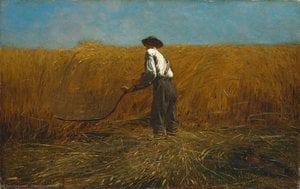
Experience Winslow Homer's iconic 1893 watercolor "Sleigh Ride," capturing the joy of a winter horse-drawn journey with its evocative style and serene mood. Discover this beautiful American art piece and bring it home.

Winslow Homer (1836-1910): Amerikansk realistisk kunstner kjent for sine kraftfulle bilder av hav og landskap! Opplev klassiske verk som Breezing Up og Gulf Stream.

Giclée / Kunsttrykk

Giclée- eller lerretsprint av museumskvalitet med rask produksjon og fleksible valgmuligheter for etterbehandling. (Kjøp håndlaget maleri Kjøp håndlaget maleriKjøp bilde Kjøp bilde)

P118B $10
P118H $10
P118W $10
P438Z $10
P508JH $12
P508YH $12
P805H $10
P805Z $10
P919BZ $10
P919G $10
P919XJ $10
P959ZH $10
P968JZ $12
W106C $8
W218G $10
W218JH $8
W218Y $10
W307PJ $10
W316G $10
W316PJ $8
W316Y $10
W398PJ $8
W4111J $10
W500HY $15
W500JH $15
W692G $12
W849H $8
W940BG $15
W953PJ $8

Standardformat
skreddersydd
CM
INCH

Velg mellom våre forhåndsdefinerte størrelser som bevarer kunstverkets opprinnelige proporsjoner.

bredde
høyde

Du kan oppgi egne mål for å tilpasse en spesifikk ramme eller et bestemt område. Dersom den valgte størrelsen ikke samsvarer med det originale bildets proporsjoner, vil vi enten beskjære kunstverket eller utvide bildet med en speilet eller ensfarget kant. En digital mockup vil bli sendt til din godkjenning før produksjonen starter.
Vennligst merk at forhåndsvisningen på skjermen ikke gjenspeiler den faktiske beskjæringen eller utvidelsen. Kun mockuppen vil vise den endelige komposisjonen nøyaktig.
Selv om tilpassede størrelser er tilgjengelige, anbefaler vi å velge et mål fra den forhåndsdefinerte listen for å bevare de originale proporsjonene.

Verdensomspennende levering () på 2 uker i stedet for standard 4/5 uker. (7 September)

why_choose_icon
Gratis ekspressfrakt over hele verden
why_choose_icon
Lerretsduk av høykvalitets lin
why_choose_icon
Full forsikring under transport
why_choose_icon
Garanti for refusjon av toll og importavgifter
why_choose_icon
Garantert korrekt fargegjengivelse
why_choose_icon
100 dagers returrett (kun ved feil)
why_choose_icon
100% pengene tilbake-garanti
why_choose_icon
Rabatt ved flere kjøp

Totalpris for bestilling

$ 68

reproduction

Sleigh Ride

Giclée / Kunsttrykk

Størrelse på reproduksjon

-

Endelig pris

$ 68

Kort om verket

  • Year: 1893
  • Title: Sleigh Ride
  • Subject or theme: Winter landscape
  • Artistic style: Simple, powerful
  • Location: Currier Museum
  • Artist: Winslow Homer
  • Movement: American Art

Winslow Homer’s “Sleigh Ride”: A Winter’s Tale of American Spirit

Winslow Homer's "Sleigh Ride," painted in 1893, is more than just a depiction of a winter scene; it’s a poignant snapshot of the burgeoning American spirit. This watercolor captures a moment of simple joy – a horse-drawn sleigh gliding down a snowy road, carrying passengers immersed in the exhilaration of the ride. Homer, deeply rooted in his native New England, eschewed the grand narratives favored by many European artists of the time, instead choosing to focus on the everyday experiences and landscapes that defined America’s burgeoning identity. The painting's power lies not in dramatic scale or historical significance, but in its quiet observation and masterful execution.

  • Subject Matter: A quintessential winter scene featuring a sleigh ride, highlighting themes of leisure, travel, and the beauty of nature.
  • Style: Characterized by Homer’s signature style – simplified forms, precise detail, and an emphasis on capturing light and atmosphere. It exemplifies American realism with a touch of romanticism.
  • Technique: Executed in watercolor, demonstrating Homer's exceptional skill in layering washes to create depth, texture, and a luminous quality. The delicate rendering of the snow and ice is particularly noteworthy.

The Artist’s Vision: Capturing the Essence of New England

Homer’s artistic journey began with commercial illustration for Harper's Weekly at just twelve years old. This early experience instilled in him a remarkable ability to observe and depict scenes with clarity and precision – skills that would later inform his paintings. Unlike many artists who sought inspiration abroad, Homer found it within the familiar landscapes and people of New England. “Sleigh Ride” reflects this deep connection to his surroundings, portraying a scene that feels both timeless and intimately local. The man at the reins, confidently guiding the horse, embodies a sense of self-reliance and mastery, while the passengers radiate delight and contentment. Homer’s ability to evoke such emotion through seemingly simple imagery is a testament to his artistic genius.

Historical Context & Influences

Created in 1893, “Sleigh Ride” sits firmly within the late 19th-century American art scene. It resonates with the broader movement towards realism and regionalism that was gaining momentum at the time. While Homer wasn’t alone in exploring winter landscapes – artists like Hendrik Barend Koekkoek and Thomas Birch had previously captured similar scenes – Homer's distinctive style and his focus on capturing the *feeling* of a moment set him apart. The painting also subtly echoes the Currier Museum of Art’s collection, which showcased a diverse range of European and American masterpieces, including works by masters like Monet and Picasso, demonstrating Homer’s engagement with broader artistic trends.

Symbolism & Emotional Impact

"Sleigh Ride" transcends a mere depiction of a winter activity; it speaks to fundamental human desires – the joy of movement, connection with nature, and shared experiences. The snow itself symbolizes purity, renewal, and perhaps even a sense of escape from the everyday. The warmth emanating from the figures within the sleigh suggests a refuge from the cold, both literal and metaphorical. Homer’s masterful use of color—the cool blues and whites of the winter landscape contrasted with the warmer tones of the figures—creates a visually arresting image that evokes a powerful emotional response. This painting is a reminder of the simple pleasures in life and the enduring beauty of the natural world.


Om kunstneren

A Brush with the American Spirit: The Life and Art of Winslow Homer

Winslow Homer, born in Boston in 1836, wasn’t sculpted by the traditional European art academies that shaped so many of his contemporaries. Instead, he emerged from a distinctly American experience, one rooted in practicality and observation. His journey began not with grand historical canvases, but as a commercial illustrator at the tender age of twelve for Harper's Weekly. This early apprenticeship was formative, honing an exceptional ability to capture scenes with clarity and detail – skills that would become hallmarks of his mature work. He wasn’t learning perspective in Paris; he was learning to *see* America, its people, and its unfolding story. The bustling streets of Boston, the quiet dignity of rural New England life, these were his first subjects, rendered with a precision born of necessity for the demands of print media. This foundation allowed him to transition into painting, initially in watercolor, before fully embracing the expressive potential of oil paints.

From Pastoral Scenes to the Raw Power of Nature

Homer’s early paintings often depicted idyllic scenes – children playing, farmers tending their fields, quiet moments of domesticity. These works, while charming, hinted at a deeper artistic sensibility waiting to be unleashed. The catalyst for this transformation was undoubtedly the Civil War. As a war correspondent for Harper's Weekly, Homer witnessed firsthand the brutal realities of conflict. He didn’t focus on heroic battles or grand strategies; instead, he documented the everyday lives of soldiers and civilians, the quiet moments of grief and resilience amidst chaos. This experience profoundly altered his artistic vision. The pastoral scenes gave way to more challenging subjects: veterans grappling with trauma, freed slaves navigating a new world, and the stark beauty of landscapes touched by hardship. He began to explore themes of struggle, isolation, and humanity’s precar He wasn't interested in imitating European styles; he wanted to create an art that was uniquely American, reflecting its landscapes, its people, and its challenges. His style also evolved, becoming bolder and more direct, reflecting the raw emotional impact of what he had witnessed. Breezing Up (A Fair Wind), painted in 1876, exemplifies this skill – a quintessential depiction of American maritime life, brimming with energy and movement. The Gulf Stream, created decades later, is perhaps his most iconic work, a powerful and symbolic portrayal of a lone man battling the forces of nature, a metaphor for human struggle against overwhelming odds. He wasn’t simply painting what he saw; he was conveying a feeling, an emotional truth about the human condition.

Mastering Light, Texture, and the American Landscape

Winslow Homer's artistic technique is immediately recognizable for its solidity and texture. He wasn’t interested in fleeting impressions; he wanted to build up a sense of tangible reality on the canvas. His oil paintings are characterized by a direct painting approach – layers of paint applied with confidence, creating depth and luminosity. He possessed an extraordinary ability to capture light, whether it was the dazzling glare of the sun on the ocean or the soft glow of twilight over a rural landscape. This mastery extended to his watercolors, where he achieved remarkable atmospheric effects through vibrant colors and delicate washes. He admired European artists like those of the Barbizon school – known for their realistic depictions of rural life – and acknowledged influences from Courbet and Millet, but he ultimately forged his own distinctly American path.

A Legacy Forged in American Realism

Winslow Homer's art offers a profound window into 19th-century America, providing invaluable insights into the social, political, and cultural landscape of his time. His paintings are not merely beautiful representations; they are powerful statements about human resilience, the beauty and power of nature, and the complexities of the American experience. He died in 1910, leaving behind a prolific body of work that continues to resonate with audiences today. His ability to depict America with honesty and authenticity – without romanticizing or idealizing it – ensures his place as one of America’s most important and enduring artists. His influence can be seen in the work of later American painters who sought to depict their own country with similar directness and emotional depth.
  • His work continues to inspire contemporary artists.
  • Homer remains a pivotal figure in the development of American Realism.
Winslow Homer

Winslow Homer

1836 - 1910 , USA

Kort om kunstneren

  • Artistic Movement Or Style: Amerikansk Realisme
  • Artists Or Movements Influenced By This Artist: ['Amerikanske malere']
  • Artists Who Influenced This Artist:
    • Barbizon skole
    • Courbet
    • Millet
  • Date Of Birth: 24. februar 1836
  • Date Of Death: 29. september 1910
  • Full Name: Winslow Homer
  • Nationality: Amerikaner
  • Notable Artworks:
    • Breezing Up
    • Gulfstrømmen
    • Usinn
    • Vitenskapsmann
  • Place Of Birth: Boston, USA
Utforsk kunstverk organisert etter temaer, stiler og kjennetegn.