ForhåndsvisningForhåndsvisning Se i ARSe i AR Kjøp håndlaget maleri Kjøp håndlaget maleriBytt til digitalt bilde Bytt til digitalt bilde SendSend
Vis detaljerVis detaljer Legg til i favoritter Legg til i favoritter Last ned bildetLast ned bildet Liknende objekterLiknende objekter RøntgenundersøkelseRøntgenundersøkelse LysbildefremvisningLysbildefremvisning StatistikkStatistikk

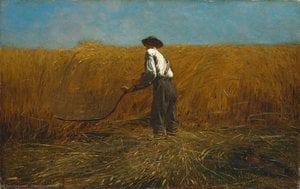
Hurricane, Bahamas

Winslow Homer (1836-1910): Amerikansk realistisk kunstner kjent for sine kraftfulle bilder av hav og landskap! Opplev klassiske verk som Breezing Up og Gulf Stream.

Giclée / Kunsttrykk

Giclée- eller lerretsprint av museumskvalitet med rask produksjon og fleksible valgmuligheter for etterbehandling. (Kjøp håndlaget maleri Kjøp håndlaget maleriBytt til digitalt bilde Bytt til digitalt bilde)

P118B $10
P118H $10
P118W $10
P438Z $10
P508JH $12
P508YH $12
P805H $10
P805Z $10
P919BZ $10
P919G $10
P919XJ $10
P959ZH $10
P968JZ $12
W106C $8
W218G $10
W218JH $8
W218Y $10
W307PJ $10
W316G $10
W316PJ $8
W316Y $10
W398PJ $8
W4111J $10
W500HY $15
W500JH $15
W692G $12
W849H $8
W940BG $15
W953PJ $8

Standardformat
skreddersydd
CM
INCH

Velg mellom våre forhåndsdefinerte størrelser som bevarer kunstverkets opprinnelige proporsjoner.

bredde
høyde

Du kan oppgi egne mål for å tilpasse en spesifikk ramme eller et bestemt område. Dersom den valgte størrelsen ikke samsvarer med det originale bildets proporsjoner, vil vi enten beskjære kunstverket eller utvide bildet med en speilet eller ensfarget kant. En digital mockup vil bli sendt til din godkjenning før produksjonen starter.
Vennligst merk at forhåndsvisningen på skjermen ikke gjenspeiler den faktiske beskjæringen eller utvidelsen. Kun mockuppen vil vise den endelige komposisjonen nøyaktig.
Selv om tilpassede størrelser er tilgjengelige, anbefaler vi å velge et mål fra den forhåndsdefinerte listen for å bevare de originale proporsjonene.

Verdensomspennende levering () på 2 uker i stedet for standard 4/5 uker. (14 September)

why_choose_icon
Gratis ekspressfrakt over hele verden
why_choose_icon
Lerretsduk av høykvalitets lin
why_choose_icon
Full forsikring under transport
why_choose_icon
Garanti for refusjon av toll og importavgifter
why_choose_icon
Garantert korrekt fargegjengivelse
why_choose_icon
100 dagers returrett (kun ved mangler)
why_choose_icon
100% pengene tilbake-garanti
why_choose_icon
Rabatt ved flere kjøp

Totalpris for bestilling

$ 68

reproduction

Hurricane, Bahamas

Giclée / Kunsttrykk

Størrelse på reproduksjon

-

Endelig pris

$ 68

Kort om verket

  • Artistic style: Impressionistic
  • Notable elements or techniques: Stormy seascape; Detailed depiction of foliage
  • Year: 1898
  • Subject or theme: Tropical Weather; Coastal Landscape
  • Artist: Winslow Homer
  • Location: The Metropolitan Museum of Art
  • Medium: Watercolor & Graphite

Kunstighetsquiz

Det er kun ett riktig svar på hvert spørsmål.

Spørsmål 1:
What medium was Winslow Homer primarily known for using in his paintings?
Spørsmål 2:
Where is 'Hurricane, Bahamas' currently housed?
Spørsmål 3:
What stylistic characteristic distinguishes Homer’s depiction of the hurricane from other tropical landscapes he created?
Spørsmål 4:
The painting includes a symbol representing British colonial rule. What is this symbol?
Spørsmål 5:
What technique did Homer employ to convey the movement and fluidity of the storm?

Hurricane, Bahamas: A Tempestuous Vision of American Landscape

Winslow Homer’s “Hurricane, Bahamas,” painted in 1898, isn't merely a depiction of a tropical storm; it’s an embodiment of the Romantic spirit that defined American art at the turn of the century. Held proudly within The Metropolitan Museum of Art’s collection, this watercolor captures not just meteorological phenomena but also a profound contemplation on nature’s power and humanity’s vulnerability—themes central to Homer's oeuvre and deeply resonant with his contemporaries. ### Artistic Style and Technique: Watercolor Mastery Homer possessed an unparalleled command of watercolor painting, transforming seemingly simple pigments into luminous expressions of movement and atmosphere. Unlike the meticulous realism favored by many European artists of the time, Homer prioritized capturing *feeling* above precise detail. Observe how the artist utilizes layering—thin washes of color gradually built upon one another—to convey the turbulent winds whipping through palm trees and the relentless rain battering the shoreline. The translucent quality of watercolor allows for an astonishing level of subtlety, revealing underlying tonal variations that contribute to the painting’s dramatic depth and luminosity. This technique wasn't simply about reproducing what Homer saw; it was about channeling his emotional response into a visual language that transcends literal representation. ### Historical Context: Romanticism in the Colonies The painting emerged during a period marked by burgeoning American nationalism and fascination with the untamed wilderness. The late Victorian era witnessed a surge of interest in exploring themes of sublime beauty and confronting mortality—concepts powerfully articulated by poets like Tennyson and Wordsworth. Homer’s depiction of the Bahamas aligns perfectly with this Romantic sensibility, portraying a landscape simultaneously magnificent and menacing. Furthermore, the inclusion of the Red Ensign – representing British colonial rule – subtly underscores the geopolitical tensions simmering across the Caribbean at that time, adding another layer of complexity to the artwork's narrative. It speaks to an era grappling with questions of identity and confronting the forces shaping the nation’s future. ### Symbolism: Confronting Nature's Fury Beyond its aesthetic qualities, “Hurricane, Bahamas” carries significant symbolic weight. The storm itself represents chaos and disruption—forces that threaten to overwhelm human endeavors. Yet, amidst this turmoil, Homer presents a solitary figure standing on the beach, gazing out at the tempestuous sea. This posture suggests contemplation and resilience – an acknowledgement of nature’s dominance while simultaneously affirming humanity's capacity for observation and inner strength. The palm trees, swaying violently in the wind, symbolize endurance and adaptability—qualities admired within American culture during this period. Homer skillfully utilizes these visual elements to convey a message about confronting adversity with courage and maintaining perspective amidst overwhelming circumstances. ### Emotional Impact: A Moment Frozen in Time “Hurricane, Bahamas” succeeds in transporting viewers back to 1898, evoking a visceral sense of drama and wonder. The artist’s masterful use of watercolor captures not only the visual spectacle of the storm but also its emotional impact—a feeling of awe mingled with apprehension. It's a painting that invites reflection on our relationship with the natural world and reminds us of the humbling power of forces beyond human control. Like Homer’s other celebrated works – “Channel Bass,” “Inside the Bar, Tynemouth,” and “Sloop, Bermuda” – this piece exemplifies his ability to distill complex emotions into a deceptively simple visual form—a testament to his enduring legacy as one of America's greatest landscape painters.

Om kunstneren

A Brush with the American Spirit: The Life and Art of Winslow Homer

Winslow Homer, born in Boston in 1836, wasn’t sculpted by the traditional European art academies that shaped so many of his contemporaries. Instead, he emerged from a distinctly American experience, one rooted in practicality and observation. His journey began not with grand historical canvases, but as a commercial illustrator at the tender age of twelve for Harper's Weekly. This early apprenticeship was formative, honing an exceptional ability to capture scenes with clarity and detail – skills that would become hallmarks of his mature work. He wasn’t learning perspective in Paris; he was learning to *see* America, its people, and its unfolding story. The bustling streets of Boston, the quiet dignity of rural New England life, these were his first subjects, rendered with a precision born of necessity for the demands of print media. This foundation allowed him to transition into painting, initially in watercolor, before fully embracing the expressive potential of oil paints.

From Pastoral Scenes to the Raw Power of Nature

Homer’s early paintings often depicted idyllic scenes – children playing, farmers tending their fields, quiet moments of domesticity. These works, while charming, hinted at a deeper artistic sensibility waiting to be unleashed. The catalyst for this transformation was undoubtedly the Civil War. As a war correspondent for Harper's Weekly, Homer witnessed firsthand the brutal realities of conflict. He didn’t focus on heroic battles or grand strategies; instead, he documented the everyday lives of soldiers and civilians, the quiet moments of grief and resilience amidst chaos. This experience profoundly altered his artistic vision. The pastoral scenes gave way to more challenging subjects: veterans grappling with trauma, freed slaves navigating a new world, and the stark beauty of landscapes touched by hardship. He began to explore themes of struggle, isolation, and humanity’s precar He wasn't interested in imitating European styles; he wanted to create an art that was uniquely American, reflecting its landscapes, its people, and its challenges. His style also evolved, becoming bolder and more direct, reflecting the raw emotional impact of what he had witnessed. Breezing Up (A Fair Wind), painted in 1876, exemplifies this skill – a quintessential depiction of American maritime life, brimming with energy and movement. The Gulf Stream, created decades later, is perhaps his most iconic work, a powerful and symbolic portrayal of a lone man battling the forces of nature, a metaphor for human struggle against overwhelming odds. He wasn’t simply painting what he saw; he was conveying a feeling, an emotional truth about the human condition.

Mastering Light, Texture, and the American Landscape

Winslow Homer's artistic technique is immediately recognizable for its solidity and texture. He wasn’t interested in fleeting impressions; he wanted to build up a sense of tangible reality on the canvas. His oil paintings are characterized by a direct painting approach – layers of paint applied with confidence, creating depth and luminosity. He possessed an extraordinary ability to capture light, whether it was the dazzling glare of the sun on the ocean or the soft glow of twilight over a rural landscape. This mastery extended to his watercolors, where he achieved remarkable atmospheric effects through vibrant colors and delicate washes. He admired European artists like those of the Barbizon school – known for their realistic depictions of rural life – and acknowledged influences from Courbet and Millet, but he ultimately forged his own distinctly American path.

A Legacy Forged in American Realism

Winslow Homer's art offers a profound window into 19th-century America, providing invaluable insights into the social, political, and cultural landscape of his time. His paintings are not merely beautiful representations; they are powerful statements about human resilience, the beauty and power of nature, and the complexities of the American experience. He died in 1910, leaving behind a prolific body of work that continues to resonate with audiences today. His ability to depict America with honesty and authenticity – without romanticizing or idealizing it – ensures his place as one of America’s most important and enduring artists. His influence can be seen in the work of later American painters who sought to depict their own country with similar directness and emotional depth.
  • His work continues to inspire contemporary artists.
  • Homer remains a pivotal figure in the development of American Realism.

Winslow Homer

Winslow Homer

1836 - 1910 , USA

Kort om kunstneren

  • Artistic Movement Or Style: Amerikansk Realisme
  • Artists Or Movements Influenced By This Artist: ['Amerikanske malere']
  • Artists Who Influenced This Artist:
    • Barbizon skole
    • Courbet
    • Millet
  • Date Of Birth: 24. februar 1836
  • Date Of Death: 29. september 1910
  • Full Name: Winslow Homer
  • Nationality: Amerikaner
  • Notable Artworks:
    • Breezing Up
    • Gulfstrømmen
    • Usinn
    • Vitenskapsmann
  • Place Of Birth: Boston, USA
Utforsk kunstverk organisert etter temaer, stiler og kjennetegn.