Gratis kunstkonsultasjon

x
Bestill maleri Bestill maleriKjøp digitalt bilde Kjøp digitalt bilde SendSend
DetaljerDetaljer Legg til i favoritter Legg til i favoritter Last ned bildetLast ned bildet Liknende objekterLiknende objekter RøntgenRøntgen LysbildefremvisningLysbildefremvisning

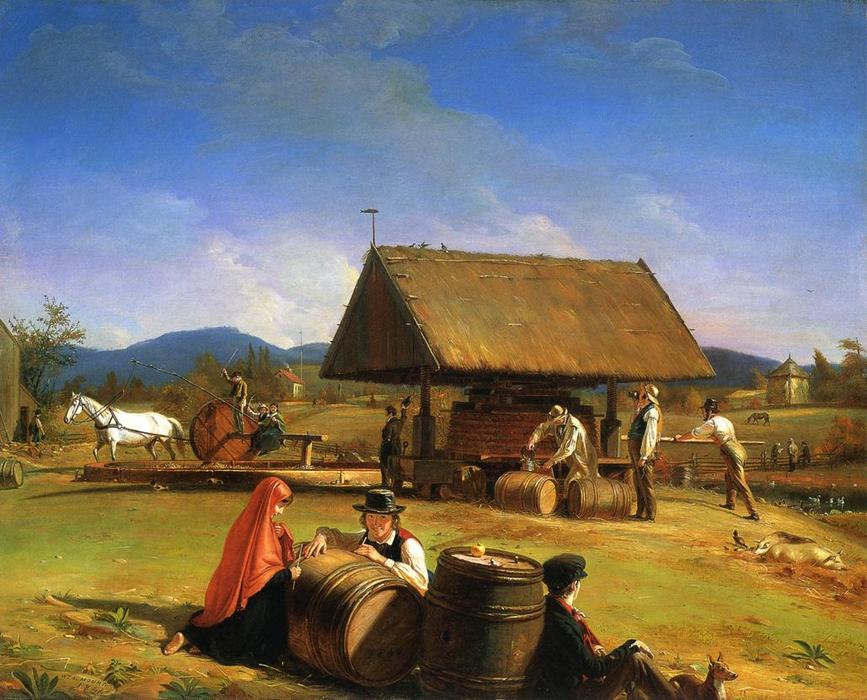
Cider Making

Experience Luminism's soft light in William Sidney Mount's 1841 Cider Making, a beautiful genre scene capturing rural American life; discover this pastoral masterpiece today.

William Sidney Mount var en amerikansk genremaler som ble kjent for sine realistiske skildringer av Long Islands landsbygdsliv og menneskelige forhold. Hans verk fokuserte på å fange autentiske øyeblikk fra hverdagen, noe som gjorde ham til en pioner innen kunsthistorien og inspirerte mange etterfølgende kunstnere.

Giclée / Kunsttrykk

Giclée- eller lerretsprint av museumskvalitet med rask produksjon og fleksible valgmuligheter for etterbehandling.

P118B $10
P118H $10
P118W $10
P438Z $10
P508JH $12
P508YH $12
P805H $10
P805Z $10
P919BZ $10
P919G $10
P919XJ $10
P959ZH $10
P968JZ $12
W106C $8
W218G $10
W218JH $8
W218Y $10
W307PJ $10
W316G $10
W316PJ $8
W316Y $10
W398PJ $8
W4111J $10
W500HY $15
W500JH $15
W692G $12
W849H $8
W940BG $15
W953PJ $8

Standard
custom
CM
INCH

Velg mellom våre forhåndsdefinerte størrelser som bevarer kunstverkets opprinnelige proporsjoner.

bredde
høyde

Du kan oppgi egne mål for å tilpasse en spesifikk ramme eller et bestemt område. Dersom den valgte størrelsen ikke samsvarer med det originale bildets proporsjoner, vil vi enten beskjære kunstverket eller utvide bildet med en speilet eller ensfarget kant. En digital mockup vil bli sendt til din godkjenning før produksjonen starter.
Vennligst merk at forhåndsvisningen på skjermen ikke gjenspeiler den faktiske beskjæringen eller utvidelsen. Kun mockuppen vil vise den endelige komposisjonen nøyaktig.
Selv om tilpassede størrelser er tilgjengelige, anbefaler vi å velge et mål fra den forhåndsdefinerte listen for å bevare de originale proporsjonene.

Verdensomspennende levering () på 2 uker i stedet for standard 4/5 uker. (6 July)

why_choose_icon
Gratis ekspressfrakt over hele verden
why_choose_icon
Lerretsduk av høykvalitets lin
why_choose_icon
Full forsikring under transport
why_choose_icon
Garanti for refusjon av toll og importavgifter
why_choose_icon
Garantert korrekt fargegjengivelse
why_choose_icon
60 dagers returrett (kun ved feil)
why_choose_icon
100% pengene tilbake-garanti
why_choose_icon
Rabatt ved flere kjøp

Totalpris for bestilling

-

reproduction

Cider Making

Giclée / Kunsttrykk

Størrelse på reproduksjon

-

Endelig pris

-

Kort om verket

  • Notable elements or techniques: Detailed depiction of cider production process
  • Year: 1841
  • Location: Private Collection
  • Influences: Hudson River School
  • Title: Cider Making
  • Artist: William Sidney Mount
  • Artistic style: Realism

Kunstighetsquiz

Det er kun ett riktig svar på hvert spørsmål.

Spørsmål 1:
What genre of painting is William Sidney Mount considered a pioneer of?
Spørsmål 2:
The artwork 'Cider Making' primarily depicts scenes from which setting and time period?
Spørsmål 3:
Mount's artistic style, evident in 'Cider Making,' is closely associated with which art movement known for soft, diffused light?
Spørsmål 4:
Besides documenting daily labor, what deeper context did Mount subtly incorporate into 'Cider Making'?
Spørsmål 5:
What central object dominates the composition in 'Cider Making,' around which the figures are gathered?

Beskrivelse av samleobjektet

A Snapshot of Rural Life: William Sidney Mount’s Cider Making

William Sidney Mount stands apart from his contemporaries in the annals of American art history. Rather than pursuing grand narratives or aristocratic portraits, he dedicated himself to capturing the essence of everyday existence – specifically, the industrious rhythms of rural Long Island during the early 1840s. His masterpiece, “Cider Making,” exemplifies this commitment, offering a beautifully rendered tableau that transcends mere depiction and speaks volumes about the spirit of its time. This painting isn’t simply a visual record; it's an invitation to contemplate the dignity inherent in simple labor and the enduring charm of pastoral landscapes.

The Scene Unfolds: Observation and Representation

Mount meticulously documented the process of cider making, transforming a commonplace activity into a compelling subject for artistic exploration. The composition is dominated by a barrel situated prominently in a sunlit field, surrounded by figures engaged in various tasks – men tending to the horse drawn wagon, women assisting with the pressing operation, and children observing the unfolding events. The artist’s keen eye captures not only the physical actions but also the palpable atmosphere of camaraderie and celebration. Notably, Mount subtly incorporated references to contemporary political discourse; speculation arose that each participant represented a candidate vying for the presidency, mirroring the fervor surrounding the 1840 election campaign. This deliberate inclusion elevates “Cider Making” beyond a simple depiction of rural life, embedding it within the broader context of American politics and culture.

Style and Technique: Luminism’s Gentle Embrace

Mount's artistic style aligns closely with Luminism, a movement characterized by its soft, diffused light and meticulous attention to detail. Unlike Romantic painters who favored dramatic contrasts and emotional intensity, Mount sought to convey tranquility and realism through subtle tonal gradations. He skillfully employed glazing techniques—applying thin layers of translucent paint over underlying colors—to achieve an ethereal glow that illuminates the figures and enhances the sense of depth within the scene. The artist’s meticulous brushwork contributes to the painting's remarkable textural quality, capturing the rough bark of the barrel, the sheen of wet cider apples, and the fleece of the horses with impressive accuracy.

Symbolism Within Simplicity: Echoes of American Identity

“Cider Making” resonates deeply with themes central to the burgeoning American identity of its era. The depiction of rural labor speaks to the nation’s foundational values – self-sufficiency, industriousness, and connection to the land—values championed by Mount's father, Micah Hawkins, who himself was a celebrated composer and poet. Furthermore, the inclusion of horses symbolizes strength and prosperity, reflecting the economic ambitions of the period. The birds perched atop the barrel serve as emblems of freedom and optimism, reinforcing the painting’s overarching message of contentment and harmony amidst the natural world.

Emotional Resonance: A Legacy of Quiet Beauty

Ultimately, “Cider Making” transcends its historical context to evoke a profound emotional response in viewers. Mount's masterful rendering captures not just what was seen but also what was felt – a sense of warmth, community, and appreciation for the beauty of rural life. It’s a painting that invites contemplation on themes of tradition, heritage, and the enduring power of simple pleasures. Reproductions of this iconic artwork continue to inspire collectors and interior designers alike, offering a glimpse into a bygone era while celebrating the timeless appeal of American genre painting.

Lignende kunstverk


Om kunstneren

A Pioneer of American Genre Painting

William Sidney Mount, born November 26, 1807, in the quiet hamlet of Setauket, Long Island, emerged as a pivotal figure in the development of distinctly American art. He wasn’t drawn to the grand historical narratives or formal portraiture championed by many of his contemporaries; instead, Mount turned his keen eye toward the everyday lives unfolding around him – the farmers, musicians, and ordinary folk who populated the rural landscapes of 19th-century Long Island. This unwavering dedication to depicting scenes of common life established him as a true innovator—a pioneer of genre painting in America—a style that celebrated the dignity and inherent beauty found within the mundane. His artistic journey was profoundly shaped by his upbringing; his father operated a bustling farm, store, and tavern, fostering an environment brimming with both practical experience and observation of human character. Micah Hawkins, Mount’s uncle, possessed a remarkable breadth of talents – a composer, playwright, mimic, and poet – nurturing within young William a spirit of artistic curiosity and engagement with diverse forms of expression.

Early Training and Artistic Awakening

Mount’s initial foray into the art world commenced not in a prestigious academy but through an apprenticeship with his older brother, Henry Smith Mount, a skilled sign painter residing in New York City. This formative experience honed his draughtsmanship skills and instilled within him a foundational understanding of painting technique—a grounding that would prove invaluable as he pursued his artistic ambitions. However, it was a visit to the American Academy of the Fine Arts exhibition in 1825 that irrevocably altered Mount’s artistic trajectory. Surrounded by the works of established artists—figures like Benjamin West and William Hogarth—he experienced an awakening, shifting away from conventional subjects toward capturing authentic moments from daily existence. This pivotal encounter spurred him to forge his own path, independent of academic dogma, recognizing the compelling narrative potential inherent in portraying ordinary life. He established his own studio in New York City in 1829, marking a decisive step towards artistic autonomy and solidifying his commitment to pursuing art as a vocation—a dedication that would define his entire career. Despite initial influences from historical painting—he created works like *Christ Raising the Daughter of Jairus* (1828)—Mount swiftly discovered his true calling lay in portraying the world he knew best: the rural life of Long Island.

Capturing Rural Life with Realism and Warmth

Mount’s artistic style is characterized by an unwavering realism tempered by a remarkable ability to infuse his scenes with warmth, humor, and profound empathy. He didn't idealize rural existence; rather, he presented it as it truly was—a tapestry woven from threads of labor and leisure, hardship and joy—acknowledging the complexities inherent in human experience. His meticulous attention to detail is evident throughout his oeuvre, from the textures of clothing to the subtle nuances of facial expressions, creating a palpable sense of immediacy and authenticity that distinguishes his work from more stylized approaches. *Dancing on Barn Floor* (1831), arguably one of Mount’s earliest masterpieces, exemplifies this distinctive aesthetic—a vibrant depiction of a rural dance brimming with energy and capturing the spirit of communal celebration. Subsequent paintings like *The Banjo Player* (1856) demonstrate not only his technical prowess but also a deep sensitivity to his subjects—particularly African American musicians—challenging prevailing stereotypes of the time and advocating for dignified representation. Other notable compositions include *The Long Story*, *Right and Left*, and *School Boys Quarreling*, each offering poignant glimpses into the lives and experiences of ordinary Americans.

Innovation Beyond the Canvas

Mount’s artistic creativity extended far beyond the confines of painting; he possessed a multifaceted talent encompassing music and invention. He was a proficient violinist, composing music that reflected his profound understanding of human emotion—a testament to his belief in art's capacity to communicate universal truths. Furthermore, demonstrating an extraordinary spirit of innovation, Mount constructed a portable studio within a horse-drawn wagon in 1860—a bold decision that allowed him to travel freely throughout Long Island and capture spontaneous moments as they unfolded. This mobile workspace underscored his unwavering commitment to authenticity and his desire to engage directly with the subjects he depicted—a characteristic that distinguishes him from many of his contemporaries.

Legacy and Enduring Influence

William Sidney Mount passed away on November 19, 1868, in Setauket, Long Island—the place of his birth and lifelong residence—leaving behind a legacy that continues to inspire artists today. He is remembered not merely for his technical skill or meticulous realism but also for his compassionate portrayal of everyday people—a recognition of their dignity and inherent worth. His pioneering work in genre painting fundamentally reshaped the landscape of American art, establishing it as a significant force within the broader artistic discourse and paving the way for future generations to explore themes of rural life and human connection with similar sensitivity and conviction. Mount’s paintings stand as enduring reminders of the beauty found within simplicity—a testament to his profound understanding of what constitutes true artistic expression. His contribution to American art is undeniable, securing his place among the most influential figures of his era.
William Sidney Mount

William Sidney Mount

1807 - 1868 , USA

Kort om kunstneren

  • Artistic Movement Or Style: Genre maleri, Realisme
  • Artists Or Movements Influenced By This Artist: ['American Genre Painting']
  • Artists Who Influenced This Artist:
    • Benjamin West
    • William Hogarth
  • Date Of Birth: November 26, 1807
  • Date Of Death: November 19, 1868
  • Full Name: William Sidney Mount
  • Nationality: Amerikaner
  • Notable Artworks:
    • The Banjo Player
    • The Long Story
    • Dancing on Barn Floor
    • Right and Left
  • Place Of Birth: Setauket, USA