


Kunstverket som vises på denne siden er beskyttet av opphavsretten, noe som betyr at vi ikke har juridisk tillatelse til å lage eller selge identiske reproduksjoner. Denne beskyttelsen håndheves i henhold til internasjonale avtaler som for eksempel Bernerkonvensjonen og av nasjonale lover, inkludert de som er fastsatt i Amerikansk lov om opphavsrett – Tittel 17.
Denne metoden er i fullt samsvar med opphavsrettslige regler, da den ikke innebærer kopiering eller duplisering av det beskyttede kunstverket. I stedet er det snakk om en kreativ nytolkning – et nytt maleri som er inspirert av originalen, men ikke identisk med den.
Giclée- eller lerretsprint av museumskvalitet med rask produksjon og fleksible valgmuligheter for etterbehandling. ( Kjøp håndmalt maleri Bytt til digitalt bilde)





























Velg mellom våre forhåndsdefinerte størrelser som bevarer kunstverkets opprinnelige proporsjoner.

Skriv inn ønsket bredde og høyde for å tilpasse trykket til din ramme eller vegg. Et trykk kan kun beskjæres, aldri skaleres opp utover motivets opprinnelige størrelse, noe som betyr at et format med andre proporsjoner vil føre til tap av deler av bildet. Vi sender deg en digital mockup for godkjenning før vi starter trykkeprosessen. Bildet som vises på denne siden viser ikke den faktiske beskjæringen — det er kun mockuppen som viser dette.
Verdensomspennende levering () på 2 uker i stedet for standard 4/5 uker. (8 November)
Placer Mining
Størrelse på reproduksjon
Step closer to observe the quiet intensity of this scene from 1854. In Placer Mining, we find ourselves on a California hillside during the height of the gold rush, witnessing a group of men engaged in the grueling, rhythmic labor of extraction. The composition centers on the Long Tom, a wooden sluice box stretching several feet through the dirt. You can almost hear the steady flow of water from the flume as it washes over the earth. Two men are positioned at the top, shoveling soil into the apparatus, while the heavier particles—the gold and sand—slowly drift downward to settle against the riffles. It is a scene defined by collective effort and the singular focus required to find fortune in the silt.
The figures are distributed with a careful balance across the landscape. Some men kneel in the dirt, while others stand or sit, their bodies angled toward the work at hand. There is a notable variety in their appearance; notice how each man wears a different style of hat, a small detail that suggests a diverse gathering of individuals brought together by a common purpose. A pickaxe rests near the middle-right, and shovels are placed strategically throughout the foreground and center, grounding the activity in the physical tools of the era.
The artist employs an academic foundation to render this historical moment with remarkable precision. The handling of the figures is skilled, creating a sense of movement that feels natural rather than staged. There is a meticulous attention to the actual mechanics of the mining process, from the way the water moves through the wooden box to the texture of the excavated hillside. This level of detail suggests an intimate familiarity with the methods used by prospectors during this period.
The palette remains grounded in the earth tones of the landscape—browns, greens, and muted hues that reflect the dusty reality of the mining site. Through these colors, the painting conveys the weight of the work and the grit of the environment. The atmosphere is one of determination. There is no grand drama here, only the steady, repetitive motion of men searching through the earth, capturing a specific chapter of California history through the lens of honest, physical toil.
"Placer Mining" er definert av en Earthy-palett med Walnut (#623b26) som den dominerende fargen.
En reproduksjon i Medium anbefales for "Placer Mining" av William Chadwick. Størrelsen kan justeres mens proporsjonene opprettholdes.
Den Earthy fargepaletten i "Placer Mining" av William Chadwick harmonerer med verkets Nostalgic stemning. Farge er en av måtene et kunstverk formidler følelser på.


1879 - 1962
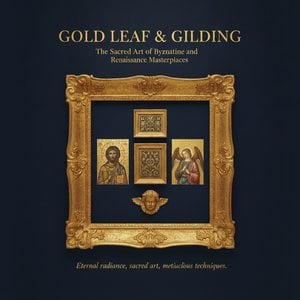
Explore the divine mastery of Byzantine gold leaf and gilding. Discover how ancient artisans used gold ground and mosaics to create celestial light, a timeless legacy of spiritual splendor and technical excellence in sacred art history.

Embark on a visual journey through the world's most radiant masterpieces. Discover how gold leaf, impasto textures, and gilded tones define luxury in fine art, from Byzantine icons to modern abstracts. Explore the eternal allure of gold in curated, museum-quality art collections.

Journey through the divine elegance of Duccio di Buoninsegna. Explore 25 iconic Sienese masterpieces, from the Maestà to the Rucellai Madonna. Find inspiration for museum-quality art reproductions and timeless decor. Discover all masterpieces on WahooArt.com.

Transform your interiors with the timeless radiance of gold leaf art. Discover museum-quality, hand-painted oil reproductions and bespoke gilded commissions. From Byzantine splendor to Klimt’s brilliance, explore exquisite pieces curated for the most discerning luxury collectors.

Immerse yourself in the golden splendor of Gustav Klimt. Explore 25 iconic Art Nouveau masterpieces, from The Kiss to his legendary portraits. Discover the stories behind these timeless works and find museum-quality art reproductions on WahooArt.com.
 Forhåndsvisning
 Send
Send Del
Del
 Vis detaljer
 Utskriftsvennlig guide

 Last ned bilde
 Liknende objekter
 Røntgenundersøkelse
 Lysbildefremvisning
 Spørsmål og svar
 Statistikk


 Vis hele teksten









 Glassalternativet er kun tilgjengelig i størrelser under 110 cm


