Om kunstneren
William-Adolphe Bouguereau: En Feiring av Skjønnhet og Klassisk Idealer
William-Adolphe Bouguereau, født i La Rochelle i 1825, var en fransk maler hvis liv ble et evigvarende testament til klassiske idealer og betagende realisme. Fra ung alder ble hans kunstneriske tendenser pleiet, noe som førte ham til Paris og den prestisjetunge École des Beaux-Arts. Der, under veiledningen av François-Edouard Picquenot, finpusset han ferdighetene sine, absorberte lærdommene fra de gamle mesterne – Raphael og Titian fremfor alt. Disse innflytelsene var ikke bare imitering; de ble grunnsteinen for Bouguereaus unike kunstneriske visjon, preget av nøyaktig detaljfantasier, lyse fargepaletter og en urokkelig forpliktelse til å skildre skjønnhet i dens mest idealiserte form. Han malte ikke bare det han *så*, men heller det han mente var iboende vakkert, strevde etter en perfeksjon som resonerte med tidens estetiske sanser.
Den Arkitekten av Akademisk Perfeksjon
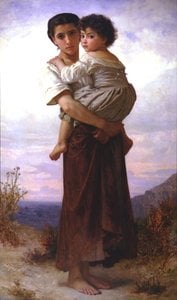
Bouguereaus kunstneriske stil blir ofte beskrevet som akademisk realisme, og det er helt korrekt. Han hadde en utenomordinær dyktighet i anatomi, lys og komposisjon. Hans lerreter er befolket av figurer skildret med bemerkelsesverdig presisjon – den delikate kurven på en skulder, den subtile glød av hud, dybden av et uttrykksfullt øye. Men hans verk går langt utover bare teknisk ferdighet; det er fylt med følelser og fortellermakt. Han skildret ofte mytologiske scener, og forvandlet gamle historier til livlige, emosjonelt resonante øyeblikk. *Fødselen av Venus*, for eksempel, er ikke bare en fremstilling av en gudinne som stiger opp fra havet; det er en feiring av kvinners grasiøsitet og eteriske skjønnhet. Lignende arbeider som *Zenobia Funnet av Gårdsfolk på Araxes-elvens Bredder* fanger sårbarhet og patos med bemerkelsesverdig følsomhet. Ut over mytologi fant Bouguereau inspirasjon i hverdagslivet – gårdsjenter som pleier flokken, unge jenter som leker, mødre som holder sine barn. Disse genrebildene, selv om de virket enkle, var fylt med en følelse av verdighet og særpreg som løftet dem til kunstens sfære. *Faneuse (1869)* er et godt eksempel på dette, og skildrer en ung kvinne i et fredelig landskap med en utmerket oppmerksomhet på detaljer og atmosfære. Hans dedikasjon til å fange uskyld er særlig tydelig i malerier som *Barn ved Badet*, hvor den delikate fremstillingen av hud og lys skaper et virkelig fengslende bilde.
Innflytelser og Utvikling
Bouguereaus kunstneriske reise ble formet av en rekke faktorer. Hans tidlige oppvekst i La Rochelle, omgitt av vinmarker og olivenlunder, la grunnlaget for hans kjærlighet til naturen og den klassiske verden. Hans onkel, en katolsk prest, introduserte ham for gresk mytologi og bibelske fortellinger, noe som ble en viktig inspirasjon gjennom hele hans karriere. Han studerte ved École des Beaux-Arts i Paris, hvor han lærte seg de tradisjonelle reglene for komposisjon og teknikk. Han ble sterkt påvirket av Raphael og Titian, og deres evne til å fange menneskelig skjønnhet og følelser ble en viktig del av hans egen stil. I løpet av sin karriere utviklet Bouguereau en unik teknikk, som kjennetegnes av sine nøyaktige detaljer, lyse farger og myke lyssetting. Han var kjent for å bruke et stort antall lag med maling for å skape en overflate som virket glatt og reflekterende.
Et Liv Dedikert til Kunst
Bouguereau ble utnevnt til *Salongmaler* i 1863, og han ble raskt en av de mest populære kunstnerne i Paris. Han viste verkene sine regelmessig på Salonen, den viktigste kunstutstillingen i Frankrike på den tiden. I løpet av sin karriere malte Bouguereau over 800 bilder, som omfatter mytologiske scener, genrebilder og portretter. Hans arbeid ble høyt verdsatt av kritikere og samlere, og han tjente betydelig formue på sine kunstverk. Han var også en respektert lærer, og underviste mange unge kunstnere i sin studio. Bouguereau døde i La Rochelle i 1905, etter å ha levd et langt og produktivt liv. Hans arv lever videre gjennom hans malerier, som er utstilt i museer over hele verden.
En Historisk Betraktning
I begynnelsen av det 20. århundre falt Bouguereaus kunst fra popularitet, da kunstsmaken generelt hadde endret seg. Han ble sett på som en sentimental akademiker, og hans malerier ble ansett som utdaterte og manglende originalitet. Men i de siste tiårene av det 20. århundre har det vært en ny interesse for Bouguereaus arbeid, og han er nå gjenoppdaget som en av de viktigste franske malerne på 1800-tallet. Hans tekniske dyktighet, hans evne til å fange skjønnhet og følelser, og hans bidrag til kunstens historie blir i dag anerkjent og verdsatt. Bouguereaus kunst er et bevis på kraften av talent, dedikasjon og en urokkelig tro på den vedvarende appellen til klassiske idealer. Han representerer toppen av akademisk kunstneri og tilbyr en tidløs visjon om skjønnhet som fortsatt fenger publikum i dag.



 Forhåndsvisning
 Kjøp håndlaget maleri
 Send
Send Del med andre
 Vis detaljer

 Last ned bildet
 Liknende objekter
 Røntgenundersøkelse
 Lysbildefremvisning
 Statistikk


 Vis hele teksten






































 Glassalternativet er kun tilgjengelig i størrelser under 110 cm