


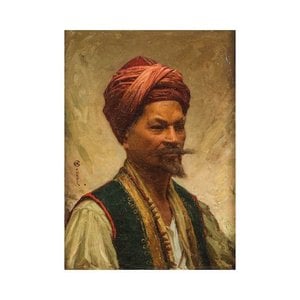
 Oil On CanvasWallArtAcademic Realism
 188819th Century
 41.0 x 36.0 cm
 Nasjonalgalleri i Melbourne
Kjøp et høyoppløselig, forbedret digitalt bilde som er langt bedre enn forhåndsvisningen på nettet.
Hver fil er omhyggelig klargjort av våre egne spesialister ved hjelp av avanserte verktøy og profesjonell manuell retusjering. Vi sørger for at hvert bilde har eksepsjonell klarhet, presis fargegjengivelse og fine detaljer.
Den endelige filen leveres via e-post innen 72 timer, optimalisert for umiddelbar bruk i profesjonelle, redaksjonelle og trykte miljøer. Dette er den samme kvaliteten som benyttes av ledende designstudioer, utgivere og gallerier.
Last ned en høyoppløselig fil for personlig bruk, utskrift og kreative prosjekter. ( Kjøp trykk Kjøp håndlaget maleri)
Når du velger WahooArt.com, får du ikke bare et bilde – du mottar et profesjonelt forbedret digitalt kunstverk, skapt med presisjon og med en garantert tilfredshetsgaranti. Her er alt som automatisk følger med din bestilling:

Din høyoppløselige digitale bildefil sendes til din e-post innen 72 timer etter bestilling – klar til umiddelbar bruk.

Ditt kunstverk blir profesjonelt optimalisert ved hjelp av avanserte AI-verktøy og manuell redigering, noe som sikrer maksimal detaljrikdom, klarhet og fargegjengivelse.

Har du ved et uhell slettet eller mistet filen din? Ingen bekymring – vi sender den på nytt når som helst, helt gratis.

Nyt ditt kunstverk umiddelbart uten toll, avgifter eller leveringskostnader – digitale nedlastinger er alltid avgiftsfrie.

Vi sikrer at ditt digitale bilde gjenspeiler de originale fargene så nøyaktig som mulig ved hjelp av profesjonelle verktøy og fargehåndtering.

Hvis du ikke er fornøyd med ditt digitale bilde, vil vi revidere det eller refundere 100% innen 100 dager – uten spørsmål.

Ikke fornøyd? Få full refusjon innen 100 dager etter at du har mottatt din digitale fil – uten spørsmål.

Kjøp 3 bilder, spar 10% - Kjøp 5, spar 15% - Kjøp 10+, spar 20%. Ideelt for kreative prosjekter, gallerier og byråer.
To gaze upon Mrs. L. A. Abrahams is to be invited into a hushed, intimate chamber of the late nineteenth century. Thomas William Roberts has masterfully captured not just a likeness, but an entire atmosphere—the quiet dignity of domestic life. The subject sits within the comforting embrace of her own home, a space rendered with such palpable detail that one can almost hear the soft clinking of porcelain or smell the faint scent of potted earth. Her presence is central, commanding attention through her serious yet deeply contemplative gaze, which seems to meet the viewer’s eye across the gulf of time. It is a portrait steeped in the quiet resonance of memory and settled routine.
Roberts' technical brilliance shines through every visible surface. The use of oil on canvas allows for an astonishing depth of color, enabling him to render both the richness of the fabrics and the subtle play of light across the polished surfaces. Observe the dining table, adorned with its collection of cups; each piece catches a distinct highlight, suggesting the morning sun filtering in from an unseen window. The inclusion of the vases and the verdant potted plant are not mere filler; they are carefully placed anchors that ground the scene in reality. This meticulous attention to everyday objects elevates the painting beyond simple portraiture into a profound study of domestic harmony.
Created in 1888, this work stands as a significant artifact from Australia's burgeoning artistic history. Thomas William Roberts, whose journey took him from Dorchester to Melbourne, became one of the most defining voices of his era. His ability to absorb and reinterpret the light and landscape of his new home while retaining a classical sense of portraiture is evident here. Owning a reproduction of Mrs. L. A. Abrahams allows contemporary admirers to connect directly with this pivotal moment in Australian cultural heritage, bringing a piece of that pioneering spirit into modern living spaces.
The painting speaks volumes without uttering a word. The arrangement—the seated figure surrounded by signs of cultivated life—suggests themes of permanence amidst change, and the quiet strength found within personal sanctuary. For the art lover or interior designer, this piece offers more than mere decoration; it provides an emotional anchor. It suggests that beauty can be found in the unposed moments, in the objects we cherish, and in the steady gaze of a life well-lived. A reproduction allows one to curate not just walls, but moods, infusing any room with the warm, contemplative glow of a bygone era.

1856 - 1931

 Forhåndsvisning
 Send
Send Del med andre
 Vis detaljer

 Last ned bildet
 Liknende objekter
 Røntgenundersøkelse
 Lysbildefremvisning
 Vis hele teksten


