Theo van Doesburg: Arkitekten av Abstraksjon
Theo van Doesburg, født Christian Emil Marie Küpper den 30. august 1883 i Utrecht, var mer enn bare en maler; han var en revolusjonerende kraft som omformet selve grunnlaget for moderne kunst. Hans reise begynte midt i de vedvarende ekkoene av impresjonismen og postimpresjonismen, og speilet opprinnelig stiler minnende om Vincent van Goghs – både i motivvalg og emosjonell intensitet. Likevel tjente denne tidlige fasen som en kritisk forberedelse, et nødvendig springbrett mot den radikale transformasjonen som skulle definere hans varige arv. Et avgjørende øyeblikk kom i 1913 med møtet med Wassily Kandinskys *Rückblicke*. Denne teksten utløste en dyp erkjennelse i van Doesburg: kunstig ekthet lå ikke i å gjenskape den ytre verden, men i å kanalisere en indre, åndelig virkelighet gjennom ren abstraksjon. Dette var overbevisningen som fødte Neoplasticisme – bevegelsen han grunnla og med lidenskap forsvart, og ble dens mest uttalte forkjemper.
Forming a New Visual Language: The Principles of De Stijl
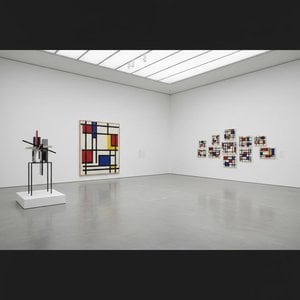
De Stijl var ikke bare en kunstnerisk stil; det var et omfattende filosofisk manifest oversatt til visuell form. Van Doesburg trodde på å redusere kunsten ned til dens mest essensielle elementer – rette linjer, rettvinklede vinkler og de primære fargene rød, gul og blå, sammen med svart, hvitt og grått. Denne austere paletten ble ikke født av begrensning, men fra et ønske om universellhet – en tro på at disse grunnleggende formene resonerte med en underliggende kosmisk orden. Han forestilte seg et *totalt* kunstverk, som utvidet seg utover lerretet for å omfatte arkitektur, design og til og med hverdagsgjenstander. Samarbeid var nøkkelen; van Doesburg arbeidet tett med arkitekter som J.J.P. Oud og Gerrit Rietveld, og designet glassmalerier, møbler og hele interiører som gjenspeilte prinsippene i De Stijl. Hans samarbeid utvidet seg til andre kunstnere som Piet Mondrian, med hvem han grunnla det innflytelsesrike tidsskriftet *De Stijl*, en plattform for å spre deres ideer og skape dialog blant kunstnere og intellektuelle. Likevel oppsto det spenninger mellom van Doesburg og Mondrian om strengheten i Neoplasticismen. Van Doesburg introduserte “Elementarism” i 1926, og forsøkte å injisere dynamikk inn i Neoplasticismen ved å introdusere diagonale linjer og en mer flytende tilnærming til komposisjon.
Beyond Painting: A Multifaceted Artistic Vision
Mens han ble feiret som maler, var van Doesburgs kunstneriske strekker bemerkelsesverdig mangfoldige. Han var en produktiv skribent, poet og kritiker, og brukte sin penn til å uttrykke de teoretiske underpinnene til De Stijl og utfordre konvensjonelle oppfatninger av kunst. Hans engasjement i Dadaismen tidlig på 1920-tallet utvidet ytterligere hans kunstneriske horisonter, noe som førte til eksperimentelle verk som inkluderte collage og typografi. Denne perioden så også ham undervise ved Bauhaus, hvor han delte sine ideer med en ny generasjon kunstnere og designere. Han var ikke fornøyd med å forbli innenfor grensene for tradisjonelle kunstformer; van Doesburg søkte aktivt etter å integrere kunst i hverdagen, og trodde at den hadde kraften til å transformere samfunnet. Hans design for interiører og møbler var ikke bare estetiske øvelser, men forsøk på å skape harmoniske boliger som gjenspeilte prinsippene i De Stijl. Et typisk eksempel er hans samarbeid med Sophie Taeuber-Arp og Georges Vantongerloo ved å designe kunstnerboliger, noe som viste en helhetlig tilnærming til kunstnerisk skapelse – et forsøk på å bygge en verden *i* bildet av hans idealer.
Influences and Development
Van Doesburgs kunstneriske utvikling var preget av en konstant søken etter nye uttrykksformer og ideer. Han ble dypt påvirket av Kubismen, som han studerte nøye i Paris, og eksperimenterte med å kombinere kubistiske elementer med sine egne abstrakte konsepter. Hans møte med Kandinsky i 1913 var avgjørende for hans overgang til abstraksjon, og inspirerte ham til å se kunst som en måte å uttrykke det spirituelle på. Han ble også en aktiv deltaker i den intellektuelle debatten om kunsten og samfunnet, og skrev artikler og essays om sine ideer. Hans engasjement i Dadaismen førte til at han utforsket nye former for kunstnerisk uttrykk, inkludert collage og typografi, og bidro til å forme den abstrakte bevegelsen på 1920-tallet.
Legacy and Enduring Influence
Theo van Doesburgs liv ble tragisk avbrutt i 1931, men hans innflytelse på moderne kunst er fortsatt dypgående. De Stijl, selv om det var relativt kortvarig som en samlet bevegelse, utøvde enorm innflytelse på etterfølgende kunstutviklinger, inkludert Bauhaus-design, Minimalisme og Konstruktivisme. Hans vektlegging av geometrisk abstraksjon, ren farge og funksjonalitet resonnerer fortsatt med kunstnere og designere i dag. Hans verk tjener som en påminnelse om at kunst ikke bare handler om representasjon, men om å utforske grunnleggende former og ideer. Van Doesburgs visjon om en forent, harmonisk verden – uttrykt gjennom språket til De Stijl – inspirerer fortsatt de som søker å skape et mer vakkert og meningsfylt miljø.
Key Works & Lasting Impact
- Study for Simultaneous Compositions XXII (1922): Et typisk eksempel på Neoplasticisme, som viser bevegelsens signatur geometriske former og begrensede fargepalett.
- Composition with half values (1928): Demonstrerer van Doesburgs utforskning av tonevariasjoner innenfor De Stijl-estetikken.
- Dancers (1917-1918): Representerer en overgangsfase i hans arbeid, som blander figurative elementer med fremvoksende abstrakte tendenser.
- Collaboration on *De Stijl* journal: En kritisk plattform for å spre bevegelsens ideer og skape dialog blant kunstnere og intellektuelle.
- Elementarism (1926): Van Doesburgs forsøk på å injisere dynamikk inn i Neoplasticismen ved å introdusere diagonale linjer og en mer flytende tilnærming til komposisjon.



 Forhåndsvisning
 Bytt til trykk
 Send
Send Del
Del
 Vis detaljer
 Utskriftsvennlig guide

 Last ned bilde
 Liknende objekter
 Røntgenundersøkelse
 Lysbildefremvisning
 Q&A
Q&A Statistikk


 Vis hele teksten






































 Glassalternativet er kun tilgjengelig i størrelser under 110 cm