


x


 Bestill trykk Kjøp digitalt bilde
 Send
Send
 Details
 Legg til i favoritter
 Last ned bildet
 Liknende objekter
 X-Ray
X-Ray
 Lysbildefremvisning
 Olje på treplateAnnetBarok
 1625
1625 85.0 x 61.0 cm
Håndmalt olje på lerret i din valgte størrelse og ramme, laget på bestilling av våre kunstnere.
Velg mellom våre forhåndsdefinerte størrelser som bevarer kunstverkets opprinnelige proporsjoner.

Du kan angi egne mål for å tilpasse en spesifikk ramme eller plass. Dersom den valgte størrelsen ikke samsvarer med originalbildets proporsjoner, vil vi enten beskjære kunstverket eller utvide maleriet med ytterligere håndmalte elementer. En digital mockup vil bli sendt til din godkjenning før produksjonen starter.
Vennligst merk at forhåndsvisningen på skjermen ikke gjenspeiler den faktiske beskjæringen eller utvidelsen. Kun mockuppen vil vise den endelige komposisjonen nøyaktig.
Selv om tilpassede størrelser er tilgjengelige, anbefaler vi å velge et mål fra den forhåndsdefinerte listen for å bevare de originale proporsjonene.
Verdensomspennende levering () på 3–4 uker i stedet for standard 5 uker. (1 July). Ingen kompromisser med kvaliteten.


Selvportrett
Størrelse på reproduksjon
Peter Paul Rubens's self-portrait, painted in 1625, is far more than a simple likeness; it’s a profound and intensely personal revelation. This oil on panel, measuring a modest 85 x 61 centimeters, offers an unprecedented glimpse into the mind of one of the most influential figures of the Flemish Baroque – a man grappling with his own identity, artistic ambitions, and the weighty responsibilities of a celebrated artist. The painting resides within the Gemaldegalerie Donaueschingen, a testament to its enduring significance and the institution’s commitment to preserving cultural heritage.
The immediate impact is one of quiet contemplation. Rubens isn't presenting a flamboyant display of wealth or power; instead, he’s depicted with a deliberate solemnity. His gaze, fixed beyond the viewer, suggests an inward focus, a deep engagement with something unseen – perhaps a memory, a creative impulse, or simply the weight of his own legacy. The beard, neatly trimmed but bearing the marks of time and experience, adds to this sense of gravitas. The simple black hat, angled slightly off-center, is not merely an accessory; it subtly frames his face, drawing attention to his eyes – windows into a complex and deeply thoughtful soul.
Rubens’s mastery of technique is immediately apparent. He employs the dramatic principles of chiaroscuro—the masterful manipulation of light and shadow—to create an astonishing sense of volume and depth. The dark background, rendered with subtle washes of brown underpaint, serves to intensify the luminosity of his face and hands. This isn't a flat, two-dimensional representation; it’s a sculpted portrait, alive with texture and movement. Notice how the light catches the folds of his clothing, highlighting their richness and detail, while simultaneously obscuring other areas in shadow, creating an illusion of three-dimensionality.
The brushwork itself is remarkably expressive. Rubens doesn't shy away from visible strokes—a characteristic of the Baroque style—which contribute to the painting’s dynamic energy. The application of paint varies across the surface; some areas are thinly scrubbed, revealing the wood beneath, while others boast thick, impastoed layers that seem to shimmer with color and vitality. This deliberate variation in technique adds another layer of visual interest and reinforces the sense of movement within the composition.
To fully appreciate this self-portrait, it's crucial to understand the historical context in which it was created. 1625 falls during a period of immense artistic and cultural ferment in Europe – the height of the Baroque era. Rubens himself was deeply involved in the political and diplomatic landscape of his time, serving as an ambassador for the Spanish court. This experience undoubtedly informed his work, imbuing it with a sense of grandeur and formality. The portrait reflects this dual existence: the artist-intellectual engaged in scholarly pursuits alongside the diplomat navigating complex international relations.
Furthermore, Rubens’s artistic style was deeply rooted in classical ideals, yet he infused them with a distinctly Baroque sensibility – characterized by heightened emotion, dramatic lighting, and dynamic composition. His work drew inspiration from Renaissance masters like Titian and Michelangelo, but he pushed the boundaries of realism and expression to create something entirely new. The inclusion of elements such as the rock and reddening sky—a subtle nod to his own name (Petrus et caelum rubens)—demonstrates this intellectual engagement with his art.
Rubens’s self-portraits are not merely technical exercises; they offer invaluable insights into the artist's life, personality, and artistic philosophy. They reveal a man of considerable intellect, ambition, and emotional depth – a complex individual grappling with his own identity within a rapidly changing world. The intensity of his gaze, the subtle nuances of expression, and the masterful use of light and shadow all contribute to a portrait that transcends the limitations of mere likeness.
Consider, too, the significance of the act of self-portraiture itself. In an era when artists were often commissioned to paint portraits of wealthy patrons, Rubens’s decision to depict himself was remarkably bold – a declaration of his own artistic agency and a challenge to conventional notions of representation. For those seeking to understand the profound impact of one of history's greatest painters, exploring works like “The Triumph of Julius” or “The Meeting of Abraham and Melchizedek,” alongside resources such as Wikipedia articles on Rubens and his key paintings, offers a richer appreciation of his artistic genius.
To delve deeper into the historical context surrounding Rubens’s life and work, consider examining resources like The Elevation of the Cross (Rubens) and Massacre of the Innocents (Rubens), alongside broader historical studies such as History of Painting.


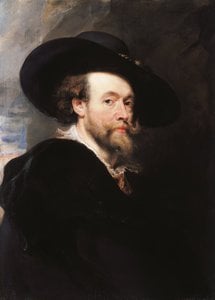
1577 - 1640 , Tyskland

Discover the life & art of Peter Paul Rubens, the most influential artist of the Flemish Baroque tradition. Explore his masterpieces, legacy, and impact on art history with WahooArt.

Oppdag de 10 mest innflytelsesrike oljemaleriene gjennom tidene! Fra Mona Lisa til Van Goghs mesterverk – lær historien bak ikoniske kunstverk og finn inspirasjon for ditt hjem. Museumskvalitet reproduksjoner på WahooArt.com.

Transform cherished photos into timeless oil paintings with skilled artists. Trusted for bespoke portraits & heirloom art. Discover the process, styles & lasting value – a legacy preserved.

Explore the fascinating evolution of portraiture from classical masterpieces to digital art! Discover symbolism, techniques & societal impact. Expert insights for collectors & enthusiasts at WahooArt.
Utforsk oljemaleriets kraft og digitalfotografiets nye liv! Eksklusive reproduksjoner, håndmalt fan art & personlig kunstkonsultasjon. Museumskvalitet – WahooArt.com.


Hold deg oppdatert med de siste kunstnyhetene, eksklusive tilbud og dekorasjonsideer.
Fortell oss om prosjektet ditt, så vil våre kunsteksperter gi deg 3 personlige kunstforslag.
Vi velger ut 3 alternativer kun for deg – helt gratis!
 Del med andre





































 Les mer om dette
 Glassalternativet er kun tilgjengelig i størrelser under 110 cm


