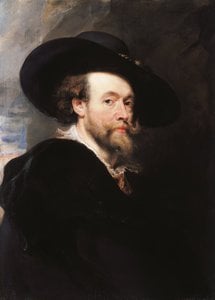
A Life Forged in Baroque Splendor
Sir Peter Paul Rubens, et navn som runger med selve essensen av Barokkens dynamikk, var langt mer enn bare en maler. Han var en diplomat, en lærd og en kulturell arkitekt som fundamentalt forandret det kunstneriske landskapet i 1600-tallets Europa. Født i Siegen, Tyskland, i 1577, ble hans tidlige liv preget av forflytning – en dannelsesreise som subtilt ville infiltrere hans senere verk med en understrøm av drama og emosjonell dybde. Hans far, Jan Rubens, en jurist på flukt fra religiøs forfølgelse for sine kalvinistiske tro, flyttet familien fra deres opprinnelige hjemsted i Antwerpen, da under spansk styre. Denne første eksilen la grunnlaget for en følelse av motstandsdyktighet og tilpasningsevne, kvaliteter som ville tjene ham godt gjennom hele hans mangefasetterte karriere. Etter farens død i 1587, returnerte familien til Antwerpen, hvor han mottok en humanistisk utdannelse før han begynte sin kunstneriske opplæring rundt 1590, og lærte under Tobias Verhaecht og Adam van Noort, og finpusset grunnleggende ferdigheter i tegning og maleteknikker. Det var imidlertid hans tid med Otto van Veen som viste seg å være avgjørende, og introduserte ham for det rike arven fra renessansens kunst – en verden han snart ville omfavne helhjertet.
Den Italienske Oppvåkningen og Kunstnerisk Syntese
I 1600 seilte Rubens avsted på en transformativ reise til Italia, en pilegrimstokt som uomtvitelig formet hans kunstneriske visjon. I åtte år fordypte han seg i mesterverkene fra Michelangelo, Raphael og Titian, og absorberte deres dyktighet innen form, farge og komposisjon. Den italienske gigantenes innflytelse er tydelig synlig i hans tidlige italienske verk, karakterisert av klassiske temaer og idealiserte figurer. Likevel kopierte Rubens ikke bare; han syntetiserte disse influensene med sin egen iboende talent, og utviklet en distinkt stil preget av livlige farger, dynamiske komposisjoner og en sanselig fremstilling av den menneskelige formen. Han studerte anatomi nøye, noe som resulterte i figurer som besitter både fysisk realisme og emosjonell kraft – robuste kropper fylt med liv og bevegelse. Denne perioden var ikke bare en kunstnerisk utvikling; det var en dyp intellektuell oppvåkning, som fremmet en dyp forståelse for klassisk mytologi og litteratur, som ville bli tilbakevendende motiver i hans verk. Han returnerte til Antwerpen i 1608, hvor han raskt etablerte seg som den ledende kunstneren på sin tid, mottok en strøm av bestillinger som vitnet om hans voksende rykte og solidifiserte hans posisjon foran den flamske kunsten.
En Mester i Mange Former: Maleri Ut over Grenser
Rubens’s kunstneriske utfoldelse var bemerkelsesverdig mangfoldig og produktiv. Han begrenset ikke sin kreativitet til én sjanger; heller utmerket han seg innen historie malerier, mytologiske scener, portretter, landskap og religiøse verk – et vitnesbyrd om hans versatilitet og grenseløse kreativitet. Hans store lerrebuketter, ofte ment for kirker, palasser og offentlige rom, var imponerende utstillinger av teknisk dyktighet og dramatisk fortelling.
Nedstigningen fra Korset (c. 1612-1614) illustrerer hans mesterskap i å manipulere lys og skygge for å skape et bilde av dyp emosjonell intensitet, og trekker seerne inn i hjertet av fortellingen.
Høyelsen fra Korset (1610-1611), med sine virvlende figurer og dynamiske komposisjon, viser hans evne til å formidle bevegelse og energi – et kjennetegn på hans Barokk stil. Selv i tilsynelatende statiske emner som
Parisdommen (c. 1636), injiserte Rubens en følelse av liv og vitalitet gjennom sin rike fargepalett og sanselige fremstilling av den menneskelige formen. Hans teknikk var like bemerkelsesverdig – en mesterskunnskap i oljemaling, som benyttet seg av impasto for å skape tekstur og dybde, sammen med delikate glazerteknikker for å oppnå lummere effekter. Han brukte ofte allegoriske figurer og symbolske bilder, og lagde narrativer med komplekse betydninger som inviterte til refleksjon og tolkning.
Diplomati, Arv og Varig Innflytelse
Rubens’s innflytelse utgikk langt utenfor kunstens sfære. Hans diplomatiske ferdigheter var høyt etterspurt av det sørlige Nederland (moderne Belgia), og han gjennomførte en rekke oppdrag til England, Frankrike og Spania, forhandlet om fredsavtaler og fremmet politiske allianser – en unik dobbeltrolle som ga ham et nyansert perspektiv på europeisk politikk og ytterligere styrket hans rykte som en mann av intellekt og innflytelse. I 1625 ble byen Antwerpen rammet av pesten. Rubens flyttet familien til Brussel, hvor hans kone ble syk og døde, sannsynligvis av pest. Vanligvis en mann som stolte på sin stoikisme, var Rubens knust over tapet av ‘den jeg måtte elske og kære så lenge jeg lever’. Han kastet seg inn i sitt diplomatiske arbeid for å distrahere seg. Han tilbrakte flere måneder i England hvor han utførte flere bestillinger for kong Charles I. I både Frankrike og England ble Rubens en diplomat, og han forhandlet avtaler for Isabella Clara Eugenia, den guvernøren av det spanske Nederland. I bytte ga Isabella ridderkåpen til sin lojale maler, og kunstneren ble Sir Peter Paul Rubens.
Nøkkelkarakteristikker ved Rubenes Stil
- Dynamisk Komposisjon: Rubenes’s malerier er kjent for sine energiske og dramatiske arrangementer av figurer.
- Livlige Fargepaletter: Han benyttet seg av et rikt, varmt fargespekter som ga hans lerret liv.
- Sanselige Figurer: Hans fremstillinger av den menneskelige form var preget av fylde, vitalitet og ofte, åpenbar sensualitet.
- Mesterskunnskap i Lys og Skygge: Rubens manipulerte lys og skygge på en dyktig måte for å skape dybde, drama og emosjonell effekt.
- Allegorisk Symbolikk: Hans verk inneholdt ofte allegoriske figurer og symbolske bilder, som la til lag med mening og kompleksitet.



 Forhåndsvisning
 Kjøp håndlaget maleri
 Send
Send Del med andre
 Vis detaljer

 Last ned bildet
 Liknende objekter
 Røntgenundersøkelse
 Lysbildefremvisning
 Statistikk


 Vis hele teksten






































 Glassalternativet er kun tilgjengelig i størrelser under 110 cm