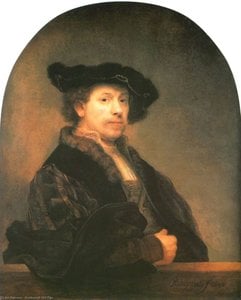
A Window into the Enlightenment: Sir Joshua Reynolds’ “Self-Portrait”
Sir Joshua Reynolds' "Self-Portrait," painted in 1747-1749, isn’t merely a likeness; it’s a carefully constructed declaration of an artist’s ambition and his understanding of the era. This captivating work, now residing within the esteemed collection of the SCAD Museum of Art in Savannah, offers a rare glimpse into the mind of one of Britain's most influential figures in 18th-century art – a man who fundamentally reshaped the very notion of portraiture. The painting immediately draws the eye with its dramatic lighting, a hallmark of Reynolds’ “Grand Style,” where shadows are sculpted to enhance form and create an atmosphere of both solemnity and vibrant energy. The artist himself is presented not as a humble craftsman, but as a figure of authority and intellectual prowess – his gaze direct and confident, suggesting a man acutely aware of his own importance within the cultural landscape.
A Masterclass in Technique: The Reynoldsian Approach
Reynolds’ skill lies not just in capturing a physical likeness but in imbuing that likeness with character and depth. Observe the meticulous rendering of his wig, styled with an almost theatrical flourish – a deliberate choice reflecting the fashionable sensibilities of the time. The ruffled collar, meticulously detailed, speaks to his status and connection to the aristocratic circles he frequented. But it’s the subtle manipulation of light and shadow that truly elevates the portrait. Reynolds employed a technique known as *chiaroscuro*, expertly contrasting areas of bright illumination with deep shadows, creating a sense of three-dimensionality and drawing attention to key features. The impasto – the thick application of paint – adds texture and visual interest, particularly noticeable in the folds of his clothing and the suggestion of fabric beneath his jacket. This wasn’t simply about painting; it was about sculpting light and form onto canvas.
Echoes of Antiquity: Symbolism and Context
The “Self-Portrait” is deeply rooted in the artistic principles of the Enlightenment, a period characterized by a renewed interest in classical antiquity. Reynolds, heavily influenced by artists like Leonardo da Vinci and Michelangelo, sought to emulate their mastery of anatomy, perspective, and dramatic composition. The pose itself – reminiscent of Roman statues – deliberately connects him to this rich heritage. Furthermore, the inclusion of his ear trumpet, a symbol of his partial deafness acquired during his time in Rome, subtly acknowledges his artistic journey and intellectual pursuits. It’s a quiet testament to the challenges he overcame in pursuit of his craft. The painting also reflects Reynolds' belief that art should be idealized – not a slavish imitation of reality but an elevation of it, reflecting the beauty and harmony inherent within human form.
Beyond the Brush: A Legacy of Influence
Sir Joshua Reynolds’ “Self-Portrait” is more than just a personal depiction; it's a pivotal document in the history of British art. His theories on painting, articulated in his influential *Discourses on Art*, established the "Grand Style," which dominated portraiture for decades and profoundly impacted subsequent generations of artists. He championed the idea that painters should study classical models and strive to create works of beauty and harmony – a philosophy that shifted the focus from mere likeness to artistic expression. The painting’s enduring appeal lies in its ability to transport us back to a pivotal moment in art history, offering a window into the mind of a visionary artist who shaped the course of British painting. Reproductions of this iconic work continue to inspire and captivate, reminding us of the power of art to both reflect and shape our understanding of the world.
- Artist: Sir Joshua Reynolds
- Date: 1747-1749
- Medium: Oil on Canvas
- Location: SCAD Museum of Art, Savannah, United States



 Forhåndsvisning
 Bytt til trykk
 Send
Send Del med andre
 Vis detaljer
 Veiledning

 Last ned bildet
 Liknende objekter
 Røntgenundersøkelse
 Lysbildefremvisning
 Statistikk


 Vis hele teksten