Forhåndsvisning Se i AR Bytt til trykk Kjøp håndlaget maleri Send
Vis detaljer Veiledning Legg til i favoritter Last ned bildet Liknende objekter Røntgenundersøkelse Lysbildefremvisning Statistikk

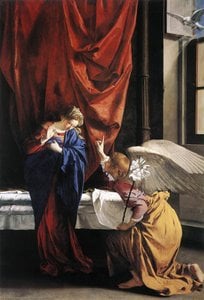
The Annunciation

Explore Scipione Pulzone’s Baroque ‘Annunciation’ (1587). A dramatic oil painting featuring Mary & Gabriel, rich detail, and symbolic elements. Discover this masterpiece of Italian art.

Scipione Pulzone (1544-1598): Neapolitan Renaissance master renowned for detailed portraits of nobility & Counter-Reformation religious art. Explore his unique style!

Kjøp et høyoppløselig, forbedret digitalt bilde som er langt bedre enn forhåndsvisningen på nettet.

Hver fil er omhyggelig klargjort av våre egne spesialister ved hjelp av avanserte verktøy og profesjonell manuell retusjering. Vi sørger for at hvert bilde har eksepsjonell klarhet, presis fargegjengivelse og fine detaljer.

Den endelige filen leveres via e-post innen 72 timer, optimalisert for umiddelbar bruk i profesjonelle, redaksjonelle og trykte miljøer. Dette er den samme kvaliteten som benyttes av ledende designstudioer, utgivere og gallerier.

Digitalt bilde

Last ned en høyoppløselig fil for personlig bruk, utskrift og kreative prosjekter. ( Bytt til trykk Kjøp håndlaget maleri)

Totalbeløp

$ 24.90

Inkludert i alle bestillinger av digitale bilder

Ekspert digital levering, garantert

Når du velger WahooArt.com, får du ikke bare et bilde – du mottar et profesjonelt forbedret digitalt kunstverk, skapt med presisjon og med en garantert tilfredshetsgaranti. Her er alt som automatisk følger med din bestilling:

shipping_icon
Rask digital levering

Din høyoppløselige digitale bildefil sendes til din e-post innen 72 timer etter bestilling – klar til umiddelbar bruk.

canvas_icon
KI-forbedret digital fil

Ditt kunstverk blir profesjonelt optimalisert ved hjelp av avanserte AI-verktøy og manuell redigering, noe som sikrer maksimal detaljrikdom, klarhet og fargegjengivelse.

insurance_icon
Gratis livslang nyutlevering

Har du ved et uhell slettet eller mistet filen din? Ingen bekymring – vi sender den på nytt når som helst, helt gratis.

tax_icon
Ingen importavgifter – noen gang

Nyt ditt kunstverk umiddelbart uten toll, avgifter eller leveringskostnader – digitale nedlastinger er alltid avgiftsfrie.

color_icon
Garantert fargenøyaktighet

Vi sikrer at ditt digitale bilde gjenspeiler de originale fargene så nøyaktig som mulig ved hjelp av profesjonelle verktøy og fargehåndtering.

return_icon
100 dagers tilfredshetsgaranti

Hvis du ikke er fornøyd med ditt digitale bilde, vil vi revidere det eller refundere 100% innen 100 dager – uten spørsmål.

guarantee_icon
100% Penggaranti

Ikke fornøyd? Få full refusjon innen 100 dager etter at du har mottatt din digitale fil – uten spørsmål.

discount_icon
Rabatt ved storkjøp

Kjøp 3 bilder, spar 10% - Kjøp 5, spar 15% - Kjøp 10+, spar 20%. Ideelt for kreative prosjekter, gallerier og byråer.

Kort om verket

  • Subject or theme: Religious narrative
  • Location: Private Collection
  • Title: The Annunciation
  • Year: 1587
  • Medium: Oil on panel
  • Artistic style: Detailed realism
  • Influences: Italian Renaissance

A Celestial Encounter in Oil and Light

In the quiet, hallowed stillness of Scipione Pulzone’s 1587 masterpiece, The Annunciation, time seems to suspend itself. This profound work captures the precise, breathless moment when the Archangel Gabriel descends to deliver a divine decree to the Virgin Mary. It is not merely a depiction of a biblical event, but a carefully orchestrated visual drama that invites the viewer into a sacred dialogue. As your eyes wander through the composition, you encounter the tender presence of a young John the Baptist, whose excited gestures toward a blossoming lily serve as a poignant reminder of the life and purity about to unfold. The painting breathes with a sense of spiritual immediacy, pulling the observer into an intimate interior space where the earthly and the divine intersect through a soft, ethereal glow.

The technical brilliance of Pulzone lies in his ability to move beyond the artificiality of Mannerism toward a refined, luminous realism. Utilizing oil on canvas, the artist employs meticulous brushwork to sculpt the figures with anatomical precision and a palpable sense of volume. One cannot help but be captivated by the dramatic chiaroscuro—the masterful interplay of light and shadow that defines the scene. A celestial light source, seemingly emanating from an unseen heaven, bathes the central figures in a radiant warmth, creating a halo effect around the dove of the Holy Spirit. This light does more than illuminate; it sanctifies, casting deep, velvety shadows into the recesses of the room and highlighting the rich textures of flowing fabrics and smooth skin, making the scene feel both monumental and deeply human.

Symbolism and the Soul of the Counter-Reformation

To understand this painting is to understand the heartbeat of the late Renaissance and the dawn of the Baroque era. Created in the wake of the Council of Trent, Pulzone’s work embodies the Counter-Reformation's mission: to use art as a vessel for intense religious devotion and emotional resonance. Every element within the frame is heavy with symbolic meaning, designed to inspire awe and contemplation in the faithful. The lily, held or gestured toward, stands as an eternal emblem of Mary’s purity, while the dove descending through the light represents the divine presence of the Holy Spirit. These symbols are not merely decorative; they are the theological anchors that ground the viewer's emotional response in a sense of profound grace and salvation.

For the discerning collector or interior designer, The Annunciation offers more than just historical significance; it provides a centerpiece of unparalleled emotional depth. The painting’s vertical orientation and balanced composition make it an exquisite addition to a space that seeks to evoke tranquility, dignity, and intellectual curiosity. Whether placed in a grand gallery or a quiet study, the rich palette of deep blues and vibrant reds, contrasted against the dramatic shadows, creates a focal point that commands attention while fostering a meditative atmosphere. Owning a high-quality reproduction of this Baroque treasure allows one to bring a piece of Italy's spiritual and artistic heritage into the modern home, transforming any environment into a sanctuary of beauty and light.


Om kunstneren

Scipione Pulzone: Life and Legacy

Early Life and Training

Scipione Pulzone (1544 – February 1, 1598), also known as Il Gaetano, was a prominent Neapolitan painter of the late Italian Renaissance. Born in Gaeta around 1550, he began his artistic journey within the workshop of Jacopino del Conte in Rome. This foundational training proved crucial to his development, shaping his early style and providing access to the vibrant Roman art scene.

Artistic Development and Style

Pulzone’s work distinguished itself from the prevailing Mannerist trends of his time. He developed a refined and detailed approach, characterized by precise rendering and a focus on naturalism. While influenced by earlier masters, he forged a unique style that blended elegance with religious fervor – particularly relevant during the period of the Counter-Reformation.

  • His portraits are noted for their meticulous detail and psychological insight.
  • Religious paintings often feature dramatic compositions and emotive figures.
  • He skillfully balanced Renaissance ideals with emerging Baroque sensibilities.

Major Works and Achievements

Pulzone’s career spanned Naples, Florence, and Rome, resulting in a diverse body of work. Some of his most significant achievements include:

  • Portraits of Prominent Figures: He painted portraits of Pope Gregory XIII, Cardinal de' Medici, Francesco I de’ Medici, Grand Duke of Tuscany, and their wives, Eleanor and Marie de’ Medici.
  • Religious Commissions: Notable religious works include the “Assumption with the Apostles” for San Silvestro al Quirinale, a “Pietà” for the Gesù church, and a “Crucifixion” for Santa Maria in Vallicella.
  • Mater Divinae Providentiae (around 1580): This painting is particularly significant as it inspired the Roman Catholic cult of devotion to Our Lady of Providence.

Influences and Legacy

Pulzone’s artistic development was shaped by several key influences:

  • Jacopino del Conte: His initial teacher, providing a strong foundation in technique and composition.
  • Girolamo Siciolante da Sermoneta: A significant influence on his religious paintings, particularly in terms of compositional style and emotional intensity.

Pulzone’s legacy lies in his ability to synthesize Renaissance ideals with the evolving artistic landscape of the late 16th century. He was one of the most esteemed artists active in Rome during this period, leaving behind a body of work that continues to be admired for its technical skill and expressive power.

Historical Significance

Scipione Pulzone’s art reflects the religious and political climate of the Counter-Reformation. His detailed and emotionally resonant paintings served as powerful tools for conveying Catholic doctrine and inspiring devotion. He successfully navigated the artistic demands of both secular courts and the Church, establishing himself as a versatile and highly sought-after artist.

Scipione Pulzone

Scipione Pulzone

1550 - 1598 , Italy

Kort om kunstneren

  • Birth Date: 1544
  • Birth Place: Gaeta, Italy
  • Death Date: February 1, 1598
  • Influenced By: Jacopino del Conte, Girolamo Siciolante da Sermoneta
  • Movement: Late Italian Renaissance
  • Name: Scipione Pulzone
  • Nationality: Italian
  • Notable Works:
    • Assumption with the Apostles
    • Pietà
    • Crucifixion
    • Mater Divinae Providentiae