Kunstverket som vises på denne siden er beskyttet av opphavsretten, noe som betyr at vi ikke har juridisk tillatelse til å lage eller selge identiske reproduksjoner. Denne beskyttelsen håndheves i henhold til internasjonale avtaler som for eksempel Bernerkonvensjonen og av nasjonale lover, inkludert de som er fastsatt i Amerikansk lov om opphavsrett – Tittel 17.
Denne metoden er i fullt samsvar med opphavsrettslige regler, da den ikke innebærer kopiering eller duplisering av det beskyttede kunstverket. I stedet er det snakk om en kreativ nytolkning – et nytt maleri som er inspirert av originalen, men ikke identisk med den.
Giclée- eller lerretsprint av museumskvalitet med rask produksjon og fleksible valgmuligheter for etterbehandling. ( Kjøp håndmalt maleri Bytt til digitalt bilde)





























Velg mellom våre forhåndsdefinerte størrelser som bevarer kunstverkets opprinnelige proporsjoner.

Skriv inn ønsket bredde og høyde for å tilpasse trykket til din ramme eller vegg. Et trykk kan kun beskjæres, aldri skaleres opp utover motivets opprinnelige størrelse, noe som betyr at et format med andre proporsjoner vil føre til tap av deler av bildet. Vi sender deg en digital mockup for godkjenning før vi starter trykkeprosessen. Bildet som vises på denne siden viser ikke den faktiske beskjæringen — det er kun mockuppen som viser dette.
Verdensomspennende levering () på 2 uker i stedet for standard 4/5 uker. (21 November)
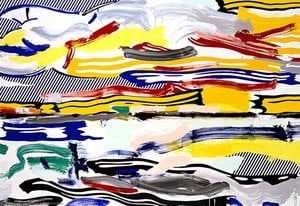
Sinking Sun
Størrelse på reproduksjon
Roy Lichtenstein’s Sinking Sun, painted in 1964, isn't merely a depiction of a sunset; it’s a carefully constructed meditation on the anxieties and visual language of the burgeoning Pop Art movement. Emerging from the shadows of Abstract Expressionism, Lichtenstein sought to dismantle traditional notions of fine art by embracing the imagery of popular culture – advertising, comic books, and everyday objects – transforming them into sophisticated works of art. Sinking Sun embodies this shift perfectly, capturing a fleeting moment of dramatic beauty while simultaneously hinting at an underlying sense of unease.
The painting’s genesis lies in the artist's fascination with the visual techniques employed in commercial printing, particularly the use of Ben-Day dots. This technique, borrowed from the world of mass production, creates a mosaic effect of tiny colored squares that mimics the appearance of halftone patterns found in newspapers and magazines. Lichtenstein masterfully employs this method to render the fiery hues of the sunset – vibrant yellows, deep oranges, and streaks of purple – imbuing the scene with an almost photographic quality while simultaneously distancing it from traditional representational painting. The deliberate flatness of the color fields contributes to the work’s immediate impact, drawing the viewer into its bold and dynamic composition.
The composition of Sinking Sun is deceptively simple yet profoundly effective. A dramatic sunset dominates the canvas, with a large, cloud-obscured sun positioned just above the horizon line. The clouds themselves are rendered in soft pinks and blues, creating a sense of depth and atmospheric perspective. A subtle rainbow arcs across the upper portion of the painting, adding a touch of hopeful beauty to the scene – a fleeting promise after the intensity of the sunset. However, it’s not just a picturesque landscape; the receding horizon line suggests a downward trajectory, subtly conveying a feeling of decline or transition.
The choice of subject matter itself is significant. A sinking sun has long been a potent symbol in art and literature, representing endings, mortality, and the passage of time. In Sinking Sun, this symbolism is amplified by Lichtenstein’s stylistic choices. The bright colors and simplified forms contrast sharply with the melancholic connotations of the subject matter, creating a compelling tension between beauty and sadness.
Lichtenstein’s work, including Sinking Sun, played a pivotal role in challenging established artistic conventions. By appropriating imagery from popular culture – a deliberate move away from the traditional subjects of fine art – he questioned the very definition of what constituted “art.” His use of comic book aesthetics, bold colors, and mass-produced techniques directly confronted the elitism and intellectualism often associated with the art world. Sinking Sun exemplifies this challenge, demonstrating how seemingly mundane imagery could be elevated to a level of artistic significance.
Today, Sinking Sun is recognized as an iconic image of American Pop Art and a testament to Lichtenstein’s innovative approach. Its vibrant colors, meticulous attention to detail, and subtle symbolism continue to resonate with viewers. The painting serves as a poignant reminder of the cultural landscape of its time – a period marked by rapid technological advancements, consumerism, and a growing sense of uncertainty. More than just a beautiful image, Sinking Sun offers a glimpse into the anxieties and aspirations of a generation grappling with the complexities of modernity. It’s a work that invites contemplation and rewards repeated viewing, revealing new layers of meaning with each encounter.
Further Resources: Roy Lichtenstein: Sinking sun, Roy Lichtenstein: Figures with sunset, Roy Lichtenstein: We rose up slowly, Roy Lichtenstein: Crying girl
Artist Information: Roy Fox Lichtenstein (1923-1997) was an American pop artist. He rose to prominence in the 1960s through pieces which were inspired by popular advertising and the comic book style. Much of his work explores the relationship between fine art, advertising, and consumerism.
Additional Research: Roy Lichtenstein, Roy Lichtenstein Foundation
En reproduksjon i Medium anbefales for "Sinking Sun" av Roy Lichtenstein. Størrelsen kan justeres mens proporsjonene opprettholdes.
Den kunsthistoriske klassifiseringen av "Sinking Sun" av Roy Lichtenstein er Pop Art, fra Modern-perioden.
De registrerte verdiene for "Sinking Sun" av Roy Lichtenstein er: brilliant lysstyrke, Bright Balance luminans.

Manhattan, New York City, 27. oktober 1923. Roy Lichtenstein trer inn i verden som sønn av Milton og Beatrice. Storbyens urbane energi danner bakteppet for et liv som til slutt skal utfordre grensene for finkunst. Han vokser opp i en jødisk middelklassefamilie og absorberer byens kulturelle rytmer gjennom museer og jazzmusikk.
Karrierens bane endrer seg drastisk i løpet av det tyvende århundrets midte. Han fremstår som en ledende skikkelse i Pop Art-bevegelsen, en periode definert av et radikalt brudd med de tunge, emosjonelle penselstrøkene fra den abstrakte ekspresjonismen. I stedet for å søke innover, retter han blikket utover mot de glansede, mekaniske overflatene i amerikansk massekultur. Han finner sitt motiv i de mest oversette hjørnene av dagliglivet: tegneserienes dramatiske ruter og den nakne, repetitive estetikken i kommersiell reklame.
Hans arbeid transformerer det flyktige språket fra trykksaker til noe monumentalt. Ved å adoptere massenes visuelle shorthand, tvinger han frem en konfrontasjon mellom galleriets høytidelige prestisje og gatens hverdagslige puls. Hans tilstedeværelse i kunstverdenen er preget av en bevisst distanse, der han bruker selve verktøyene fra industriell reproduksjon for å redefinere hva et maleri kan være.
Manhattan, 1923. Storbyen danner bakteppet for Roy Fox Lichtensteins ankomst til en jødisk middelklassefamilie. Hans far, Milton, arbeider som eiendomsmegler, mens hans mor, Beatrice, en utdannet pianist, introduserer ham for New Yorks kulturelle rytmer. Disse tidlige årene er preget av en dobbel fordypning i det visuelle og det auditive; han tilbringer barndommen med å utforske museer og delta på konserter, noe som utvikler en dyp kjærlighet for jazzmusikk som vil vedvare gjennom hele livet.
Livsløpet tar en vending mot formell disiplin i 1939. Han trer inn i Art Students League of New York, hvor han søker veiledning under Reginald Marsh. Her forblir fokuset på de grunnleggende prinsippene innen tegning og maleri. Fra disse tidlige utforskningene beveger han seg videre mot høyere utdanning, og melder seg på Ohio State University for å ta en grad i kunstfag. Dette akademiske fundamentet gir den tekniske tyngden som senere skal danne grunnlaget for hans mer radikale brudd med tradisjonell representasjon.
Lichtensteins utdanningsløp gjennomgår et brått og uventet skifte i 1943. Verneplikten river ham ut av klasserommet og inn i den amerikanske hæren. I to år flyttes fokus fra kunstnerens atelier til Europas brennende frontlinjer. Han tjenestegjør i Frankrike, Belgia og Tyskland, og navigerer gjennom kaoset som preget krigsårene mellom 1943 og 1945. I denne turbulente perioden arbeider han som ordonans, tegner og kunstner, hvor han skisserer virkeligheten rundt seg mens konflikten når sitt klimaks.
Krigen tar slutt, men overgangen til det sivile liv skjer ikke umiddelbart. Etter at fiendtlighetene opphørte i 1945, blir Lichtenstein værende i Frankrike en tid, med en ambisjon om å studere ved Sorbonne. Denne planen går imidlertid i oppløsning når faren blir alvorlig syk, noe som tvinger ham til å vende tilbake til USA. Han setter kursen mot Ohio State University for å fullføre det han hadde påbegynt. Innen 1946 har han fullført sin bachelorgrad i kunst, klar til å tre inn i den profesjonelle kunstverdenen som en utdannet utøver.
Etterkrigsårene finner Roy Lichtenstein i ferd med å navigere i det akademiske landskapet i det amerikanske Midtvesten og langs østkysten. Han fungerer som kunstinstruktør ved Ohio State University, en stilling han innehar med avbrudd i et tiår. I løpet av denne perioden gjennomgår hans kreative produksjon en tydelig endring. Han beveger seg bort fra den tunge, emosjonelle penselføringen som preget den abstrakte ekspresjonismen. I stedet begynner han å eksperimentere med kubistiske tolkninger og lyriske verk inspirert av Bayeux-teppet. Han utforsker også temaer fra det ville vesten, og produserer serier med tegninger og malerier som reflekterer en voksende interesse for stilisert, trykt bildebruk.
Overgangen mot et mer grafisk språk akselererer gjennom hans ulike akademiske verv. I 1957 flytter han til State University of New York, Oswego, for å undervise i industridesign. Denne rollen sammenfaller med en periode preget av intens eksperimentering. Han begynner å kombinere tegneseriefigurer, som Mikke Mus og Donald Duck, med abstrakte bakgrunner. Denne hybride tilnærmingen markerer et brudd med den tradisjonelle bildekunsten. Senere fungerer han som førsteamanuens ved Douglass College, Rutgers, State University of New Jersey, og som førsteamanuens ved SUNY Oswego. Disse akademiske miljøene gir ham stabiliteten som trengs for å foredle et visuelt språk som avviser den tradisjonelle maleriets tekstur til fordel for noe mer mekanisk og distansert.
Lerrete forvandles til en arena for mekanisk presisjon. Roy Lichtenstein skreller bort det synlige penselstrøket og erstatter kunstnerens personlige hånd med det kalde, kalkulerte språket fra masseproduksjon. Han adopterer estetikken fra tegneserier og reklame, og tar i bruk dristige primærfarger og tunge, svarte konturer for å definere sine motiver. Bildene føles distanserte; de etterligner den flate, upersonlige kvaliteten til en trykt side, snarere enn en håndmalt overflate.
Tekstur oppnås gjennom en bevisst og systematisk bruk av Ben-Day-prikker. Disse små, fargede sirklene skaper skyggelegging og graderinger som replikerer utseendet til billig, kommersielt trykk. Han maler ikke disse prikkene individuelt. I stedet benytter han sjablonger laget av tynn plast eller metall, hvor han fører en pensel eller en klut over overflaten for å sikre et ensartet, maskinprodusert uttrykk. Denne teknikken forvandler selve malingsakten til en reproduksjonsprosess, og visker ut grensen mellom finkunst og industrielt produkt.
Vendepunktet mot hans signaturstil inntreffer i 1961 med Look Mickey. Her markerer approprieringen av en Disney-karakter et brudd med hans tidligere abstrakte eksperimenter. Han beveger seg bort fra det forrige tiårets tunge, emosjonelle penselstrøk, og velger i stedet den mekaniske klarheten fra tegneserien. Verket fungerer som en bro som oversetter det lavkulturelle språket fra pulp-fiksjon til en formell, storslått komposisjon.
Innen 1963 har omfanget av hans visuelle undersøkelser utvidet seg betydelig. Whaam! eksploderer over lerretet og utnytter de dramatiske, fragmenterte panelene fra krigstegneserier for å fange et øyeblikk av intens, høyoktan vold. Samtidig presenterer Drowning Girl en annen form for spenning. Den fokuserer på en kvinne nedsenket i vann, med et ansikt preget av stiliserte tårer og en snakkeboble som uttrykker en følelse av personlig trass. Disse verkene skildrer ikke bare scener; de fryser massemediets melodrama til statiske, grafiske objekter.
Maleriet Nurse fra 1964 fortsetter denne utforskningen av det romantiske og det dramatiske. Det benytter de samme høy-kontrasterte konturene og Ben-Day-prikkene som definerer hans mest anerkjente periode. Motivet, en sykepleier fra en romantisk tegneserie, er gjengitt med en distanse som understreker det kunstige ved kildematerialet. Hans produksjon i denne epoken forblir fokusert på skjæringspunktet mellom menneskelig emosjon og industriell reproduksjon.
1960-tallet brakte med seg et skifte i hans personlige liv da han giftet seg med Dorothy Herzka i 1968. Denne perioden var preget av en uopphørlig kreativ kraft, hvor han fortsatte å produsere en enorm mengde verk og utvidet sitt kunstneriske virke gjennom ulike medier. Hans produksjon forble eksepsjonelt omfattende, med over fem tusen verk som spente over alt fra malerier og skulpturer til veggmalerier. Han beveget seg forbi den innledende sjokkeffekten fra sin tegneserieinspirerte stil for å utforske mer komplekse komposisjoner, inkludert serier som refererte til klassisk kunst og landskap.
Slutten kom brått på slutten av 1990-tallet. I august 1997 ble han rammet av lungebetennelse, en sykdom som viste seg å være for tung for hans kropp. Han gikk bort som følge av komplikasjoner fra infeksjonen den 29. september 1997. Han ble 73 år gammel.
Grensene mellom finkunst og populærkultur går i oppløsning i kjølvannet av hans innflytelse. Ved å løfte det visuelle språket fra tegneserier og reklame inn i galleriene, tvang han frem en konfrontasjon mellom den etablerte kunsten og de masseproduserte bildene fra dagliglivet. Dette skiftet endret mer enn bare maleriets motivverden; det utfordret selve definisjonen av kunstnerisk forfatterskap og originalitet. Hans verk forblir en katalysator for kritisk dialog om skjæringspunktet mellom kunst, kultur og kommersialisme.
Hans nærvær er følbart i de største museumsamlingene verden over. Fra salene i Tate i London til Museum of Modern Art i New York, forblir hans estetikk en fundamental del av den moderne kanon. Virkningen av hans metode strekker seg inn i grafisk design, illustrasjon og samtidens digitale kunst, hvor spenningen mellom det mekaniske og det håndmalte fortsetter å resonnere. Han var ikke bare en deltaker i Pop Art-bevegelsen; han var med på å forme den, og etablerte et visuelt vokabular som forblir et primært referansepunkt for hvordan vi konsumerer bilder i en mediemettet tidsalder.

1923 - 1997 , USA

Explore the psychological depth of Roy Lichtenstein's color theory. An expert analysis for art students and collectors on Ben-Day dots, primary palettes, and the intersection of Pop Art with mass media history.

Explore the fascinating history of Pop Art, from its rebellious origins to its enduring influence on contemporary artists. Discover key figures like Warhol & Lichtenstein and learn about collecting this iconic movement.
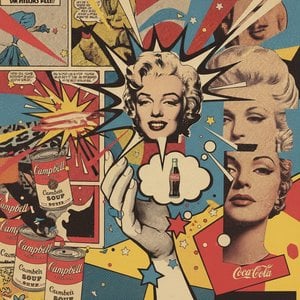
Immerse yourself in the vibrant legacy of Pop Art. Explore the stories, bold colors, and iconic techniques behind ten legendary masterpieces that redefined modern culture. Find museum-quality reproductions to elevate your space. Discover all masterpieces on WahooArt.com.

Immerse yourself in the vibrant world of Pop Art with our curated guide to Roy Lichtenstein's top 25 masterpieces. Explore the stories behind his iconic Ben-Day dots and bold comic aesthetics. Find museum-quality reproductions for your decor at WahooArt.com. Discover all masterpieces online.

Explore Roy Lichtenstein's revolutionary Pop Art! Discover the story behind Ben-Day dots, iconic works like 'Whaam!', and investment insights for collectors. Expert analysis & high-quality reproductions at WahooArt.
 Forhåndsvisning
 Send
Send Del
Del
 Vis detaljer
 Utskriftsvennlig guide

 Last ned bilde
 Liknende objekter
 Røntgenundersøkelse
 Lysbildefremvisning
 Spørsmål og svar
 Statistikk

 Vis hele teksten









 Glassalternativet er kun tilgjengelig i størrelser under 110 cm