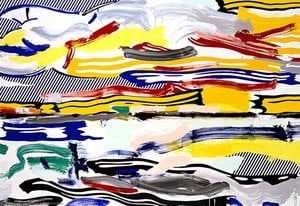
Roy Lichtenstein: En Pioner i Popkunstens Landskap
Roy Fox Lichtenstein, født i det pulserende New York City den 27. oktober 1923, forandret dyptgripende kunstens landskap i det tyvende århundre. Som en sentral figur i Pop Art-bevegelsen, gjorde han ikke bare rede for sin tids æra; han utfordret den aktivt, og transformerte hverdagslige bilder til engasjerende kunstneriske utsagn. Hans barndom i en velstående jødisk familie i Manhattan bidro til både kulturell bevissthet og en tidlig kunstnerisk interesse. Tidlig eksponering for museer og konserter, kombinert med en dyp kjærlighet til jazzmusikk, la grunnlaget for et kreativt sinn som ville utfordre tradisjonelle oppfatninger av høy kunst. Selv om han i begynnelsen var tiltrukket av realistisk tegning og maleri under sin formative periode, begynte Lichtensteins formelle utdanning ved Art Students League i 1939 under Reginald Marsh, fulgt av studier ved Ohio State University – kort ferdigstilt av krigstjeneste i hæren. Disse erfaringene ga et robust teknisk fundament som senere ble briljant omformulert gjennom linsen til masse kultur og kommersielle estetikk. Frøene til hans signaturstil ble ikke sådd i de hellige hallene av kunsttradisjon, men heller i den ofte oversette verden av hverdagslige bilder, spesielt tegneserier og reklame.
Fra Abstraksjon til Appropriasjon: En Nøkkelovergang
Lichtensteins tidlige verk demonstrerte en klar engasjement med Abstrakt ekspresjonisme, som gjenspeilte de dominerende estetiske trendene i etterkrigstiden. Likevel viste denne fasen seg å være overgangs, et springbrett mot hans revolusjonerende stil. Et avgjørende øyeblikk oppsto under hans tid på Rutgers University der han møtte Allan Kaprow, hvis innflytelse reaktiverte Lichtensteins interesse for proto-pop bilder. Denne møtet utløste en kritisk endring i hans kunstneriske bane, og førte ham til å stille spørsmål ved de etablerte grensene mellom «høy» og «lav» kunst. Han begynte å se utover den subjektive eks
Ben-Day Dots og Det Bolde Språket
Lichtensteins kunstneriske vokabular er umiddelbart gjenkjennelig: dristige, primærfarger, tykke svarte konturer og mest berømt Ben-Day dots – en teknikk lånt direkte fra den mekaniske reproduksjonen av tegneserier. Disse prikkene var ikke bare dekorative; de var integrert i hans konseptuelle rammeverk, representerte selve prosessen med masseproduksjon og utfordret de tradisjonelle vektleggingene av kunstnerens hånd. Hans malerier tok ofte detaljer fra tegneserier til monumentale skalaer, tvingende seerne til å konfrontere de estetiske kvalitetene til en kunstform som vanligvis ble avvist som triviell. Arbeider som *Whaam!* (1963), *Drowning Girl* (1963) og *Oh, Jeff…I Love You, Too…But…* (1964) ble ikoniske representasjoner av Pop Art, fanget de angstfylte og ønskede aspektene ved en raskt foranderlig forbrukerkultur. Disse var ikke bare fremstillinger av tegneserie scener; de var kommentarer til temaer som krig, romantikk og samfunnsmessige forventninger, filtrert gjennom det visuelle språket til massemediene. Han hadde til hensikt å fjerne enhver form for kunstnerisk subjektivitet, presentere arbeidet sitt som objektive refleksjoner over amerikansk samfunn – et speilholdt mot dets egen fabrikkerte virkelighet.
Innflytelser og Utvikling
Lichtenstein ble sterkt påvirket av den amerikanske tegneseriekunsten, spesielt av tidlige arbeider fra 1930-tallet. Han studerte også verkene til Paul Klee, som han beundret for sin bruk av farger og former. I tillegg var han inspirert av surrealistiske kunstnere som René Magritte og Salvador Dalí, og deres evne til å skape overraskende og tankevekkende bilder. Hans tidlige arbeid reflekterte ofte en blanding av disse innflytelser, og resulterte i et unikt og originalt kunstnerisk uttrykk.
Lichtenstein var en svært produktiv kunstner, og han malte over 5000 verk i løpet av sin karriere. Han eksperimenterte med forskjellige teknikker og stiler gjennom hele sin karriere, og utviklet sin egen unike stil som er gjenkjennelig for sine dristige farger, klare konturer og bruk av Ben-Day dots.
Arv og Betydning
Roy Lichtenstein’s innflytelse strekker seg langt utover kunstens sfære. Hans innovative bruk av kommersielle teknikker og appropriasjon banet vei for nye generasjoner av kunstnere som utforsket temaer knyttet til forbrukerkultur, mediedekning og kulturell identitet. Salget av *Masterpiece* i 2017 for 165 millioner dollar solidifiserte hans posisjon som en av de mest kommersielt vellykkede amerikanske kunstnerne gjennom tidene, men hans arv er ikke utelukkende definert av monetære verdier. Han utfordret tradisjonelle oppfatninger om kunstnerisk forfatterskap og originalitet, og tvang en ny vurdering av hva som utgjør «kunst» i seg selv. Hans verk fortsetter å inspirere grafiske designere, illustratører og visuelle kunstnere på tvers av ulike disipliner.
- Nøkkelfragt: Pionerte Pop Art-stil; oppnådde internasjonal anerkjennelse med banebrytende utstillinger.
- Merkverdige verk: *Whaam!*, *Drowning Girl*, *Oh, Jeff…I Love You, Too…But…*, *Masterpiece*.
- Undervisningskarriere: Påvirket spirende kunstnere ved SUNY Oswego og Rutgers University.
Lichtenstein gikk bort den 29. september 1997, og etterlot seg et verk som fortsatt er like relevant og provoserende i dag som det var på toppen av Pop Art-bevegelsen. Hans kunst tjener som en kraftfull påminnelse om massemediers allestedsnærvær og dets evne til å forme våre oppfatninger av virkeligheten. Han gjorde ikke bare rede for sin tid; han utfordret den aktivt, og etterlot et uutslettelig merke i kunsthistorien og inspirerer fortsatt kritisk dialog om forholdet mellom kunst, kultur og handel.



 Forhåndsvisning
 Bytt til trykk
 Send
Send Del med andre
 Vis detaljer
 Veiledning

 Last ned bildet
 Liknende objekter
 Røntgenundersøkelse
 Lysbildefremvisning
 Statistikk

 Vis hele teksten






































 Glassalternativet er kun tilgjengelig i størrelser under 110 cm