Early Life and the Seeds of Surrealism
René Magritte, født René François Ghislain Magritte den 21. november 1898, i Lessines, Belgia, trådte inn i en verden som ville forme hans gåtefulle kunstneriske visjon på dypet. Hans tidlige år var preget av en forstyrrende hendelse – morens selvmord da han bare var tretten. Bilde av hennes lik, funnet i Sambre-elven med kjolen som skjulte ansiktet, ble et hjemsøkende motiv som subtilt ville gjenspeile seg i hans senere verk, manifestert i skjemmede figurer og en vedvarende utforskning av det skjulte. Denne tidlige traumatiske opplevelsen la grunnlaget for hans livslange spørsmål om persepsjon og representasjon. Han begynte å ta tegneleksjoner som tiåring, noe som avslørte en iboende tilbøyelighet mot visuell uttrykk, men utforsket først impresjonisme før han gikk inn på en vei som skulle føre ham til å bli en av de mest betydningsfulle figurene i surrealistisk kunst.
Artistic Development and Influences
Magrittes kunstneriske reise var ikke umiddelbar eller enkel. Han studerte ved Académie Royale des Beaux-Arts i Brussel, men fant dens tradisjonelle metoder kvalmende. Hans tidlige verk eksperimenterte med futurisme og kubisme, absorberte elementer av disse avantgardebevegelsene, men nektet til slutt deres rene formale bekymringer. Det var først da han møtte Giorgio de Chiricos maleri *The Song of Love* i 1922 at Magritte oppdaget en resonans som uunngåelig ville endre hans kunstneriske kurs. De Chiricos drømmelignende landskap og forstyrrende sammenstillinger åpnet en ny måte å se på for Magritte – en verden der det kjente kunne bli fremmed, og det vanlige innlemmet med dyp mysterium. Dette møtet utløste hans forpliktelse til surrealisme, selv om han ofte opprettholdt en unik distanse fra dens mer åpenbare psykologiske eller automatiske tilnærminger. Han foretrakk en metiscig, nesten klinisk presisjon i malingen sin, og brukte realistiske teknikker for å skildre ulogiske scenarier.
The Heart of Surrealism: Challenging Reality
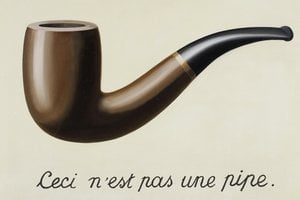
Ved 1926 hadde Magritte fullt ut omfavnet surrealistiske prinsipper, og produserte *Le Jockey Perdu (The Lost Jockey)*, som bredt anerkjent som hans første ekte surrealistiske verk. Likevel var hans type surrealisme distinkt. Han var ikke interessert i å utforske det ubevisste gjennom fri assosiasjon eller drømmebilder på samme måte som noen av sine samtidige. I stedet søkte Magritte å utfordre betrakterens oppfatninger om virkeligheten ved å presentere vanlige gjenstander i uventede kontekster, og tvinge dem til å stille spørsmål ved sine antakelser om verden rundt dem. Ikoniske verk som *The Treachery of Images (This is not a pipe)* (1929) dekonstruerer på en briljant måte forholdet mellom bilde og objekt, og minner oss om at en representasjon aldri er tingen selv. *Les Amants (The Lovers)* (1927-1928), med sine skjemmede figurer, gjenspeiler traumer rundt hans mors død samtidig som det utforsker temaer om skjulthet og intimitet. *Time Transfixed* (1938) presenterer en tog som går gjennom en peis, forstyrrer vår oppfatning av rom og tid. Og *The Human Condition* (1933), et lerret inne i et lerret, utvisker grensene mellom representasjon og virkelighet, og får oss til å vurdere hvordan vi oppfatter og tolker verden.
Later Life, Recognition, and Enduring Legacy
Til tross for innledende vanskeligheter med anerkjennelse, fikk kunstverkene hans gradvis fremheving, spesielt i USA med utstillinger i 1936 og senere retrospektiver på Museum of Modern Art (1965) og Metropolitan Museum of Art (1992). Han forble politisk engasjert gjennom hele livet, og argumenterte for kunstnerisk autonomi. Han fortsatte å perfeksjonere sin signaturstil, utforsket temaer som repetisjon, illusjon og kraften i språket i malerier som er både intellektuelt stimulerende og visuelt slående. Magritte døde den 15. august 1967 som følge av pankreansk kreft, og etterlot seg et kunstnerisk verk som fortsatt fanger og utfordrer publikum over hele verden. Hans innflytelse strekker seg langt utenfor maleriet, påvirker popkunst, minimalistisk kunst og konseptuell kunst, og til og med reklame og film. I dag er hans malerier beholdt i store museamkolleksjoner rundt om i verden, inkludert Musées royaux des beaux-arts de Belgique i Brussel, som huser Magritte Museum – dedikert utelukkende til hans verk og som har verdens største samling av dem.
- Museamkolleksjoner: Musées royaux des beaux-arts de Belgique, Brussel; Magritte Museum.



 Forhåndsvisning
 Kjøp håndlaget maleri
 Send
Send Del med andre
 Vis detaljer

 Last ned bildet
 Liknende objekter
 Røntgenundersøkelse
 Lysbildefremvisning
 Statistikk


 Vis hele teksten






































 Glassalternativet er kun tilgjengelig i størrelser under 110 cm