


 OilWallArtIndo-British Painting
 190019th Century
 48.0 x 32.0 cm
 The Raja Ravi Varma Heritage Foundation
Giclée- eller lerretsprint av museumskvalitet med rask produksjon og fleksible valgmuligheter for etterbehandling. ( Kjøp håndlaget maleri Kjøp bilde)





























Velg mellom våre forhåndsdefinerte størrelser som bevarer kunstverkets opprinnelige proporsjoner.

Du kan oppgi egne mål for å tilpasse en spesifikk ramme eller et bestemt område. Dersom den valgte størrelsen ikke samsvarer med det originale bildets proporsjoner, vil vi enten beskjære kunstverket eller utvide bildet med en speilet eller ensfarget kant. En digital mockup vil bli sendt til din godkjenning før produksjonen starter.
Vennligst merk at forhåndsvisningen på skjermen ikke gjenspeiler den faktiske beskjæringen eller utvidelsen. Kun mockuppen vil vise den endelige komposisjonen nøyaktig.
Selv om tilpassede størrelser er tilgjengelige, anbefaler vi å velge et mål fra den forhåndsdefinerte listen for å bevare de originale proporsjonene.
Verdensomspennende levering () på 2 uker i stedet for standard 4/5 uker. (7 September)


A Tamil Lady
Størrelse på reproduksjon
In the quiet intimacy of A Tamil Lady, we encounter more than just a portrait; we enter a moment frozen in time by the masterful hand of Raja Ravi Varma. Painted around 1900, this oil on canvas serves as a breathtaking testament to the artist's unique ability to marry the grandeur of Indian heritage with the sophisticated realism of European academic traditions. The subject, a woman of profound grace, gazes toward the viewer with an expression that is both serene and deeply soulful. Her long, dark hair, gathered in a delicate ponytail, frames a face illuminated by a soft, natural light that seems to emanate from within the canvas itself. Clad in a vibrant red dress that symbolizes vitality and auspiciousness, she wears jewelry that speaks of her cultural identity and social standing, making the painting a window into the aristocratic elegance of turn-of-the-century India.
The technique employed by Varma is nothing short of extraordinary, characterized by a meticulous attention to texture and light. As an expert in the fusion of styles, Varma utilizes oil paint to achieve a luminous quality, particularly in the way the light catches the sheen of her ornaments and the soft folds of her crimson attire. The artist’s mastery of chiaroscuro—the dramatic play between light and shadow—adds a three-dimensional depth to the figure, pulling her forward from the background and creating an immersive experience for the observer. Every brushstroke is deliberate, contributing to a sense of tactile reality that allows the viewer to almost feel the weight of the gold and the smoothness of the silk.
A Legacy of Cultural SynthesisTo understand this piece is to understand the historical significance of Raja Ravi Varma himself. Born into the royal lineage of Kilimanoor, Varma acted as a cultural bridge during a transformative era in Indian history. He took the classical themes of Indian mythology and courtly life and rendered them through the lens of Western realism, effectively creating a new visual language for a nation. A Tamil Lady embodies this synthesis perfectly; while the subject matter is deeply rooted in the local traditions of South India, the execution follows the rigorous standards of the academic style he studied. This makes the painting not only a beautiful object of art but also a vital historical document that captures the dignity and aesthetic splendor of the era.
An Inspiration for Modern InteriorsFor the discerning collector or interior designer, A Tamil Lady offers an unparalleled opportunity to introduce a sense of timeless sophistication into a living space. The rich, warm palette of reds, golds, and deep shadows provides a commanding focal point that can anchor a room, whether it be a formal gallery wall or a curated study. A high-quality reproduction of this masterpiece brings with it an aura of prestige and a conversation-starting depth of narrative. It is a piece that does not merely decorate a wall; it enriches the atmosphere, inviting contemplation and evoking a sense of worldly elegance that transcends modern trends.

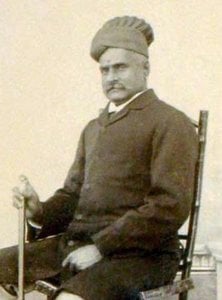
1848 - 1906 , India

Discover the profound elegance of Neoclassicism. Explore how the pursuit of order, symmetry, and Greco-Roman ideals created a timeless aesthetic for collectors seeking grandeur and intellectual depth in fine art and architecture.

 Forhåndsvisning
 Send
Send Del med andre
 Vis detaljer

 Last ned bildet
 Liknende objekter
 Røntgenundersøkelse
 Lysbildefremvisning
 Vis hele teksten







 Glassalternativet er kun tilgjengelig i størrelser under 110 cm


