Kjøp håndlaget maleri Bytt til digitalt bilde Send
Vis detaljer Veiledning Legg til i favoritter Last ned bildet Liknende objekter Lysbildefremvisning Statistikk

Charles Lenormant

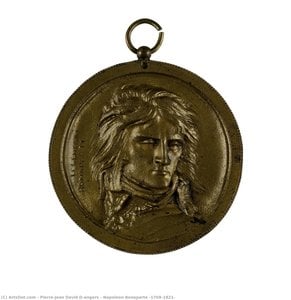
Admire Charles Lenormant's bronze medallion portrait by Pierre-Jean David d’Angers! This neoclassical masterpiece captures the French archaeologist, showcasing intricate detail and historical significance.

Pierre-Jean David d’Angers (1788–1856): Fransk skulptør kjent for neoclassiske portretter og monumentale verk som Pantheon-friksen – utforsk hans arv!

Giclée / Kunsttrykk

Giclée- eller lerretsprint av museumskvalitet med rask produksjon og fleksible valgmuligheter for etterbehandling. ( Kjøp håndlaget maleri Bytt til digitalt bilde)

Standardformat
skreddersydd
CM
INCH

Velg mellom våre forhåndsdefinerte størrelser som bevarer kunstverkets opprinnelige proporsjoner.

bredde
høyde

Du kan oppgi egne mål for å tilpasse en spesifikk ramme eller et bestemt område. Dersom den valgte størrelsen ikke samsvarer med det originale bildets proporsjoner, vil vi enten beskjære kunstverket eller utvide bildet med en speilet eller ensfarget kant. En digital mockup vil bli sendt til din godkjenning før produksjonen starter.
Vennligst merk at forhåndsvisningen på skjermen ikke gjenspeiler den faktiske beskjæringen eller utvidelsen. Kun mockuppen vil vise den endelige komposisjonen nøyaktig.
Selv om tilpassede størrelser er tilgjengelige, anbefaler vi å velge et mål fra den forhåndsdefinerte listen for å bevare de originale proporsjonene.

Verdensomspennende levering () på 2 uker i stedet for standard 4/5 uker. (21 September)

why_choose_icon
Gratis ekspressfrakt over hele verden
why_choose_icon
Lerretsduk av høykvalitets lin
why_choose_icon
Full forsikring under transport
why_choose_icon
Garanti for refusjon av toll og importavgifter
why_choose_icon
Garantert korrekt fargegjengivelse
why_choose_icon
100 dagers returrett (kun ved mangler)
why_choose_icon
100% pengene tilbake-garanti
why_choose_icon
Rabatt ved flere kjøp

Totalpris for bestilling

$ 68

reproduction

Charles Lenormant

Giclée / Kunsttrykk

Størrelse på reproduksjon

-

Endelig pris

$ 68

Kort om verket

  • Influences:
    • Le Brun
    • David
  • Title: Charles Lenormant
  • Location: Walters Art Museum
  • Year: 1830
  • Subject or theme: Historical figure
  • Medium: Bronze medallion
  • Movement: Neoclassical

Kunstighetsquiz

Det er kun ett riktig svar på hvert spørsmål.

Spørsmål 1:
What is Charles Lenormant primarily known for?
Spørsmål 2:
According to the description, in what year was Charles Lenormant appointed inspector of fine arts?
Spørsmål 3:
The image description highlights which aspect of the bronze medallion's surface?
Spørsmål 4:
Who is the artist depicted in the medallion?
Spørsmål 5:
What artistic style is most closely associated with the depiction of Charles Lenormant?

A Portrait of Scholarly Pursuit: Charles Lenormant by Pierre-Jean David d'Angers

The bronze medallion depicting Charles Lenormant offers more than just a likeness; it’s a window into the burgeoning field of archaeology in 19th-century France. Crafted by the esteemed sculptor Pierre-Jean David d’Angers, this remarkable piece captures not merely a man's features but also his intellectual fervor and dedication to uncovering the secrets of the past. Lenormant, a pivotal figure in French archaeology, was an inspector of fine arts who dedicated himself to exploring Egypt and Greece, contributing significantly to our understanding of ancient civilizations. The medallion serves as a tangible reminder of his pioneering work, embodying the spirit of scientific inquiry that defined the era.

A Neoclassical Masterpiece: Style, Technique, and Material

David d’Angers's style is firmly rooted in the neoclassical tradition, evident in the meticulously rendered profile of Lenormant. The work showcases a remarkable attention to detail – from the subtle lines etched into his face to the texture of his hair, each element speaks to the sculptor’s mastery. The bronze itself—a material prized for its durability and ability to capture fine details—is skillfully manipulated to create a sense of depth and realism. Notice how the artist employs *chiaroscuro*, using light and shadow to sculpt volume and define form, lending a dramatic quality to the portrait. The casting process, likely utilizing the lost-wax method, would have involved creating a wax model, then investing it in plaster before melting down the wax to create the final bronze form. This technique ensures a remarkable level of precision and surface finish.

Symbolism and Historical Context: A Reflection of an Age

Beyond its aesthetic qualities, the medallion is rich with symbolic meaning. Lenormant’s pose—a thoughtful gaze directed towards the viewer—suggests a man deeply engaged in contemplation and intellectual pursuit. The inclusion of the scroll or document (though details are difficult to discern without higher resolution) hints at his scholarly work and dedication to historical research. The period itself, the early 19th century, was one of immense change and discovery, fueled by the Enlightenment’s emphasis on reason and scientific inquiry. Archaeology was gaining prominence as a legitimate field of study, driven by figures like Champollion and inspired by Napoleon's campaigns in Egypt. This medallion stands as a testament to that intellectual excitement and the growing interest in understanding our shared human past.

Emotional Resonance: A Portrait of Dedication

Looking at this portrait, one is struck not only by its technical brilliance but also by the sense of quiet determination it conveys. Lenormant’s face—lined with experience and imbued with a thoughtful expression—suggests a man who has dedicated his life to unraveling the mysteries of antiquity. The bronze itself, with its patina of age and wear, adds to this feeling of historical weight and enduring legacy. It's a portrait that invites us to reflect on the importance of intellectual curiosity, perseverance, and the pursuit of knowledge—qualities that continue to resonate today. The piece evokes a sense of reverence for scholarship and the individuals who have shaped our understanding of history.


Om kunstneren

A Legacy Forged in Stone: The Life and Art of Pierre-Jean David d’Angers

Born in Angers, France, in 1789, Pierre-Jean David embarked on his artistic journey steeped in the republican fervor that would characterize much of his life and work. Initially apprenticed to a local wood carver – his father – young David swiftly demonstrated an aptitude for sculpting that propelled him towards greater ambitions. He arrived in Paris in 1808, a city brimming with both classical tradition and revolutionary spirit, seeking tutelage under Philippe-Laurent Roland at the École des Beaux-Arts. This period was formative, grounding him in neoclassical principles while simultaneously exposing him to the burgeoning Romantic movement. A pivotal moment came in 1809 when he entered the studio of Jacques-Louis David, adopting the name “David d’Angers” not merely as a professional designation but as a conscious assertion of lineage and artistic ambition – a distinction from his celebrated master. This adoption signaled a desire to forge his own path while acknowledging the profound influence of the era's leading painter. Early struggles marked his Parisian years, yet he persevered, winning recognition with works like “Othryades” in 1810 and ultimately securing the prestigious Prix de Rome in 1811 for his sculpture "Epaminondas."

From Roman Reverie to Neoclassical Mastery

The five years David d’Angers spent in Rome, from 1811 to 1816, proved transformative. Immersed in the world of classical antiquity and under the influence of masters like Antonio Canova, his artistic vision matured. He absorbed the ideals of Greek sculpture – its emphasis on idealized form, heroic narrative, and emotional restraint – yet began to infuse these principles with a distinctly personal sensibility. This period wasn’t solely about academic study; it was also one of political awakening. The restoration of the Bourbon monarchy in France cast a shadow over his return, prompting a brief sojourn in England where he encountered both admiration and scrutiny due to his association with Jacques-Louis David, who had been linked to the revolutionary regime. Back in Paris, however, his talent quickly found favor. He became renowned for his portrait medallions – remarkably detailed and psychologically insightful representations of prominent figures – as well as monumental sculptures that celebrated civic virtue and national heroes. His work on the Arc de Triomphe and the Louvre demonstrated an early mastery of large-scale projects, establishing him as a sculptor capable of tackling ambitious commissions.

A Sculptor of Heroes and Ideals

David d’Angers' artistic output was remarkably diverse, encompassing statues, bas-reliefs, tombs, and, most notably, portrait medallions. He possessed an extraordinary ability to capture not just the physical likeness but also the inner character of his subjects. His portraits weren’t simply representations; they were interpretations – imbued with a sense of dignity, intelligence, and moral strength. Among his celebrated works are “Wounded Philopoemen,” housed in the Louvre, a poignant depiction of the Greek general's tragic fate, and "La Douleur," showcasing his mastery of emotional expression. However, it was his monumental commissions that truly cemented his reputation. The pediment sculpture for the Panthéon in Paris stands as perhaps his most significant achievement – a sweeping allegorical representation of French patriotism and intellectual heritage. Other notable works include the Gutenberg monument in Strasbourg and the equestrian statue of General Gobert in Père Lachaise Cemetery, both testaments to his skill in conveying power and dynamism through sculpted form. He also created a bust of Goethe for the poet’s library in Weimar – a gesture of profound respect and artistic kinship.

Political Engagement and Artistic Expression

David d’Angers was deeply committed to republican ideals throughout his life, reflecting the turbulent political landscape of his era. His art served as a vehicle for expressing these convictions—celebrating figures who embodied courage, integrity, and dedication to public service. He actively participated in intellectual debates and corresponded with prominent writers and artists, fostering a vibrant artistic community that embraced innovation while upholding classical values. Despite facing periods of exile due to political persecution, David persevered in his creative endeavors, producing masterpieces that continue to inspire awe and admiration. His sculptures weren’t merely aesthetically pleasing; they were imbued with moral significance—serving as reminders of noble virtues and commemorating pivotal moments in French history.

A Lasting Influence: Legacy and Historical Significance

Pierre-Jean David d’Angers remains a compelling figure – a sculptor who not only captured the likenesses of heroes but also embodied the spirit of an era. His ability to blend classical form with Romantic expression continues to resonate with audiences today, solidifying his place as one of France's most important and enduring artists. His works can be found in museums across Europe and America—a testament to their universal appeal and artistic merit. David’s legacy extends beyond the sculptures themselves; it encompasses a broader contribution to French culture—promoting republican values and fostering intellectual discourse during a period of profound transformation. He is remembered as “the Michelangelo of Paris”—a sculptor who elevated art to new heights of grandeur and beauty, leaving an indelible mark on the artistic landscape of his time and inspiring generations of artists to come.

Pierre-Jean David D’Angers

Pierre-Jean David D’Angers

1788 - 1856 , Frankrike

Kort om kunstneren

  • Artistic Movement Or Style: Neoklassisisme
  • Artists Or Movements Influenced By This Artist: ['Romantikk']
  • Artists Who Influenced This Artist:
    • Jacques-Louis David
    • Philippe-Laurent Roland
  • Date Of Birth: 1788
  • Date Of Death: 1856
  • Full Name: Pierre Jean David d’Angers
  • Nationality: Fransk
  • Notable Artworks:
    • Wounded Philopoemen
    • La Douleur
    • Epaminondas
  • Place Of Birth: Angers, France
Utforsk kunstverk organisert etter temaer, stiler og kjennetegn.