Forhåndsvisning Se i AR Bytt til trykk Kjøp håndlaget maleri Send
Vis detaljer Veiledning Legg til i favoritter Last ned bildet Liknende objekter Røntgenundersøkelse Lysbildefremvisning Statistikk

La lutte bretonne

Paul Sérusier (1864-1927) emerged as a key figure in the Symbolist movement, profoundly impacting the development of Synthetism and cloisonnism. His collaboration with Gauguin at Pont-Aven solidified his reputation as an innovator, establishing him as one of France’s foremost artists.

Paul Sérusier (1864-1927) var en fransk maler som banet vei for abstrakt kunst og inspirerte Nabis-bevegelsen. Kjent for sin cloisonnism-stil og verk som "The Talisman", var han en pioner innen moderne kunst.

Kjøp et høyoppløselig, forbedret digitalt bilde som er langt bedre enn forhåndsvisningen på nettet.

Hver fil er omhyggelig klargjort av våre egne spesialister ved hjelp av avanserte verktøy og profesjonell manuell retusjering. Vi sørger for at hvert bilde har eksepsjonell klarhet, presis fargegjengivelse og fine detaljer.

Den endelige filen leveres via e-post innen 72 timer, optimalisert for umiddelbar bruk i profesjonelle, redaksjonelle og trykte miljøer. Dette er den samme kvaliteten som benyttes av ledende designstudioer, utgivere og gallerier.

Digitalt bilde

Last ned en høyoppløselig fil for personlig bruk, utskrift og kreative prosjekter. ( Bytt til trykk Kjøp håndlaget maleri)

Totalbeløp

$ 24.90

Inkludert i alle bestillinger av digitale bilder

Ekspert digital levering, garantert

Når du velger WahooArt.com, får du ikke bare et bilde – du mottar et profesjonelt forbedret digitalt kunstverk, skapt med presisjon og med en garantert tilfredshetsgaranti. Her er alt som automatisk følger med din bestilling:

shipping_icon
Rask digital levering

Din høyoppløselige digitale bildefil sendes til din e-post innen 72 timer etter bestilling – klar til umiddelbar bruk.

canvas_icon
KI-forbedret digital fil

Ditt kunstverk blir profesjonelt optimalisert ved hjelp av avanserte AI-verktøy og manuell redigering, noe som sikrer maksimal detaljrikdom, klarhet og fargegjengivelse.

insurance_icon
Gratis livslang nyutlevering

Har du ved et uhell slettet eller mistet filen din? Ingen bekymring – vi sender den på nytt når som helst, helt gratis.

tax_icon
Ingen importavgifter – noen gang

Nyt ditt kunstverk umiddelbart uten toll, avgifter eller leveringskostnader – digitale nedlastinger er alltid avgiftsfrie.

color_icon
Garantert fargenøyaktighet

Vi sikrer at ditt digitale bilde gjenspeiler de originale fargene så nøyaktig som mulig ved hjelp av profesjonelle verktøy og fargehåndtering.

return_icon
100 dagers tilfredshetsgaranti

Hvis du ikke er fornøyd med ditt digitale bilde, vil vi revidere det eller refundere 100% innen 100 dager – uten spørsmål.

guarantee_icon
100% Penggaranti

Ikke fornøyd? Få full refusjon innen 100 dager etter at du har mottatt din digitale fil – uten spørsmål.

discount_icon
Rabatt ved storkjøp

Kjøp 3 bilder, spar 10% - Kjøp 5, spar 15% - Kjøp 10+, spar 20%. Ideelt for kreative prosjekter, gallerier og byråer.

Kort om verket

  • Artistic style: Naive
  • Movement: Nabis
  • Influences: Paul Gauguin
  • Notable elements or techniques: Cloissonism, Flat space
  • Title: La lutte bretonne
  • Year: 1890
  • Location: Musée d'Orsay

Kunstighetsquiz

Det er kun ett riktig svar på hvert spørsmål.

Spørsmål 1:
What artistic movement is Paul Sérusier primarily associated with?
Spørsmål 2:
The painting depicts a scene of wrestling. Where did Sérusier find inspiration for this subject?
Spørsmål 3:
What technique is prominently featured in 'La Lutte bretonne', as exemplified by Sérusier's masterpiece?
Spørsmål 4:
Who mentored Paul Sérusier during his artistic development, influencing his style and approach to painting?
Spørsmål 5:
What was the significance of Pont-Aven for Sérusier and the Nabis artists?

A Primal Encounter in Breton Color

In the vibrant tapestry of late nineteenth-century French art, few works capture the raw, unbridled energy of folk tradition quite like Paul Sérusier's La Lutte bretonne. Completed in 1890, this masterpiece serves as a profound window into the soul of Brittany, moving far beyond a mere depiction of a wrestling match to become an evocative exploration of human struggle and cultural identity. The scene unfolds with an immediate, visceral intensity, placing the viewer directly within a circle of onlookers gathered to witness a physical altercation between two men. As they grapple in the center of the frame, the surrounding crowd—composed largely of women adorned in the iconic, intricate white coifs of Breton tradition—stands as a silent, watchful collective, their presence grounding the chaotic movement of the fighters in a sense of communal ritual.

The painting is a triumph of Cloisonnism, a bold stylistic departure from the soft, atmospheric nuances of traditional Impressionism. Heavily influenced by the mentorship of Paul Gauguin, Sérusier utilized thick, dark outlines to encase patches of saturated color, much like the leaded glass of a cathedral window. This technique strips away unnecessary anatomical detail in favor of a powerful, flattened graphic impact. The artist’s palette is particularly striking; he employs energetic bursts of reds and yellows that seem to pulse against the canvas, mirroring the heat and exertion of the wrestling match itself. For the discerning collector or interior designer, this use of pigment offers a dynamic focal point, capable of injecting a sense of rhythmic vitality and warmth into any sophisticated space.

Symbolism and the Spirit of the Nabis

Beyond its surface-level action, La Lutte bretonne is steeped in the symbolic preoccupations of the Nabis movement. During this era, artists sought to reject the polished, artificial perfection of the Parisian salons, turning instead toward what they perceived as the "primitive" and authentic beauty of rural life. The wrestling match serves as a potent metaphor for opposing forces—the tension between strength and vulnerability, or perhaps the struggle of tradition against the encroaching modernity of the Belle Époque. Every brushstroke is an intentional step away from realism and toward Synthetism, where the goal is to synthesize the external observation of nature with the internal emotional response of the artist.

To possess a reproduction of this work is to invite a piece of art history into one's home that celebrates the beauty of the unadorned and the profound depth of folk heritage. The painting does not merely decorate a wall; it commands attention through its structural boldness and its ability to evoke a sense of timelessness. Whether placed in a contemporary gallery setting or a classic study, Sérusier’s work continues to resonate with anyone moved by the intersection of raw human emotion and the deliberate, masterful application of color and form.


Om kunstneren

Early Life and Artistic Foundations

Paul Sérusier, born on November 9th, 1864, in the heart of Paris, was a painter whose journey toward abstract art began within the vibrant artistic circles of late 19th-century France. His upbringing, rooted in a prosperous middle-class family with Flemish heritage, provided him with both stability and exposure to cultural refinement. Unlike his father’s aspirations for a business career, young Paul harbored an unwavering passion for painting, a desire that led him to enroll at the Académie Julian in 1885. This institution, known for its progressive approach to art education, offered a space where he could hone his skills and encounter fellow artists who would profoundly influence his artistic development. Crucially, it was during this period that Sérusier encountered Maurice Denis, a kindred spirit who would later become a key figure in the revival of religious imagery within French painting. The Académie Julian’s environment fostered experimentation and challenged traditional academic styles, laying the groundwork for Sérusier's future explorations into new forms of expression.

The Pont-Aven Years: Cloisonnism and Gauguin’s Influence

Sérusier’s artistic trajectory took a decisive turn in the summer of 1888 when he traveled to Pont-Aven, a small coastal village in Brittany. This location held particular significance as it served as a gathering place for a group of artists—including Paul Gauguin, Émile Bernard, and others—who were seeking inspiration from the region’s rugged landscapes and timeless traditions. Under the watchful eye of Gauguin, Sérusier embarked on a period of intense artistic experimentation, culminating in the creation of *Bois d’Amour* (The Lovers' Wood), often referred to as “The Talisman.” This painting stands as a pivotal work in Sérusier’s career, embodying the principles of cloisonnism—a technique characterized by bold, flat forms delineated by dark contours. Gauguin encouraged Sérusier to move beyond traditional representation and embrace a more symbolic approach, emphasizing color and form over precise detail. The influence of this period is undeniable; *Bois d’Amour* represents a radical departure from academic painting, foreshadowing the development of abstract art and establishing Sérusier as a pioneer in this nascent movement.

The Nabis: A Collective Pursuit of Synthesis

Following his time at Pont-Aven, Sérusier became a founding member of the *Nabis*, a small but influential group of artists who sought to synthesize diverse artistic influences—including Post-Impressionism, Symbolism, and Japanese art. The name “Nabis” derives from the Hebrew word for “prophet,” reflecting the group’s ambition to create works that possessed spiritual depth and conveyed profound emotions. Alongside figures such as Paul Gauguin, Pierre Bonnard, Édouard Vuillard, and Maurice Denis, Sérusier explored themes of color, pattern, and decorative design, often employing a flattened perspective and simplified forms. The Nabis aimed to move beyond mere imitation of nature, instead focusing on capturing the essence of their subjects through evocative color palettes and symbolic imagery. Their work was characterized by a quiet intensity and a subtle sense of mystery, inviting viewers to engage with the paintings on an emotional level.

Notable Works and Lasting Legacy

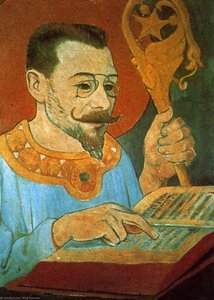
Throughout his career, Sérusier produced a body of work that is both visually striking and intellectually stimulating. Key works include *L’aversé* (The Shower), exhibited at the Musée d'Orsay in Paris, which showcases his masterful use of color and composition; *Portrait of Paul Ranson*, also held within the Musée d'Orsay, demonstrating his ability to capture personality through subtle gestures and expressions; and *Le Serpent Étranglement* (The Snake Eaters), a powerful depiction of a Breton legend housed at the National Museum in Warsaw. Beyond these individual pieces, Sérusier’s legacy lies in his pioneering role as a precursor to abstract art and his influence on subsequent generations of artists. His exploration of cloisonnism, his embrace of color and pattern, and his willingness to challenge conventional artistic norms paved the way for the development of modern art movements such as Synthetism and Cubism. Sérusier’s later years were dedicated to teaching at the École Ranson, where he imparted his knowledge and inspired a new cohort of artists. He passed away on October 7th, 1927, in Morlaix, leaving behind a rich artistic legacy that continues to resonate with art lovers today.

Artistic Influences and Connections

Paul Sérusier’s artistic development was profoundly shaped by a confluence of influences. The teachings of Paul Gauguin at Pont-Aven were particularly transformative, encouraging him to prioritize color and form over traditional representation. Furthermore, his exposure to Japanese prints—which were gaining popularity in Europe during this period—inspired him to experiment with flattened perspectives and simplified compositions. Sérusier’s work also reflects the broader artistic currents of the late 19th century, including Post-Impressionism, Symbolism, and the Arts and Crafts movement. His connection to Maurice Denis was especially significant; Denis's emphasis on religious imagery and his belief in the power of color and line profoundly influenced Sérusier’s approach to painting. The Nabis group itself served as a crucible for artistic exchange, fostering experimentation and pushing the boundaries of contemporary art.

Paul Sérusier

Paul Sérusier

1864 - 1927 , Frankrike

Kort om kunstneren

  • Artistic Movement Or Style: Post-Impressionisme
  • Artists Or Movements Influenced By This Artist: ['Les Nabis']
  • Artists Who Influenced This Artist:
    • Paul Gauguin
    • Maurice Denis
  • Date Of Birth: 9. november 1864
  • Date Of Death: 7. oktober 1927
  • Full Name: Louis-Paul-Henri Sérusier
  • Nationality: Fransk
  • Notable Artworks:
    • L'averse (1893)
    • Portrett av Paul Ranson (1890)
    • Melancholy (1890)
    • Slangeeterne (1894)
  • Place Of Birth: Paris, Frankrike