Om kunstneren
Paul Cézanne: Fra Impresjonismens Skygger til Kubismens Fødsel
Paul Cézanne, født i Aix-en-Provence i 1839, representerer et monumentalt skillepunkt i kunsthistorien. Han bygget en bro mellom impresjonismens flyktige øyeblikksbilder og kubismens fragmenterte former, men hans vei var ikke preget av umiddelbar anerkjennelse. Snarere var det en langsom prosess med utforskning, fylt med tvil og kritikk, som til slutt resulterte i et arv som for alltid ville endre moderne kunst. Cézanne ble født inn i en velstående familie – hans far var opprinnelig hattemaker før han ble bankmann – noe som ga ham en økonomisk trygghet uvanlig for aspirerende kunstnere. Dette tillot ham å dedikere seg til sin lidenskap uten det umiddelbare presset av kommersiell suksess. Selv om faren først ønsket at han skulle følge en juridisk karriere, viste den kunstneriske kallingen seg for sterk, og han forlot loven til fordel for maleriet – et valg som definerte hans liv. Tidlige påvirkninger inkluderte romantikken fra hans ungdom og Barbizonskolens dedikasjon til landskapet, men det var gjennom møter med kunstnere som Paul Gauguin og Georges Seurat, og deres innovative tilnærminger til farge og form, at Cézanne begynte å smi sin egen distinkte vei.
En Analytisk Reise: Utviklingen av en Unik Stil
Cézannes tidlige arbeider gjenspeilet ofte de dramatiske, emosjonelt ladede temaene som kjennetegner romantikken – mørke fargepaletter og uttrykksfulle penselstrøk dominerte hans lerret. Denne innledende fasen var imidlertid bare et springbrett mot en langt mer analytisk og banebrytende tilnærming. Misfornøyd med å kun fange flyktige inntrykk av lys, slik impresjonistene foretrakk, begav Cézanne seg ut på en søken etter å forstå og representere den underliggende strukturen i objektene selv. Han ønsket ikke bare *hva* han så, men *hvordan* han oppfattet de fundamentale formene som konstituerte virkeligheten. Dette førte ham til å bryte ned naturlige former i deres geometriske ekvivalenter – kjegler, sylindere, sfærer – og forutse kubistrevolusjonen flere tiår før den materialiserte seg. Hans teknikk ble preget av små, repetitive penselstrøk, omhyggelig lagt på hverandre for å bygge opp komplekse farge- og teksturfelter, og skape en følelse av soliditet og dybde som tidligere var usett i maleriet. Han var ikke interessert i illusjonistisk rom; i stedet presenterte han ofte objekter fra flere synsvinkler samtidig, utfordret tradisjonelle forestillinger om perspektiv og tvang betrakteren til å aktivt engasjere seg med den konstruerte naturen av hans komposisjoner. Denne bevisste forvrengningen var ikke vilkårlig, men snarere et forsøk på å formidle en mer fullstendig forståelse av formen, representere ikke bare et enkelt øyeblikk i tid, men en syntese av persepsjon.
Landskapets Magi, Stilllivets Intimitet og Menneskekroppens Mysterier
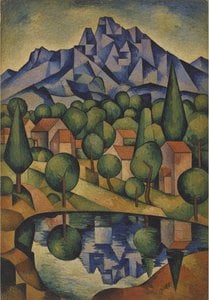
Cézannes oeuvre er bemerkelsesverdig mangfoldig, og omfatter landskaper, stillliv, portretter og fremstillinger av badende kvinner. Likevel forenes alle verkene av hans unike tilnærming til form og farge. The Pond at Jas de Bouffan, malt i 1880, er et eksempel på hans landskapsarbeider, som viser hans evne til å fange essensen av naturen gjennom en nøye arrangement av former og toner. Portrait of Émile Zola, skapt i 1866, avslører hans utviklende stil og gir et overbevisende innblikk i den intellektuelle intensiteten hos sin nære venn og medforfatter. Hans stillliv, som de med epler og annen frukt, er ikke bare representasjoner av objekter, men snarere utforskninger av volum, lys og romlige forhold. Mont Sainte-Victoire-serien ble en besettelse for Cézanne, et tilbakevendende motiv som tillot ham å nådeløst undersøke form og perspektiv over flere tiår. Disse maleriene er ikke bare fremstillinger av et fjell; de er studier i hvordan vi oppfatter dybde, volum og samspillet mellom lys og skygge. Til slutt representerer hans serie med Bathers, som viser nakne figurer i idylliske landskaper, en dyp utforskning av menneskekroppen og dens forbindelse til naturen, ofte fylt med en følelse av tidløshet og stille kontemplasjon.
En Varig Innflytelse: Cézannes Arv i Moderne Kunst
Paul Cézannes innvirkning på etterfølgende generasjoner kunstnere er umålelig. Han regnes som «den moderne kunstenes far» for sine banebrytende bidrag til billedspråket, og banet vei for mange av de store kunstbevegelsene i det 20. århundre. Pablo Picasso og Georges Braque var dypt takknemlige for Cézannes vektlegging av geometriske former og flere perspektiver, som ble sentrale prinsipper i kubismen. Hans dristige bruk av farge inspirerte også fauvistbevegelsen, ledet av kunstnere som Henri Matisse, som omfavnet livlige, ikke-naturalistiske nyanser. Selv surrealistiske kunstnere fant gjenklang i Cézannes utforskning av subjektiv persepsjon og psykologisk dybde. Utover spesifikke bevegelser frigjorde Cézannes insistering på kunstnerens personlige visjon og hans forkastelse av tradisjonelle akademiske begrensninger generasjoner av malere til å utforske nye uttrykksformer. Han utfordret selve definisjonen av representasjon, skiftet fokuset fra å etterligne virkeligheten til å konstruere en visuell opplevelse basert på underliggende struktur og subjektiv persepsjon. Hans død i 1906 markerte ikke en slutt, men en begynnelse – daggryet av en ny æra i kunsthistorien, en som ble dypt formet av hans revolusjonerende visjon.



 Forhåndsvisning
 Kjøp håndlaget maleri
 Send
Send Del med andre
 Vis detaljer
 Veiledning

 Last ned bildet
 Liknende objekter
 Røntgenundersøkelse
 Lysbildefremvisning
 Statistikk


 Vis hele teksten






































 Glassalternativet er kun tilgjengelig i størrelser under 110 cm