Nicolas Poussin’s Profound Vision: A Window into Baroque Spirituality
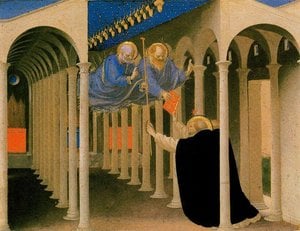
Nicolas Poussin's “The Ecstasy of St. Paul” is far more than a mere depiction of a biblical scene; it’s an immersive experience, a carefully orchestrated symphony of light, shadow, and profound spiritual contemplation. Painted in 1643 during the height of the Baroque period, this monumental canvas residing within the Louvre Museum in Paris isn't simply observed – it’s felt. Poussin, a master of translating complex theological concepts into breathtaking visual splendor, achieved this through an unparalleled understanding of composition, color, and the very essence of human emotion. The painting serves as a testament to his ability to capture not just what was seen, but what *could* be perceived – a glimpse into the divine realm experienced by St. Paul himself.
The scene unfolds with an arresting immediacy: St. Paul, draped in flowing robes of deep crimson and gold, is dramatically lifted from the ground by two radiant angelic figures. This isn’t a static pose; it's a dynamic representation of ascension, mirroring the biblical narrative where Paul recounts his visionary encounter with divine grace. The subtle use of *chiaroscuro*, the masterful interplay between light and shadow – particularly evident in the folds of Paul’s garments and the ethereal glow surrounding the angels – creates an atmosphere of intense drama and otherworldly beauty. Poussin doesn't just paint a scene; he sculpts it with light, drawing the viewer into the heart of this transformative experience.
Echoes of Raphael: A Classical Foundation
To fully appreciate Poussin’s genius, it’s crucial to understand his deep debt to Raphael. The Italian Renaissance master's “Vision of Ezekiel,” a work Poussin studied intently during his formative years in Rome, profoundly shaped his artistic sensibilities. Poussin consciously adopted Raphael’s techniques – particularly his mastery of perspective and the creation of idealized forms – to imbue his own work with a sense of classical order and intellectual rigor. The pyramidal composition, anchoring St. Paul at its apex, is a direct homage to Raphael's compositional strategies, providing stability and grandeur to the scene.
However, Poussin wasn’t merely imitating; he was transforming. While embracing the Renaissance ideals of clarity and harmony, he infused his work with a distinctly Baroque sensibility – a heightened emotional intensity and a dramatic use of light and shadow. The subtle details—the anxious expression on St. Paul's face, the delicate folds of his drapery, the almost palpable sense of movement—all contribute to this powerful blend of classical restraint and Baroque exuberance.
Symbolism Woven into the Fabric of Faith
Beyond the central figure, “The Ecstasy of St. Paul” is rich in symbolic detail. The two angels supporting Paul aren’t simply assistants; they represent divine grace and intervention, actively facilitating his spiritual ascent. A woman stands to St. Paul's left, a contemplative figure embodying humility and receptivity – she represents the audience, inviting us into this sacred moment. A book rests at the bottom right corner, symbolizing not just scripture but also divine wisdom and knowledge. And circling above are two birds, an allusion to biblical imagery signifying heavenly messengers and the transformative power of faith.
The painting’s overall effect is one of profound spiritual significance. It's a visual meditation on the nature of faith, the experience of divine revelation, and the human capacity for transcendence. Poussin doesn’t offer a literal depiction; he provides an *interpretation* – a powerful invitation to contemplate the mysteries of belief and the possibility of encountering the sacred within ourselves.



 Forhåndsvisning
 Kjøp håndlaget maleri
 Send
Send Del med andre
 Vis detaljer
 Veiledning

 Last ned bildet
 Liknende objekter
 Røntgenundersøkelse
 Lysbildefremvisning
 Statistikk


 Vis hele teksten






































 Glassalternativet er kun tilgjengelig i størrelser under 110 cm