The Delicate Legacy of Moïse Jacobber
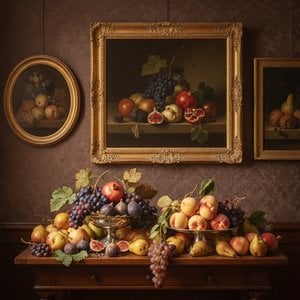
In the golden age of nineteenth-century French naturalism, few artists captured the ephemeral grace of the botanical world as tenderly as Moïse Jacobber. Born Jakob Ber in the German town of Blieskastel in 1786, his journey from a young student to a celebrated figure in the Parisian art scene is a testament to the enduring allure of the floral still life. Trained under the masterful hand of Gérard van Spaendonck, Jacobber inherited a profound respect for botanical accuracy and a technical precision that would become his hallmark. His early education provided more than just skill; it instilled a lifelong devotion to the subtle nuances of nature, allowing him to translate the fleeting vitality of a petal or the soft curve of a ripening fruit into enduring works of art.
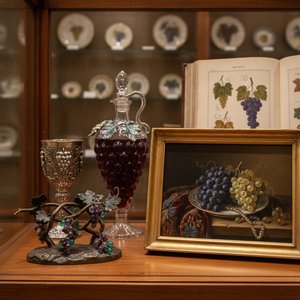
The defining chapter of Jacobber’s career was inextricably linked to the prestigious Manufacture nationale de Sèvres. Arriving in Paris and securing a position at this renowned porcelain manufactory in 1823, he spent over a decade as a floral painter, a role that would shape his artistic soul. At Sèvres, the boundaries between fine art and decorative excellence blurred. Tasked with adorning porcelain with exquisite botanical motifs, Jacobber developed an unparalleled ability to render texture and light. This period of intense focus on the minute details of flora—the velvety skin of a peach, the translucent veins of a leaf, or the dew-kissed surface of a tulip—refined his style into something uniquely captivating, blending rigorous realism with a soft, almost impressionistic sensitivity.
A Mastery of Light and Texture
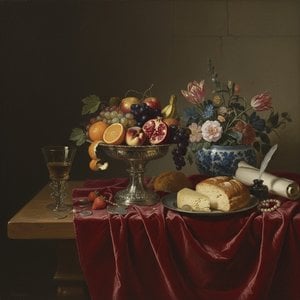
Jacobber’s artistry was never merely about imitation; it was an act of poetic observation. While many of his contemporaries sought drama through bold brushstrokes or stark contrasts, Jacobber found his strength in the quietude of nuance. His compositions are masterfully balanced, often presenting meticulously arranged bouquets and fruit that invite the viewer into a moment of serene contemplation. He possessed a rare gift for capturing the way light interacts with organic surfaces—how it filters through a delicate petal or glints off the skin of a grape. This mastery allowed him to breathe life into his subjects, making them appear as though they were caught in a momentary pause between blooming and decay.
His technical versatility further enriched his repertoire, as he moved seamlessly between various media:
- Oil Paintings: Where he achieved profound depth and rich, luminous color.
- Watercolors: Allowing for a more ethereal and transparent depiction of botanical forms.
- Porcelain Decoration: Demonstrating his ability to adapt his delicate touch to the smooth, glazed surfaces of Sèvres ceramics.
This versatility ensured that his influence reached beyond the canvas, touching the very fabric of French decorative arts. His work often drew inspiration from the great masters of the past, such as Jan van Huysum, yet he infused these classical influences with a contemporary French charm that felt both timeless and fresh.
Historical Significance and Enduring Charm
Though history occasionally casts a shadow over artists who specialized in the "minor" genre of still life, the significance of Moïse Jacobber remains undeniable. He was a frequent and respected exhibitor at the Paris Salon from 1822 to 1855, and his reputation extended far beyond the borders of France, with exhibitions held in London, Lille, Douai, and Cambrai. His ability to command respect in the competitive landscape of the School of Paris speaks to the undeniable quality and emotional resonance of his work.
Beyond his individual achievements, Jacobber’s legacy is also found in the continuity of artistic tradition. His daughter, Élisabeth Sidonie Jaccober, followed in his footsteps, working as a floral painter at Sèvres and continuing the family's dedication to botanical excellence. Today, the works of Moïse Jacobber—found in esteemed collections such as the Louvre and the Musée des Beaux-Arts de Rouen—serve as a window into a vanished era of refined elegance. He remains a master of the miniature wonders of nature, reminding us that there is profound beauty to be found in the smallest, most delicate details of the world around us.



 Forhåndsvisning
 Kjøp håndlaget maleri
 Send
Send Del med andre
 Vis detaljer

 Last ned bildet
 Liknende objekter
 Røntgenundersøkelse
 Lysbildefremvisning

 Vis hele teksten






































 Glassalternativet er kun tilgjengelig i størrelser under 110 cm