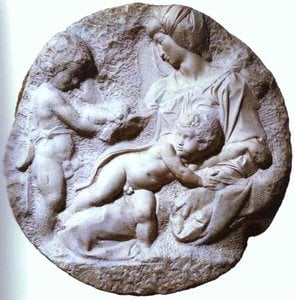
En renessanses geni formet i stein og maling
Michelangelo Buonarroti, et navn synonymt med høyrenessansen, klinger gjennom århundrer som et vitnesbyrd om menneskelig kunstnerisk potensial. Født 6. mars 1475 i Caprese Michelangelo, gjemt i de toskanske åsene i Italia, var hans liv en ekstraordinær sammensmelting av talent, ambisjon og guddommelig inspirasjon. Selv om han møtte motstand fra faren angående en kunstnerisk vei, viste den unge Michelangelos medfødte tegnetalent seg ubestridelig, og satte ham på et kurs for å omdefinere grensene for skulptur, maleri og arkitektur. Hans tidlige læretid under Domenico Ghirlandaio ga grunnleggende ferdigheter i freskomaleri og utkaststeknikk, men det var innenfor Medici-hagene – en fristed for klassisk antikk – at hans kunstneriske sjel virkelig våknet. Fordypet i studiet av greske og romerske skulpturer absorberte Michelangelo prinsippene for anatomi, proporsjoner og idealisert skjønnhet som skulle bli kjennetegn på hans stil. Denne formative perioden var ikke bare teknisk trening; det var en filosofisk fordypning i de humanistiske idealene som blomstret under renessansen, et fokus på menneskelig verdighet og potensial som dypt formet hans kunstneriske visjon.
Fra Pietàs sorg til Davids styrke
Michelangelos oppgang i kunstverdenen var bemerkelsesverdig rask. I 1496 reiste han til Roma, hvor han mottok sin første store bestilling: skulpturen av *Pietà*. Fullført i 1499 for kardinal Jean de Bilhères, etablerte dette fantastiske marmermesterstykket – nå plassert i Peterskirken – Michelangelo umiddelbart som en billedhugger uten sidestykke i ferdighet og emosjonell dybde. Den serene skjønnheten og hjerteskjærende sorgen fanget i Marias ansikt mens hun holder Kristi kropp var revolusjonerende, og demonstrerte en evne til å innpode kald stein med dyp menneskelig følelse. Denne tidlige suksessen banet vei for hans neste monumentale oppgave: *David*. Utkåret mellom 1501 og 1504 fra en enkelt blokk av Carrara-marmor, ble den over fem meter høye statuen et symbol på florentinske republikanske idealer – et utfordrende legemliggjørelse av styrke, mot og borgerdygd. Den anatomiske nøyaktigheten, dynamiske posen og psykologiske intensiteten til *David* var uten sidestykke, og sementerte Michelangelos rykte som en mesterbilledhugger i stand til å bringe stein til live. Det var ikke bare størrelsen som imponerte; det var den håndgripelige følelsen av inneholdt energi, forventningen om handling frosset i marmor, som fengslet seerne da og fortsetter å gjøre det i dag.
Det sixtinske kapell: Et guddommelig lerret
Kanskje Michelangelos mest varige arv ligger innenfor veggene i Det sixtinske kapell. I 1508 bestilte pave Julius II ham til å male kapellets tak – en oppgave som ville forbruke fire år av livet hans og for alltid endre vestlig kunsts bane. Først nølende, da han så på seg selv først og fremst som billedhugger, aksepterte Michelangelo likevel utfordringen og startet et monumentalt freskokykl som skildrer scener fra Genesis. Han arbeidet under vanskelige forhold, ofte liggende på ryggen i timevis, og malte over 300 figurer med fantastisk detalj og kompositorisk briljans. *Skapelsen av Adam*, kanskje det mest ikoniske bildet fra kapellets tak, fanger den guddommelige gnisten som går mellom Gud og menneskeheten – et kraftfullt symbol på skapelse og potensial. Utover dette berømte panelet er hele syklusen et vitnesbyrd om Michelangelos fortellerkraft, hans mestring av anatomi og hans evne til å formidle komplekse teologiske konsepter gjennom visuell historiefortelling. Samtidig begynte han arbeidet med pave Julius IIs grav – et ambisiøst prosjekt som ville forbli ufullstendig i sin opprinnelige storhet, men likevel ga kraftfulle skulpturer som *Moses*.
Arkitektur, manierisme og en varig innflytelse
I de senere årene av sitt liv strakte Michelangelos talenter seg til arkitektur. I 1520 ble han arkitekt for Peterskirken i Roma, og endret betydelig Bramantes opprinnelige design med en mer imponerende og strukturelt solid plan. Denne overgangen markerte et skifte mot manierismen – en stil preget av langstrakte former, overdrevne positurer og dramatiske komposisjoner. Denne stilistiske utviklingen er tydelig i *Den siste dommen*, malt på alterveggen i Det sixtinske kapell mellom 1536 og 1541. Freskoen skildrer Kristi gjenkomst med en overveldende følelse av drama og emosjonell intensitet, som gjenspeiler et mer turbulent åndelig klima. Michelangelos innflytelse strakte seg langt utover hans egen levetid. Han påvirket dypt både høyrenessansen og manieristiske kunstbevegelser, inspirerte generasjoner av kunstnere med sin anatomiske nøyaktighet, dynamiske komposisjoner og dype utforskning av den menneskelige tilstanden.
En arv etset i tid
Michelangelo døde 18. februar 1564 i Roma, og etterlot seg et enestående verk som fortsetter å fengsle og inspirere. Han forblir en ruvende skikkelse i kunsthistorien – den definitive «renessansemannen» – hvis skulpturer, malerier og arkitektoniske design har formet vår forståelse av skjønnhet, makt og menneskelig potensial. Hans arv er ikke bare en av kunstnerisk prestasjon; det er et vitnesbyrd om den varige kraften i kreativitet, dedikasjon og den nådeløse jakten på perfeksjon.
Han demonstrerte at kunst kunne transcendere ren representasjon, bli et kjøretøy for dyp åndelig og emosjonell uttrykk. Ekoet av hans geni resonerer i museer og kirker rundt om i verden, og sikrer at Michelangelo Buonarroti for alltid vil bli husket som en av de største kunstnerne som noensinne har levd.
- Inflytelser: Klassisk antikk (gresk & romersk skulptur), renessansehumanisme, florentinsk kunsttradisjon (Donatello, Masaccio).
- Nøkkelverk: *Pietà*, *David*, fresker i Det sixtinske kapell (*Skapelsen av Adam*), *Den siste dommen*, Julius IIs grav.
- Kunstnerisk stil: Opprinnelig klassisk idealisme, utviklet mot en dynamisk og uttrykksfull manierisme.



 Forhåndsvisning
 Kjøp håndlaget maleri
 Send
Send Del med andre
 Vis detaljer
 Veiledning

 Last ned bildet
 Liknende objekter
 Røntgenundersøkelse
 Lysbildefremvisning
 Statistikk
 Vis hele teksten






































 Glassalternativet er kun tilgjengelig i størrelser under 110 cm