The Genesis of a Dramatic Narrative
Max Liebermann’s “Samson and Delilah” isn't merely a depiction of a biblical tale; it’s a carefully constructed tableau brimming with psychological tension, a potent exploration of desire, betrayal, and the shifting power dynamics between men and women. Painted in 1910, during a period of significant artistic ferment in Germany, the work stands as a testament to Liebermann's ability to infuse historical narratives with his own distinctive brand of realism and subtle emotionalism. The story itself – the tale of Samson’s downfall at the hands of Delilah, who seduces him to reveal his secret strength – is ripe with symbolism, offering fertile ground for an artist seeking to dissect human nature.
A Study in Light and Shadow: Liebermann's Technique
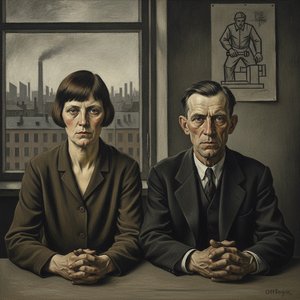
Liebermann, a key figure within the German Impressionist movement, employed a technique that skillfully blended elements of realism with the fleeting effects of light. “Samson and Delilah” exemplifies this approach. The composition is rendered with a deliberate flatness, reminiscent of early Impressionism, yet imbued with a meticulous attention to detail. Liebermann’s brushstrokes are visible, creating a textured surface that invites close examination. He masterfully utilizes light – predominantly diffused and atmospheric – to sculpt the figures and define their forms. Notice how the shadows subtly emphasize the vulnerability of Samson, while Delilah's presence is marked by a cool, almost predatory luminescence. The color palette is restrained, dominated by earthy tones—ochres, browns, and greys— punctuated by flashes of red in Delilah’s attire, drawing the eye to her central role.
The Figures: A Dance of Power and Deception
The painting's strength lies not just in its technical execution but also in the nuanced portrayal of its two protagonists. Samson, depicted as a powerfully built man, is rendered with a quiet vulnerability—a sense of impending doom etched onto his face. His nakedness isn’t overtly provocative; rather, it underscores his exposed state, both physically and emotionally. Delilah, on the other hand, is presented with a calculated elegance, her gaze direct and alluring. She's not portrayed as a villainess in the traditional sense but as a woman of agency, actively shaping the narrative through her actions. The positioning of the figures—close together yet separated by an unspoken tension—heightens the drama and invites speculation about their motivations.
Contextualizing the Masterpiece: Liebermann's Berlin
To fully appreciate “Samson and Delilah,” it’s crucial to understand the artistic climate of Berlin in 1910. The city was a hub of innovation, with artists pushing boundaries and challenging established conventions. Liebermann himself was part of the Berlin Secession, a group that rejected the conservative traditions of the German art establishment. This period saw a growing interest in portraying modern life—particularly the lives of the bourgeoisie—and exploring themes of social commentary and psychological realism. “Samson and Delilah” reflects this shift, moving beyond purely mythological subjects to engage with more complex human relationships.
Beyond the Narrative: Emotional Resonance
Ultimately, "Samson and Delilah" transcends its biblical origins to become a timeless meditation on power, betrayal, and the seductive allure of deception. The painting’s enduring appeal lies in its ability to evoke a profound sense of unease and intrigue. It's not simply a story of a hero’s downfall but a poignant exploration of the vulnerabilities inherent in human relationships—a reminder that even the strongest among us can be undone by weakness, desire, and the calculated actions of another. It remains a powerful image, prompting viewers to contemplate the complexities of love, trust, and the consequences of our choices.



 Forhåndsvisning
 Bytt til trykk
 Send
Send Del med andre
 Vis detaljer

 Last ned bildet
 Liknende objekter
 Røntgenundersøkelse
 Lysbildefremvisning
 Statistikk


 Vis hele teksten






































 Glassalternativet er kun tilgjengelig i størrelser under 110 cm