Gratis kunstkonsultasjon

x
Bestill maleri Bestill maleriKjøp digitalt bilde Kjøp digitalt bilde SendSend
DetaljerDetaljer Legg til i favoritter Legg til i favoritter Last ned bildetLast ned bildet Liknende objekterLiknende objekter RøntgenRøntgen LysbildefremvisningLysbildefremvisning

untitled (8351)

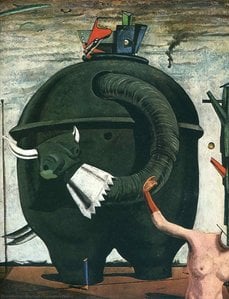
The painting showcases Ernst’s surrealist style with an enigmatic sculpture surrounded by bizarre figures and a bird, prompting contemplation on artistic exploration and societal critique.

Utforsk Max Ernsts surrealistiske verden! Oppdag frottage, collager og drømmende malerier med fugler, landskap & psykologisk dybde. #MaxErnst #Surrealisme #Dada

Giclée / Kunsttrykk

Giclée- eller lerretsprint av museumskvalitet med rask produksjon og fleksible valgmuligheter for etterbehandling.

P118B $10
P118H $10
P118W $10
P438Z $10
P508JH $12
P508YH $12
P805H $10
P805Z $10
P919BZ $10
P919G $10
P919XJ $10
P959ZH $10
P968JZ $12
W106C $8
W218G $10
W218JH $8
W218Y $10
W307PJ $10
W316G $10
W316PJ $8
W316Y $10
W398PJ $8
W4111J $10
W500HY $15
W500JH $15
W692G $12
W849H $8
W940BG $15
W953PJ $8

Standard
custom
CM
INCH

Velg mellom våre forhåndsdefinerte størrelser som bevarer kunstverkets opprinnelige proporsjoner.

bredde
høyde

Du kan oppgi egne mål for å tilpasse en spesifikk ramme eller et bestemt område. Dersom den valgte størrelsen ikke samsvarer med det originale bildets proporsjoner, vil vi enten beskjære kunstverket eller utvide bildet med en speilet eller ensfarget kant. En digital mockup vil bli sendt til din godkjenning før produksjonen starter.
Vennligst merk at forhåndsvisningen på skjermen ikke gjenspeiler den faktiske beskjæringen eller utvidelsen. Kun mockuppen vil vise den endelige komposisjonen nøyaktig.
Selv om tilpassede størrelser er tilgjengelige, anbefaler vi å velge et mål fra den forhåndsdefinerte listen for å bevare de originale proporsjonene.

Verdensomspennende levering () på 2 uker i stedet for standard 4/5 uker. (2 July)

why_choose_icon
Gratis ekspressfrakt over hele verden
why_choose_icon
Lerretsduk av høykvalitets lin
why_choose_icon
Full forsikring under transport
why_choose_icon
Garanti for refusjon av toll og importavgifter
why_choose_icon
Garantert korrekt fargegjengivelse
why_choose_icon
60 dagers returrett (kun ved feil)
why_choose_icon
100% pengene tilbake-garanti
why_choose_icon
Rabatt ved flere kjøp

Totalpris for bestilling

-

reproduction

untitled (8351)

Giclée / Kunsttrykk

Størrelse på reproduksjon

-

Endelig pris

-

Kort om verket

  • Artistic style: Dreamlike
  • Medium: Oil on canvas
  • Artist: Max Ernst
  • Notable elements or techniques: Automatism, Collage
  • Movement: Surrealism
  • Subject or theme: Mythology

Kunstighetsquiz

Det er kun ett riktig svar på hvert spørsmål.

Spørsmål 1:
What artistic movement is Max Ernst's painting “untitled (8351)” primarily associated with?
Spørsmål 2:
Describe the central sculptural element featured in the image.
Spørsmål 3:
What is a notable characteristic of Ernst's artistic approach?
Spørsmål 4:
The painting incorporates a bird as an element. What symbolic significance might this detail convey?
Spørsmål 5:
Considering Ernst's philosophical influences, what overarching theme does “untitled (8351)” seem to address?

Beskrivelse av samleobjektet

A Surrealist Echo: Exploring Max Ernst’s “Untitled (8351)”

The canvas holds an unsettling beauty—a landscape rendered in hues of ochre and bruised violet, dominated by a colossal sculpture that commands immediate attention. This is Max Ernst’s “Untitled (8351),” a cornerstone of Surrealist art produced in 1927 during the height of Weimar Germany's artistic ferment. It’s not merely a painting; it’s an invitation into a realm where logic yields to dream, and familiar forms twist into grotesque distortions.
  • Subject Matter: The sculpture itself is amorphous—a towering monolith devoid of discernible features—yet undeniably imposing. Scattered around its base are smaller figures, some recognizable as birds, others rendered in abstract shapes that defy categorization. These elements coalesce to form a desolate tableau reminiscent of arid deserts or windswept plains.
  • Style: Ernst’s approach aligns perfectly with the Surrealist movement's rejection of rational representation. Influenced by Sigmund Freud’s psychoanalytic theories, he sought to tap into the subconscious mind and express primal emotions—fear, anxiety, desire—without resorting to conventional artistic conventions.

Technique: Automatism and Collage – Embracing Chance

Ernst pioneered a revolutionary technique known as automatism—a process of spontaneous drawing or painting undertaken without conscious control. He believed that bypassing rational thought allowed access to deeper levels of creativity, liberating the artist from self-censorship and fostering unexpected visual discoveries. To achieve this effect, Ernst combined collage techniques with meticulous brushwork. Fragments of printed matter—photographs, maps, newspaper clippings—were meticulously adhered to the canvas, creating a textured surface that mirrored the fragmented nature of the subconscious.
  • Materials: Ernst utilized oil paints mixed with turpentine and linseed oil on linen canvas. The collage elements included paper scraps sourced from various publications, adding layers of visual complexity and referencing anxieties surrounding political instability and cultural fragmentation prevalent in Weimar Germany.

Historical Context: Weimar’s Artistic Crisis and the Rise of Surrealism

“Untitled (8351)” emerged during a period of profound societal upheaval in Germany. The aftermath of World War I left the nation reeling from economic hardship, political polarization, and social disillusionment. Amidst this crisis, Surrealist artists—including Ernst, André Breton, Joan Miró, René Magritte—challenged prevailing artistic dogma and championed experimentation as a means of confronting existential anxieties. They sought to liberate art from the constraints of reason and explore the uncharted territories of human consciousness.

Symbolism: Desert Landscapes and Fragmented Forms – Reflections of Inner Turmoil

The desolate landscape depicted in “Untitled (8351)” serves as a powerful metaphor for inner turmoil—a representation of psychological emptiness and vulnerability. The colossal sculpture embodies the overwhelming presence of repressed desires and anxieties, while the scattered figures symbolize fragmented identities and shattered perceptions. Ernst’s masterful use of color—the muted violet conveying melancholy and uncertainty—further amplifies the painting's emotional impact.

Emotional Impact: An Invitation to Contemplate the Unconscious

Ultimately, “Untitled (8351)” compels viewers to confront uncomfortable truths about themselves and their relationship with reality. It’s a disconcerting yet profoundly rewarding experience—a reminder that beauty can reside in dissonance and that art possesses the capacity to illuminate hidden dimensions of human psychology. Like many Surrealist masterpieces, it continues to resonate today as an emblem of artistic innovation and a testament to the enduring power of imagination.

Om kunstneren

A Life Immersed in the Surreal

Max Ernst, born Maximilian Maria Ernst on April 1st, 1891, in Brühl, Germany, was a restless spirit destined to become one of the most pivotal figures in 20th-century art. His journey wasn’t one of conventional artistic training; rather, it was a self-directed exploration fueled by philosophical inquiry, psychological fascination, and a profound disillusionment with societal norms. Ernst's father, a teacher of the deaf and an amateur painter, instilled in him both a sensitivity to the world and a rebellious streak against established authority. This early duality would become a defining characteristic of his artistic vision.

Ernst’s academic pursuits at the University of Bonn – encompassing philosophy, art history, literature, psychology, and psychiatry – were not merely diversions but foundational elements that deeply informed his later work. He wasn’t simply interested in *how* to paint; he was grappling with *why*. This intellectual curiosity led him to encounter the groundbreaking works of Picasso, Van Gogh, and Gauguin at the Sonderbund exhibition in Cologne in 1912, a moment that irrevocably altered his artistic trajectory. The seeds of modernism had been sown.

Dada’s Disruption and the Birth of Surrealist Visions

The cataclysm of World War I proved to be a watershed moment for Ernst. His experiences as a soldier on both the Eastern and Western fronts left him profoundly shaken, fostering a deep skepticism towards established order and a yearning for new modes of expression. This disillusionment found fertile ground in the burgeoning Dada movement, which he embraced wholeheartedly after returning to Cologne in 1918. Alongside Hans Arp – a lifelong friend and collaborator – Ernst became a central figure in the Cologne Dada group, rejecting traditional artistic conventions and embracing absurdity, chance, and anti-rationality.

The Dadaists sought to dismantle bourgeois values and challenge accepted notions of beauty and logic. They employed techniques like collage, photomontage, and assemblage—often incorporating found objects—to create jarring juxtapositions that mocked the seriousness of the era. Ernst’s Dada output was marked by a preoccupation with disturbing imagery and a deliberate disregard for conventional artistic standards.

Pioneering Techniques: Frottage, Grattage, and Collage

Ernst's artistic innovation extended beyond subject matter; he was a relentless experimenter with technique. He didn’t simply adopt existing methods—he invented new ones. Perhaps his most famous contribution is frottage, a process of rubbing pencil or charcoal over textured surfaces to create unexpected and evocative images. This technique, born from a moment of boredom while observing wood grain, allowed Ernst to tap into the subconscious and generate forms that defied conscious control. It was a method he famously described as “a way of letting the unconscious speak.”

Closely related was grattage, where paint is scraped across canvas revealing underlying layers—often incorporating textures and patterns created by previous paintings. Ernst’s meticulous layering of colors and surfaces contributed to the dreamlike atmosphere characteristic of his work.

Surrealist Exploration: Dreams, Symbolism, and Psychological Depth

Ernst's engagement with Surrealism solidified his commitment to exploring the realm of dreams, the unconscious mind, and the irrational. Influenced by Sigmund Freud’s psychoanalytic theories—particularly his concept of “the Oedipus complex”—Ernst sought to unlock hidden desires and anxieties through his art. He wasn’t interested in depicting reality as it appeared but rather in revealing the underlying psychological forces that shaped perception.

His paintings frequently incorporate symbolic imagery: birds (often representing freedom and aspiration), desolate landscapes reflecting inner turmoil, unsettling juxtapositions designed to provoke thought and emotion—and recurring motifs like Loplop, Ernst’s alter ego, which embodies a blend of masculine and feminine energies. His artistic vision was driven by a profound desire to confront the darker aspects of human experience.

Major Achievements and Legacy

Throughout his prolific career, Ernst produced an astonishing array of paintings, sculptures, prints, and drawings—spanning genres from figurative landscapes to abstract compositions. Notable works include “Ofrenda funeraria,” “The Equivocal Woman,” and “L’Ange du foyer”—each demonstrating Ernst's mastery of technique and his ability to convey complex psychological states.

Max Ernst’s influence on subsequent generations of artists is undeniable. He championed innovative methods, challenged artistic conventions, and established himself as a cornerstone of Surrealist art—a movement that continues to resonate with audiences worldwide. His legacy resides not only in his stunning visual creations but also in his unwavering belief in the transformative power of imagination and the importance of confronting uncomfortable truths.

Max Ernst

Max Ernst

1891 - 1976 , Tyskland

Kort om kunstneren

  • Artistic Movement Or Style: Dada, Surrealisme
  • Artists Or Movements Influenced By This Artist:
    • Surrealisme
    • Dada
  • Artists Who Influenced This Artist:
    • Picasso
    • Van Gogh
    • Gauguin
  • Date Of Birth: 1. april 1891
  • Date Of Death: 1. april 1976
  • Full Name: Max Ernst
  • Nationality: Tysk-Amerikansk, Fransk
  • Notable Artworks:
    • Byen helhetlig
    • Euclides
    • Av denne skal ingen vite
  • Place Of Birth: Brühl, Tyskland
Utforsk kunstverk organisert etter temaer, stiler og kjennetegn.