x
ForhåndsvisningForhåndsvisning Se i ARSe i AR Kjøp trykk Kjøp trykkKjøp håndlaget maleri Kjøp håndlaget maleri SendSend
Vis detaljerVis detaljer Legg til i favoritter Legg til i favoritter Last ned bildetLast ned bildet Liknende objekterLiknende objekter RøntgenundersøkelseRøntgenundersøkelse LysbildefremvisningLysbildefremvisning

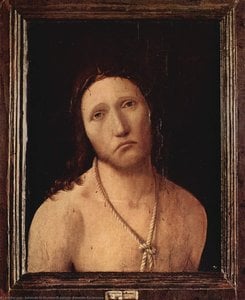
Saint Bartholomew

Oppdag 'Saint Bartholomew' av Matteo di Giovanni (1485), et fantastisk tidlig renessanse maleri! Utforsk røde nyanser, detaljerte draperinger og symbolsk dybde – et fengslende kunsthistorisk verk.

Explore the art of Matteo di Giovanni (1435-1495), a leading Sienese Renaissance painter! Discover his blend of local tradition & Florentine influence in Madonna, Massacre of Innocents & more. #RenaissanceArt #SieneseSchool

Kjøp et høyoppløselig, forbedret digitalt bilde som er langt bedre enn forhåndsvisningen på nettet.

Hver fil er omhyggelig klargjort av våre egne spesialister ved hjelp av avanserte verktøy og profesjonell manuell retusjering. Vi sørger for at hvert bilde har eksepsjonell klarhet, presis fargegjengivelse og fine detaljer.

Den endelige filen leveres via e-post innen 72 timer, optimalisert for umiddelbar bruk i profesjonelle, redaksjonelle og trykte miljøer. Dette er den samme kvaliteten som benyttes av ledende designstudioer, utgivere og gallerier.

Digitalt bilde

Last ned en høyoppløselig fil for personlig bruk, utskrift og kreative prosjekter. (Kjøp trykk Kjøp trykkKjøp håndlaget maleri Kjøp håndlaget maleri)

Totalbeløp

$ 24.90

Inkludert i alle bestillinger av digitale bilder

Ekspert digital levering, garantert

Når du velger WahooArt.com, får du ikke bare et bilde – du mottar et profesjonelt forbedret digitalt kunstverk, skapt med presisjon og med en garantert tilfredshetsgaranti. Her er alt som automatisk følger med din bestilling:

shipping_icon
Rask digital levering

Din høyoppløselige digitale bildefil sendes til din e-post innen 72 timer etter bestilling – klar til umiddelbar bruk.

canvas_icon
KI-forbedret digital fil

Ditt kunstverk blir profesjonelt optimalisert ved hjelp av avanserte AI-verktøy og manuell redigering, noe som sikrer maksimal detaljrikdom, klarhet og fargegjengivelse.

insurance_icon
Gratis livslang nyutlevering

Har du ved et uhell slettet eller mistet filen din? Ingen bekymring – vi sender den på nytt når som helst, helt gratis.

tax_icon
Ingen importavgifter – noen gang

Nyt ditt kunstverk umiddelbart uten toll, avgifter eller leveringskostnader – digitale nedlastinger er alltid avgiftsfrie.

color_icon
Garantert fargenøyaktighet

Vi sikrer at ditt digitale bilde gjenspeiler de originale fargene så nøyaktig som mulig ved hjelp av profesjonelle verktøy og fargehåndtering.

return_icon
60 dagers tilfredshetsgaranti

Hvis du ikke er fornøyd med ditt digitale bilde, vil vi revidere det eller refundere 100% innen 60 dager – uten spørsmål.

guarantee_icon
100% Penggaranti

Ikke fornøyd? Få full refusjon innen 60 dager etter at du har mottatt din digitale fil – uten spørsmål.

discount_icon
Rabatt ved storkjøp

Kjøp 3 bilder, spar 10% - Kjøp 5, spar 15% - Kjøp 10+, spar 20%. Ideelt for kreative prosjekter, gallerier og byråer.

Kort om verket

  • Title: Saint Bartholomew
  • Year: 1485
  • Dimensions: 90 x 56 cm
  • Subject or theme: Religious Figure
  • Artistic style: Smooth skin tones
  • Location: Museum of Fine Arts Budapest
  • Influences: Antonio Pollaiolo

Saint Bartholomew - A Tuscan Renaissance Masterpiece

Saint Bartholomew’s depiction by Matteo di Giovanni stands as a testament to the artistic fervor of Siena during the late fifteenth century, marking a pivotal moment in the transition from Gothic formalism to the humanist ideals of the burgeoning Renaissance. Produced around 1485, this panel painting transcends mere representation; it embodies a profound engagement with anatomical precision and symbolic depth—characteristics that firmly establish Giovanni’s place within the illustrious Sienese School. The artwork's genesis lies in Alfonso II of Naples’s desire to honor the relics of Saint Bartholomew, martyred in Armenia for his unwavering faith, prompting Giovanni to undertake a commission that demanded both technical mastery and intellectual contemplation.
  • Subject Matter & Symbolism: The central figure embodies the apostle's martyrdom—a gruesome act signifying sacrifice for divine devotion. Giovanni’s masterful use of drapery—particularly the elegantly draped flayed skin—references medieval iconography while simultaneously aligning with Renaissance explorations of human anatomy and materiality. Red, a dominant hue, symbolizes passion, suffering, and ultimately, redemption – themes central to Christian theology during this period.
  • Style & Technique: Giovanni’s style reflects the influence of Sassetta and Pollaiolo—artists who championed naturalism and expressive color palettes. Employing oil paint on panel, he skillfully achieved textural nuances through layering and glazing techniques, creating a subtly matte surface that enhances the illusion of three-dimensionality. Precise linear contours delineate musculature and drapery folds, mirroring advancements in anatomical observation prevalent throughout Florence.
  • Historical Context: Siena’s artistic landscape during Giovanni's time was shaped by papal patronage and burgeoning humanist scholarship—forces propelling innovation and challenging traditional conventions. The painting’s commission coincided with a period of intense religious fervor following the Ottoman siege of Otranto, underscoring the importance of commemorating saints as symbols of spiritual fortitude.
  • Composition & Perspective: Giovanni eschews complex spatial relationships favoring scale and placement to convey visual impact—a stylistic choice consistent with Renaissance artists prioritizing clarity and emotional resonance over illusionistic depth. The figure occupies most of the panel’s space, emphasizing its centrality within the narrative and reinforcing its symbolic significance.
  • Emotional Impact: Viewing Saint Bartholomew evokes contemplation on themes of sacrifice, faith, and mortality – emotions skillfully conveyed through Giovanni's masterful use of color, light, and drapery. The painting’s solemn demeanor invites viewers to engage in a dialogue with religious iconography—a testament to the enduring power of art to inspire spiritual reflection.
Provenance & Recognition: Initially attributed to Antonio Pollaiolo, scholarly research has affirmed Giovanni's authorship, cementing his legacy as one of Siena’s foremost Renaissance painters. The artwork currently resides in the Museo Nazionale di San Matteo, Pisa—a repository of Tuscan artistic heritage—where it continues to captivate audiences with its exquisite craftsmanship and profound symbolic resonance. Its inclusion in the Museo Nazionale di San Matteo underscores Giovanni's contribution to the artistic canon of his era and ensures that Saint Bartholomew’s beauty and intellectual depth endure for generations to come.

Om kunstneren

The Sienese Master: The Life and Legacy of Matteo di Giovanni

In the heart of the Italian Renaissance, amidst the winding streets of Siena, the brushstrokes of Matteo di Giovanni helped define an era of profound spiritual and aesthetic transformation. Born around 1435 in Borgo San Sepolcro, Matteo’s journey was one of migration and metamorphosis. Though his origins lay elsewhere, his soul became inextricably linked to the Sienese school, a movement characterized by its lyrical grace, rich ornamentation, and deep devotion. His life was marked not only by artistic pursuit but by a remarkable personal stability; through two marriages to women of significant wealth, Matteo secured the financial freedom necessary to acquire real estate and establish a lasting presence in the San Salvatore neighborhood of Siena.

The early years of Matteo’s career remain shrouded in the soft mists of history, yet the traces of his development are etched into the very fabric of his canvases. While no formal apprenticeship is recorded, scholars often look toward the workshop of the renowned sculptor and painter Vecchietta as a potential cradle for his talent. His style emerged as a sophisticated tapestry woven from various threads of influence: the delicate precision of the miniaturist Girolamo da Cremona, the robust Florentine energy of Antonio del Pollaiolo, and the established Sienese traditions set by masters such as Sassetta and Domenico di Bartolo. This unique synthesis allowed him to bridge the gap between the decorative elegance of the late Gothic period and the burgeoning humanism of the Renaissance.

A Career Forged in Gold and Devotion

Matteo’s early professional life was defined by the collaborative spirit of the 15th-century workshop. In 1452, he entered into a significant partnership with Giovanni di Pietro, a period during which they shared living quarters and worked side-by-side on monumental tasks. One of the most illuminating glimpses into his early technical skill comes from 1453, when records show Matteo coloring and gilding a sculpture of the Archangel Gabriel by the celebrated Jacopo della Quercia. This task—applying precious gold leaf to sacred forms—demonstrates his mastery over the luminous, tactile surfaces that would become a hallmark of his later altarpieces.

His growing reputation led him to contribute to the most sacred spaces in Siena. His hands helped embellish the organ shutters within the Siena Cathedral and played a vital role in the decoration of the San Bernardino Chapel. These commissions were more than mere jobs; they were spiritual contributions to the city's liturgical life. As his skill matured, Matteo’s work began to exhibit a more complex narrative depth, moving beyond simple iconography toward a more dramatic and emotionally resonant style that captured the attention of the most prestigious patrons in Tuscany.

The Pinnacle of Achievement and Historical Significance

The true measure of Matteo di Giovanni’s stature is found in his selection for the urban renewal projects of Pienza. As one of only four Sienese painters chosen to furnish altarpieces for the newly erected chapels of the Pienza Cathedral, he stood at the forefront of the era's most ambitious architectural and artistic endeavors. His contributions to this project, particularly the three altarpieces dating from 1460-62, serve as a definitive window into his evolving technique, showcasing a mastery of light, form, and sacred storytelling.

Matteo’s legacy is defined by several key artistic pillars:

  • Synthesis of Styles: His ability to blend the local Sienese tradition with the emerging anatomical realism of Florence.
  • Technical Brilliance: A profound command over gilding and color, creating works that shimmered with divine light.
  • Narrative Power: The capacity to transform religious scenes, such as the Massacre of the Innocents or various Madonna and Child compositions, into gripping human dramas.
  • Civic Impact: His role in shaping the visual identity of Siena and Pienza through monumental ecclesiastical commissions.

Though he passed away in 1495, the echoes of Matteo di Giovanni’s artistry continue to resonate. He remains a pivotal figure who navigated the transition from the medieval mindset to the Renaissance dawn, leaving behind a body of work that continues to inspire awe through its delicate beauty and enduring spiritual strength.

matteo di giovanni

matteo di giovanni

1435 - 1495 , Italy

Kort om kunstneren

  • Artistic Movement Or Style: Sienese School, Renaissance
  • Artists Who Influenced This Artist:
    • Sassetta
    • Domenico di Bartolo
    • Antonio del Pollaiolo
  • Date Of Birth: 1435
  • Date Of Death: 1495
  • Full Name: Matteo di Giovanni
  • Nationality: Italian
  • Notable Artworks:
    • Madonna and Child
    • Massacre of the Innocents
  • Place Of Birth: Borgo San Sepolcro, Italy