x
Kjøp håndlaget maleri Kjøp håndlaget maleriKjøp bilde Kjøp bilde SendSend
Vis detaljerVis detaljer Legg til i favoritter Legg til i favoritter Last ned bildetLast ned bildet Liknende objekterLiknende objekter LysbildefremvisningLysbildefremvisning

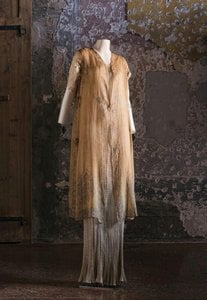
Cape

Mariano Fortuny’s ‘Cape,’ created in 1930, exemplifies his groundbreaking approach to fashion and stage lighting. This photograph captures a mannequin draped in a luxurious velvet coat adorned with delicate lace—a testament to Fortuny's revival of historical motifs and pioneering techniques.

Mariano Fortuny (1871-1949) var en spansk kunstner og designer kjent for innovative tekstiler, vakre Delphos-kjoler og banebrytende scenebelysning. Utforsk hans orientalske inspirasjon, oppfinnelser og et varig kunsthistorisk fotavtrykk!

Giclée / Kunsttrykk

Giclée- eller lerretsprint av museumskvalitet med rask produksjon og fleksible valgmuligheter for etterbehandling. (Kjøp håndlaget maleri Kjøp håndlaget maleriKjøp bilde Kjøp bilde)

Standardformat
skreddersydd
CM
INCH

Velg mellom våre forhåndsdefinerte størrelser som bevarer kunstverkets opprinnelige proporsjoner.

bredde
høyde

Du kan oppgi egne mål for å tilpasse en spesifikk ramme eller et bestemt område. Dersom den valgte størrelsen ikke samsvarer med det originale bildets proporsjoner, vil vi enten beskjære kunstverket eller utvide bildet med en speilet eller ensfarget kant. En digital mockup vil bli sendt til din godkjenning før produksjonen starter.
Vennligst merk at forhåndsvisningen på skjermen ikke gjenspeiler den faktiske beskjæringen eller utvidelsen. Kun mockuppen vil vise den endelige komposisjonen nøyaktig.
Selv om tilpassede størrelser er tilgjengelige, anbefaler vi å velge et mål fra den forhåndsdefinerte listen for å bevare de originale proporsjonene.

Verdensomspennende levering () på 2 uker i stedet for standard 4/5 uker. (4 September)

why_choose_icon
Gratis ekspressfrakt over hele verden
why_choose_icon
Lerretsduk av høykvalitets lin
why_choose_icon
Full forsikring under transport
why_choose_icon
Garanti for refusjon av toll og importavgifter
why_choose_icon
Garantert korrekt fargegjengivelse
why_choose_icon
60 dagers returrett (kun ved feil)
why_choose_icon
100% pengene tilbake-garanti
why_choose_icon
Rabatt ved flere kjøp

Totalpris for bestilling

$ 68

reproduction

Cape

Giclée / Kunsttrykk

Størrelse på reproduksjon

-

Endelig pris

$ 68

Kort om verket

  • Title: Cape
  • Influences: Historical Sources"; "Non-Western Traditions
  • Medium: Textile
  • Artist: Mariano Fortuny
  • Location: Palazzo Fortuny, Venice
  • Subject or theme: Fashion Design; Artistic Presentation
  • Movement: Decorative Arts

Kunstighetsquiz

Det er kun ett riktig svar på hvert spørsmål.

Spørsmål 1:
What is the primary subject matter of Mariano Fortuny’s ‘Cape’?
Spørsmål 2:
The photograph showcases Fortuny’s ‘Cape’ within what type of setting?
Spørsmål 3:
What technique is Fortuny credited with pioneering in theater design?
Spørsmål 4:
The photograph highlights the textures of both the garment and its background. What is a prominent textural element in the image?
Spørsmål 5:
Fortuny’s artistic inspiration drew heavily from historical and non-Western sources. What is a key characteristic of his creative approach?

A Vision of Elegance: The Timeless Allure of Mariano Fortuny’s ‘Cape’

In the realm of textile art, few pieces command the same reverence as Mariano Fortuny’s 1930 masterpiece, ‘Cape.’ This is not merely a garment; it is a profound reimagining of theatrical presentation and a masterful fusion of historical inspiration with avant-garde technique. To behold this work is to witness a moment where fashion transcends utility to become pure sculpture. The piece embodies a sophisticated dialogue between the weight of history and the lightness of innovation, making it an essential inspiration for collectors and designers who seek to infuse their spaces with a sense of storied grandeur.

The soul of the ‘Cape’ lies in its ability to reinterpret antiquity through a modern lens. Fortuny, a true polymath, drew deep inspiration from Greco-Roman mythology, specifically evoking the dramatic drapery associated with Zeus during the siege of Mount Olympus. By translating these epic narratives into fabric, he transformed a mannequin into a conduit for mythological grandeur. The garment serves as a visual spectacle where the heavy, luxurious velvet of the collar and hood meets the ethereal, delicate patterns of a lace-like overlay. This deliberate juxtaposition creates a captivating interplay of surfaces, inviting the eye to wander through layers of texture and light.

Mastery of Texture and the Art of Light

Technique is the heartbeat of this work. Fortuny was as much an inventor as he was a designer, and his mastery over material is evident in every fold of the ‘Cape.’ The way the dark, sumptuous velvet absorbs light stands in stark contrast to the translucent, patterned overlay that allows glimpses of the form beneath to emerge like a half-remembered dream. This interplay mirrors Fortuny’s revolutionary work with the cyclorama dome, where he used reflected light to create seamless, immersive environments in theater. In this piece, the fabric itself acts as a stage, performing a silent drama of shadow and brilliance.

For the interior designer or art enthusiast, the ‘Cape’ offers a rich palette of textures that can elevate any setting. The verticality of the pleated skirt provides a rhythmic stability, while the organic, flowing lines of the draped coat introduce a sense of movement. It is a study in balance—the heavy against the light, the structured against the fluid. This complexity makes a high-quality reproduction of such a work an extraordinary focal point, capable of anchoring a room with its profound sense of craftsmanship and historical weight.

An Emotional Legacy for the Modern Collector

Beyond its physical attributes, the ‘Cape’ carries an emotional resonance that speaks to the enduring human desire for beauty and transcendence. It evokes a sense of timelessness, bridging the gap between the ancient world and the modern era. There is a certain mystery held within its folds, a whisper of the aristocratic intrigue and theatrical magic that defined Fortuny’s life in Venice. To possess or display an homage to this work is to celebrate the spirit of the alchemist of aesthetics—an artist who refused to see boundaries between fashion, stagecraft, and fine art.

Whether integrated into a curated gallery collection or used as a sophisticated element in high-end decor, the ‘Cape’ remains a symbol of refined beauty. It invites viewers to contemplate the intersection of memory and innovation, making it a timeless investment for those who appreciate art that does not merely decorate a space, but breathes life and narrative into it.


Om kunstneren

Early Life and Inspiration

Mariano Fortuny, a name synonymous with theatrical innovation and exquisite textiles, was born in Granada, Spain, on May 11, 1871. His early life was marked by profound loss – his father, Mariano Fortuny y Marsal, a celebrated genre painter, tragically passed away when the young boy was just three years old. This event profoundly shaped his family’s trajectory, leading them to relocate to Paris, France, where his mother, Cecilia de Madrazo, fostered his artistic development and introduced him to the world of luxurious fabrics and textiles. From a tender age, Mariano displayed an extraordinary talent for various art forms: painting, photography, sculpting, architecture, etching, and even theatrical stage lighting—a diverse range that foreshadowed his future as a polymath. The family’s exposure to these materials, particularly during their time in Paris, would become a cornerstone of his creative vision. His mother's background as an artist herself instilled in him a deep appreciation for artistic heritage and technique.

Artistic Talents and Revolutionary Inventions

Mariano Fortuny quickly established himself as a prodigious talent, demonstrating skills across multiple disciplines with remarkable speed. He wasn’t merely a painter; he was an inventor, a designer, and a visionary. His early work showcased a keen eye for detail and a fascination with capturing the essence of movement and light—qualities that would later define his theatrical innovations. Crucially, Fortuny's artistic journey was intertwined with a relentless pursuit of technological advancement. Between 1901 and 1934, he patented over twenty groundbreaking inventions, fundamentally altering the landscape of theater design. His most celebrated creation is undoubtedly the *fortuny cyclorama dome*, a quarter-dome structure constructed from plaster or cloth, ingeniously designed to create seamless transitions between scenes through the strategic use of indirect lighting. His treatise, “Eclairage Scenique” (1904), meticulously documented his revolutionary approach to reflecting light off various surfaces, manipulating its color, intensity, and overall effect—a scientific method applied to artistic expression. This wasn’t simply about illumination; it was about crafting an immersive experience for the audience.

Collaborations and Recognition

Fortuny's work gained significant recognition in the 1920s, catapulting him into the international spotlight. His collaborations with prominent figures cemented his place in art history. He worked closely with Richard Wagner, the German composer, whose operas deeply influenced his artistic sensibilities, inspiring scenes filled with dramatic intensity and evocative atmosphere. His installation of the cyclorama dome at La Scala opera house in Milan was a monumental undertaking—a testament to his engineering prowess and artistic vision. Adapting the dome for the larger theater space presented significant challenges, which he masterfully overcame by inventing a sophisticated suction fan system to maintain its taut structure. Fortuny’s influence extended beyond music; he collaborated with stage designers and performers, shaping the very fabric of theatrical spectacle.

Legacy and Lasting Influence

Mariano Fortuny passed away on May 3, 1949, in Venice, Italy, leaving behind a legacy that continues to resonate today. His work profoundly impacted French novelist Marcel Proust, who drew inspiration from Fortuny’s artistic world for his epic novel *In Search of Lost Time*. Fortuny's life and achievements were also depicted in Pere Gimferrer’s novel *Fortuny*, further solidifying his place in literary history. Beyond the immediate impact on theatrical design, Fortuny’s innovations—particularly in textile printing and lighting technology—laid the groundwork for future developments in both fields. His dedication to blending art, science, and engineering established him as a true pioneer, whose influence can still be felt across multiple creative disciplines. Explore more about Mariano Fortuny's inventions and designs at WahooArt’s collection. Discover the impact of his work on theatrical lighting in the museum destroyed by fire (united states), a story of an unfortunate event that shaped american art history, available at WahooArt’s blog.
Mariano Fortuny

Mariano Fortuny

1871 - 1949 , Spania

Kort om kunstneren

  • Artistic Movement Or Style: Orientalism kunst
  • Artists Or Movements Influenced By This Artist: ['Marcel Proust']
  • Artists Who Influenced This Artist: ['Richard Wagner']
  • Date Of Birth: 11 mai 1871
  • Date Of Death: 3 mai 1949
  • Full Name: Mariano Fortuny y Marsal
  • Nationality: Spansk
  • Notable Artworks:
    • Teagown
    • Portrett av Henriette Fortuny
  • Place Of Birth: Granada, Spania
Utforsk kunstverk organisert etter temaer, stiler og kjennetegn.