x
ForhåndsvisningForhåndsvisning Se i ARSe i AR Kjøp håndlaget maleri Kjøp håndlaget maleriKjøp bilde Kjøp bilde SendSend
Vis detaljerVis detaljer Legg til i favoritter Legg til i favoritter Last ned bildetLast ned bildet Liknende objekterLiknende objekter RøntgenundersøkelseRøntgenundersøkelse LysbildefremvisningLysbildefremvisning

Traveller's Folding Item

Duchamp's readymades challenged conventional notions of art by presenting everyday objects as artworks, prompting viewers to reconsider their understanding of creativity and aesthetic judgment.

Marcel Duchamp var en fransk kunstner som revolusjonerte kunstens verden ved å stille spørsmål om hva kunst er og hvordan vi oppfatter den. Utforsk hans ikoniske verk og filosofiske innvirkning!

Giclée / Kunsttrykk

Giclée- eller lerretsprint av museumskvalitet med rask produksjon og fleksible valgmuligheter for etterbehandling. (Kjøp håndlaget maleri Kjøp håndlaget maleriKjøp bilde Kjøp bilde)

Standardformat
skreddersydd
CM
INCH

Velg mellom våre forhåndsdefinerte størrelser som bevarer kunstverkets opprinnelige proporsjoner.

bredde
høyde

Du kan oppgi egne mål for å tilpasse en spesifikk ramme eller et bestemt område. Dersom den valgte størrelsen ikke samsvarer med det originale bildets proporsjoner, vil vi enten beskjære kunstverket eller utvide bildet med en speilet eller ensfarget kant. En digital mockup vil bli sendt til din godkjenning før produksjonen starter.
Vennligst merk at forhåndsvisningen på skjermen ikke gjenspeiler den faktiske beskjæringen eller utvidelsen. Kun mockuppen vil vise den endelige komposisjonen nøyaktig.
Selv om tilpassede størrelser er tilgjengelige, anbefaler vi å velge et mål fra den forhåndsdefinerte listen for å bevare de originale proporsjonene.

Verdensomspennende levering () på 2 uker i stedet for standard 4/5 uker. (5 September)

why_choose_icon
Gratis ekspressfrakt over hele verden
why_choose_icon
Lerretsduk av høykvalitets lin
why_choose_icon
Full forsikring under transport
why_choose_icon
Garanti for refusjon av toll og importavgifter
why_choose_icon
Garantert korrekt fargegjengivelse
why_choose_icon
60 dagers returrett (kun ved feil)
why_choose_icon
100% pengene tilbake-garanti
why_choose_icon
Rabatt ved flere kjøp

Totalpris for bestilling

$ 68

reproduction

Traveller's Folding Item

Giclée / Kunsttrykk

Størrelse på reproduksjon

-

Endelig pris

$ 68

Kort om verket

  • Artistic style: Conceptual Art
  • Title: Traveller's Folding Item
  • Medium: Photography
  • Subject or theme: Industrial Object; Artistic Presentation
  • Notable elements or techniques: Readymade concept; Minimalist composition
  • Influences: Cubism
  • Artist: Marcel Duchamp

A Quiet Revolution: Exploring Marcel Duchamp’s Traveller's Folding Item

Marcel Duchamp’s “Traveller’s Folding Item,” created in 1916, stands as a cornerstone of Dada and Conceptual Art—a deceptively simple object transformed into a profound statement about the very definition of art. More than just a photograph documenting an unassuming typewriter cover, it embodies Duchamp's radical challenge to artistic conventions and continues to resonate with audiences today.

The Object Itself: Minimalism and Everyday Life

At first glance, “Traveller’s Folding Item” presents itself as remarkably unremarkable. A cylindrical metal table supports a folded Underwood typewriter cover—a commonplace item found in offices across Europe during the early 20th century. Yet, Duchamp deliberately eschewed traditional artistic representation, opting instead for a direct confrontation with the viewer. This decision wasn't born of indifference; it was driven by a deliberate desire to strip away illusion and expose the underlying conceptual framework. As Duchamp himself eloquently articulated, “My intention was to get away from myself, though I knew perfectly well that I was using myself.” The choice of the typewriter cover—a symbol of bureaucratic efficiency and industrial production—further underscores this subversive impulse.

A Dada Aesthetic: Challenging Artistic Boundaries

The artwork’s stylistic roots lie firmly within the Dada movement, which emerged in Zurich during World War I as a reaction to the perceived absurdity and brutality of the conflict. Dada artists rejected logic and reason, embracing chance, irrationality, and provocation. Duchamp's appropriation of the typewriter cover exemplifies this ethos—a deliberate act of negation designed to dismantle established artistic hierarchies. He famously declared that he was “putting art up against non-art,” questioning whether an object could be considered art simply by its presentation. The photograph itself serves as a tool for disseminating this conceptual idea, capturing the object’s materiality and contextualizing it within the broader Dada aesthetic.

Technique and Context: Documentation Through Photography

The photograph's execution is remarkably straightforward—a testament to Duchamp’s commitment to minimizing artistic embellishment. Utilizing diffused lighting, the photographer skillfully captures the textures of the metal table base and the folded typewriter cover, highlighting their materiality without resorting to idealized depictions. The subtle gradient in the background suggests a studio setting, emphasizing the deliberate control exerted over the visual experience. This technique aligns perfectly with Dada’s rejection of academic artifice, prioritizing conceptual clarity over aesthetic beauty. Created during the tumultuous period of World War I, “Traveller's Folding Item” reflects the anxieties and disillusionment of its time—a response to the horrors of war and a critique of societal values.

Symbolism Beyond Appearances: The Power of Conceptual Art

Ultimately, "Traveller’s Folding Item" transcends its physical form to convey a deeper symbolic message. Duchamp's gesture is not merely about presenting an object; it’s about redefining what constitutes art itself. By elevating the mundane to the level of artistic contemplation, he compels viewers to reconsider their assumptions about creativity and aesthetic judgment. The photograph serves as a conduit for this intellectual challenge, inviting audiences to engage in a dialogue about the role of art in confronting societal realities. It remains an enduring emblem of Conceptual Art—a movement that prioritizes ideas over visual sensation—and continues to inspire artists and thinkers alike.

Om kunstneren

A Revolutionary Spirit: The Life and Art of Marcel Duchamp

Marcel Duchamp, born Henri-Robert-Marcel Duchamp in 1887 in Blainville-Crevon, Normandy, was more than an artist; he was a philosophical provocateur who fundamentally altered the course of modern art. His early life, though seemingly conventional – nurtured within a family that appreciated artistic expression with both brothers pursuing successful careers as artists – hinted at the iconoclasm to come. Duchamp initially pursued formal training, mastering traditional techniques and experimenting with post-impressionist styles. However, this academic foundation served not as an end in itself, but as a springboard for questioning the very nature of art, its purpose, and its definition. He wasn’t content merely to depict the world; he sought to challenge how we perceive it, and what constitutes artistic value. This restless intellectual curiosity would become the defining characteristic of his prolific career.

Early Artistic Explorations: Cubism and Impressionism

Duchamp's initial foray into art began with a grounding in traditional techniques—primarily painting—influenced by Impressionist masters like Claude Monet and Pierre-Auguste Renoir. He honed his skills diligently, capturing fleeting moments of light and color with remarkable precision. Yet, even within these aesthetically pleasing compositions, Duchamp harbored doubts about the role of representation itself. Recognizing that art could transcend mere visual imitation, he turned his attention to Cubism, spearheaded by Pablo Picasso and Georges Braque. This movement embraced fragmented forms and multiple perspectives—a radical departure from the single viewpoint demanded by Renaissance painting—and Duchamp skillfully incorporated these principles into works like *Portrait of Chess Players* (1911). The fractured planes and overlapping viewpoints mirrored his own intellectual preoccupation with dismantling established conventions.

The Dadaist Rebellion: Challenging Artistic Norms

The horrors of World War I profoundly impacted Duchamp’s worldview, fueling a deep disillusionment with the values of reason and logic that underpinned Western civilization. This discontent propelled him into the embrace of Dadaism—a movement born out of utter rejection of artistic dogma and societal complacency. Dadaists like Tristan Tzara and Hugo Ball sought to dismantle traditional notions of art through absurdity, chance, and anti-rational gestures. Duchamp wholeheartedly embraced this rebellious spirit, producing provocative pieces that defied categorization and challenged viewers’ expectations. His Dadaist output included collages incorporating found objects—such as newspaper clippings and photographs—and performances designed to disrupt artistic rituals. The infamous *Fontaine* (1917)—a porcelain urinal signed “R. Mutt”—became the emblem of Dada’s radical critique of art, sparking controversy and cementing Duchamp's reputation as a revolutionary iconoclast.

The Birth of Conceptual Art: Beyond Representation

Duchamp’s most enduring contribution to art history was arguably his pioneering role in establishing Conceptual Art—a movement that prioritized idea over execution. Rejecting the visual arts altogether, Conceptual Artists questioned whether an artwork could exist without tangible form. Duchamp famously declared, “The idea precedes the object,” encapsulating this fundamental shift in artistic thinking. He continued to explore this concept through various mediums, including assemblage and photography. *L.H.O.O.Q.* (1919)—a postcard reproduction of Leonardo da Vinci’s Mona Lisa overlaid with a mustache and goatee—served as a deliberate parody of art history and a commentary on the veneration of artistic genius. Duchamp's intention wasn’t to create a beautiful image; it was to provoke reflection on notions of authorship, originality, and the very definition of art itself.

Legacy and Enduring Influence

Marcel Duchamp’s influence extends far beyond his own lifetime, shaping the trajectory of countless artists who followed him. His unwavering commitment to conceptual thought—the primacy of idea over form—established a paradigm that continues to resonate within contemporary artistic practice. Artists across disciplines—from sculpture to performance art to video installation—have drawn inspiration from Duchamp’s challenge to conventional aesthetic standards and his insistence on questioning accepted truths. He remains a central figure in discussions about the role of art in society, prompting us to consider whether beauty is truly paramount or if intellectual engagement—the pursuit of ideas—is equally valuable. His legacy endures as a testament to the transformative power of artistic innovation and the enduring relevance of Duchamp’s revolutionary vision.

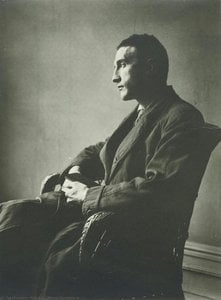
Marcel Duchamp

Marcel Duchamp

1887 - 1968 , Frankrike

Kort om kunstneren

  • Artistic Movement Or Style:
    • Kubisme
    • Dadaisme
    • Konseptuell kunst
  • Artists Or Movements Influenced By This Artist:
    • Kubisme
    • Popkunst
    • Minimalisme
  • Date Of Birth: 28 juli 1887
  • Date Of Death: 2 oktober 1968
  • Full Name: Marcel Duchamp Henri-Robert-Marcel
  • Nationality: Fransk-Amerikansk
  • Notable Artworks:
    • Fontane
    • L.H.O.O.Q.
    • Det Store Glas
    • Boîte-en-valise
  • Place Of Birth: Blainville, Frankrike
Utforsk kunstverk organisert etter temaer, stiler og kjennetegn.