
Forhåndsvisning Se i AR Bytt til trykk Kjøp håndlaget maleri Send
Vis detaljer Veiledning Legg til i favoritter Last ned bildet Liknende objekter Røntgenundersøkelse Lysbildefremvisning Statistikk

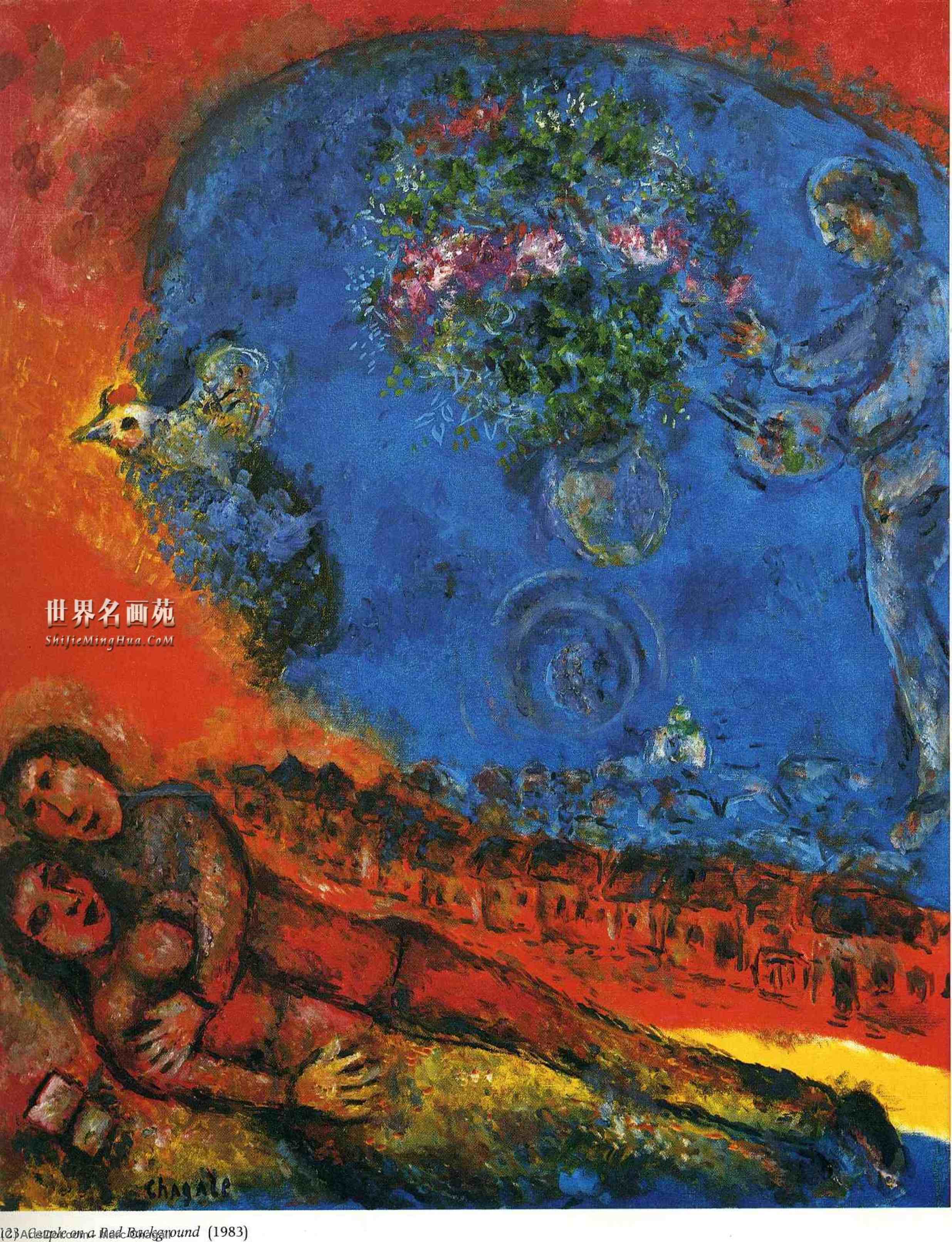
Couple on a Red Background

Explore Marc Chagall’s ‘Couple on a Red Background’! A surrealist masterpiece blending reality & dream, featuring vibrant color & expressive brushwork. View this iconic artwork now!

Opplev Marc Chagall (1887-1985), en russisk-fransk kunstner kjent for sine drømmende malerier, jødiske temaer og fantastiske glasskunstverk. Utforsk hans arv!

Kjøp et høyoppløselig, forbedret digitalt bilde som er langt bedre enn forhåndsvisningen på nettet.

Hver fil er omhyggelig klargjort av våre egne spesialister ved hjelp av avanserte verktøy og profesjonell manuell retusjering. Vi sørger for at hvert bilde har eksepsjonell klarhet, presis fargegjengivelse og fine detaljer.

Den endelige filen leveres via e-post innen 72 timer, optimalisert for umiddelbar bruk i profesjonelle, redaksjonelle og trykte miljøer. Dette er den samme kvaliteten som benyttes av ledende designstudioer, utgivere og gallerier.

Digitalt bilde

Last ned en høyoppløselig fil for personlig bruk, utskrift og kreative prosjekter. ( Bytt til trykk Kjøp håndlaget maleri)

Totalbeløp

$ 24.90

Inkludert i alle bestillinger av digitale bilder

Ekspert digital levering, garantert

Når du velger WahooArt.com, får du ikke bare et bilde – du mottar et profesjonelt forbedret digitalt kunstverk, skapt med presisjon og med en garantert tilfredshetsgaranti. Her er alt som automatisk følger med din bestilling:

shipping_icon
Rask digital levering

Din høyoppløselige digitale bildefil sendes til din e-post innen 72 timer etter bestilling – klar til umiddelbar bruk.

canvas_icon
KI-forbedret digital fil

Ditt kunstverk blir profesjonelt optimalisert ved hjelp av avanserte AI-verktøy og manuell redigering, noe som sikrer maksimal detaljrikdom, klarhet og fargegjengivelse.

insurance_icon
Gratis livslang nyutlevering

Har du ved et uhell slettet eller mistet filen din? Ingen bekymring – vi sender den på nytt når som helst, helt gratis.

tax_icon
Ingen importavgifter – noen gang

Nyt ditt kunstverk umiddelbart uten toll, avgifter eller leveringskostnader – digitale nedlastinger er alltid avgiftsfrie.

color_icon
Garantert fargenøyaktighet

Vi sikrer at ditt digitale bilde gjenspeiler de originale fargene så nøyaktig som mulig ved hjelp av profesjonelle verktøy og fargehåndtering.

return_icon
100 dagers tilfredshetsgaranti

Hvis du ikke er fornøyd med ditt digitale bilde, vil vi revidere det eller refundere 100% innen 100 dager – uten spørsmål.

guarantee_icon
100% Penggaranti

Ikke fornøyd? Få full refusjon innen 100 dager etter at du har mottatt din digitale fil – uten spørsmål.

discount_icon
Rabatt ved storkjøp

Kjøp 3 bilder, spar 10% - Kjøp 5, spar 15% - Kjøp 10+, spar 20%. Ideelt for kreative prosjekter, gallerier og byråer.

Kort om verket

  • year: 1983
  • movement: Surrealism, Modernism
  • notable elements: Red background, dreamlike imagery
  • medium: Oil painting
  • dimensions: 81 x 65 cm
  • influences: Proto-Cubism
  • style: Surrealist, Proto-Cubism influenced

Kunstighetsquiz

Det er kun ett riktig svar på hvert spørsmål.

Spørsmål 1:
What is the dominant color used in the background of Marc Chagall's 'Couple on a Red Background'?
Spørsmål 2:
Which artistic movement is most strongly associated with this painting by Marc Chagall?
Spørsmål 3:
The image description notes the style of the artwork as reminiscent of which other artist?
Spørsmål 4:
What year was 'Couple on a Red Background' created?
Spørsmål 5:
Besides figures, what other elements are prominently featured in the painting?

A Dance of Emotion: Unveiling Marc Chagall’s 1983 Masterpiece

This captivating oil painting from 1983 embodies the late style of Marc Chagall – a potent blend of memory, fantasy, and deeply felt emotion. Measuring 81 x 65 cm, the work presents a scene that is both intimate and universal, characterized by swirling color, distorted forms, and an undeniable sense of psychological depth. While reminiscent of expressionists like Chaim Soutine in its raw energy, it remains distinctly Chagallian in its symbolic language and lyrical quality.

Subject & Composition: A World Within a Canvas

The painting depicts two figures enveloped within a turbulent space dominated by intense blues, fiery reds, and oranges. One figure reclines, seemingly vulnerable, while the other stands above, perhaps offering support or observation. The composition is deliberately unbalanced, creating a dynamic tension that draws the viewer’s eye across the canvas. Scattered throughout are abstracted forms – birds, suggestive of freedom and spiritual longing – and vase-like shapes, hinting at life's fragility and beauty. The overall impression isn’t one of literal representation but rather an evocation of inner states and relationships.

Style & Technique: Expressionistic Surrealism

Chagall masterfully fuses elements of surrealism and expressionism in this work. The dreamlike quality, a hallmark of his style, is achieved through the distortion of figures and the use of non-naturalistic color. The thick impasto – the visible texture created by layering paint – adds a tactile dimension to the piece, emphasizing the physicality of the artist’s process and heightening its emotional impact. The loose, gestural brushstrokes contribute to a sense of spontaneity and immediacy, as if capturing a fleeting moment of intense feeling.

Historical Context & Influences: A Legacy of Modernism

Born in Belarus in 1887, Marc Chagall lived through a period of immense artistic upheaval. He absorbed influences from various movements – including proto-Cubism with its geometric simplification and Symbolism’s focus on subjective experience – yet forged his own unique path. As an *early modernist*, he rejected traditional representational art in favor of expressing inner realities. His work reflects the broader shift towards abstraction and psychological exploration that defined much of 20th-century art, a movement deeply rooted in challenging established norms as seen throughout the history of painting.

Symbolism & Emotional Resonance: Decoding the Language of Dreams

Chagall’s paintings are rich with symbolism drawn from his Jewish heritage, personal memories, and universal human experiences. The reclining figure may represent vulnerability or surrender, while the standing figure could symbolize protection or guidance. The birds often signify freedom, hope, or spiritual aspiration. The intense color palette – particularly the dominant reds and blues – evokes powerful emotions: passion, love, sorrow, and longing. Ultimately, the painting invites viewers to project their own interpretations onto its ambiguous forms, creating a deeply personal connection with the artwork.

Impact & Interpretation: A Timeless Expression

“Couple on a Red Background” is not merely a depiction of figures; it’s an exploration of human relationships, emotional states, and the complexities of existence. Its enduring appeal lies in its ability to resonate with viewers on a visceral level, prompting contemplation about love, loss, and the search for meaning. This painting would be a striking addition to any collection, bringing a touch of poetic intensity and intellectual depth to both contemporary and traditional interiors. Key Aspects:
  • Marc Chagall: A pivotal figure in modern art known for his dreamlike imagery and symbolic language.
  • Expressionistic Surrealism: The blending of emotional intensity with fantastical elements.
  • Impasto Technique: The use of thick paint layers to create texture and depth.
  • Symbolic Imagery: Birds, vases, and figures representing universal themes of love, loss, and hope.
  • Emotional Impact: A painting that evokes a powerful and personal response from the viewer.

Om kunstneren

A Life Painted in Dreams: The World of Marc Chagall

Marc Chagall, born Moishe Shagal in 1887 in the small Belarussian town of Liozna near Vitebsk, wasn’t merely a painter; he was a poet of color, a weaver of dreams, and a chronicler of memory. His life, spanning nearly a century, mirrored the tumultuous currents of the 20th century, yet his art remained steadfastly rooted in a deeply personal vision—one infused with the folklore of his Hasidic Jewish upbringing and an unwavering belief in the power of imagination. Vitebsk itself was more than just a birthplace; it became the emotional core of his artistic universe, a recurring motif populated by flying figures, whimsical animals, and the vibrant hues of remembered landscapes. The town’s unique blend of cultures—Russian Orthodox churches alongside bustling Jewish marketplaces—forged an aesthetic sensibility that would defy easy categorization throughout his long career. Though he sought formal training first with a local sign painter and later in St. Petersburg under Léon Bakst, and then in Paris at the Académie de la Grande Chaumière, Chagall never fully embraced any single artistic movement. He absorbed elements of Cubism, Symbolism, and Fauvism, but always filtered them through his own intensely personal lens, creating a style that was uniquely, unmistakably Chagall.

Early Influences and Artistic Beginnings

Chagall’s formative years were marked by the traditions of Vitebsk’s Jewish community—a world steeped in ritual, storytelling, and vibrant visual culture. These influences would permeate his artistic vision throughout his life. His initial training was modest, focusing on practical skills as a sign painter, but he quickly developed an aptitude for drawing and painting, driven by an innate desire to capture the beauty of the natural world and the complexities of human emotion. St. Petersburg provided him with access to influential teachers like Léon Bakst, who encouraged him to experiment with theatrical design and introduced him to the principles of Cubism—a movement that would profoundly impact his artistic style. However, Chagall resisted rigid stylistic conventions, prioritizing instead a deeply expressive approach rooted in observation and imagination. His early canvases already hinted at the distinctive language he would develop – paintings like *I and the Village* (1911) are not simply depictions of place; they are explorations of identity, memory, and the relationship between the individual and community. The village isn’t rendered realistically but as a fragmented collection of recollections, imbued with symbolic meaning. This ability to transmute personal experience into universal themes became a hallmark of his art.

The Symbolism of Flight and Memory

Chagall's artistic style quickly distinguished itself through its characteristic use of color and imagery—particularly the motif of flight. Figures soar across canvases in fantastical landscapes, defying gravity and logic, creating a dreamlike atmosphere that invites viewers into his inner world. This stylistic choice wasn’t accidental; it stemmed from a desire to move beyond mere imitation of reality and capture the essence of feeling, the weight of memory, and the power of folklore. Recurring symbols—such as apples, birds, and biblical figures—appear throughout his oeuvre, conveying profound emotional resonance and hinting at deeper spiritual concerns. His palette was bold and expressive, often employing vibrant, non-naturalistic colors to convey emotion rather than literal representation. This approach solidified his reputation as a visionary artist who dared to explore the subconscious mind and express ideas beyond conventional boundaries.

From Vitebsk to Paris: Artistic Transformation

The Russian Revolution dramatically altered Chagall’s life trajectory, bringing him back to Vitebsk where he became involved in cultural initiatives, establishing an art school that briefly flourished before succumbing to the restrictions imposed by the new regime. This period was marked by both creative energy and political disillusionment, a tension that would continue to shape his artistic trajectory. He embraced Surrealism, influenced by André Breton and fellow artists, experimenting with dreamlike imagery and irrational juxtapositions—a stylistic shift that reflected the anxieties and uncertainties of the time. The outbreak of World War II forced him to flee occupied France for the United States, where he spent seven years in New York City. This period was marked by profound emotional upheaval and artistic experimentation. He found solace in his art, creating powerful works that reflected the traumas of war and displacement—particularly *White Crucifixion* (1938), a haunting depiction of suffering and persecution.

Legacy and Recognition

After the war, Chagall returned to France, where he continued to paint and create until his death in 1985 at the age of 97. He received numerous prestigious commissions, including the ceiling of the Paris Opera (1964), a breathtaking explosion of color and form that celebrated musical masterpieces, and stunning stained glass windows for the Hadassah Hebrew University Medical Center synagogue in Jerusalem. These large-scale projects allowed him to translate his artistic vision into architectural spaces, creating immersive environments that continue to inspire awe and wonder. Chagall’s influence on subsequent generations of artists is undeniable. His lyrical quality, emotional depth, and imaginative power resonated with Surrealists and other movements that embraced fantasy and symbolism. He bridged the gap between European modernism and Jewish cultural identity, becoming known as “the quintessential Jewish artist of the twentieth century.” His ability to synthesize personal experience, folklore, and universal themes continues to resonate with audiences worldwide. Marc Chagall’s legacy extends beyond his paintings and stained glass; it resides in the enduring power of his vision—a vision that celebrates love, memory, and the boundless possibilities of the human imagination.
Marc Chagall

Marc Chagall

1887 - 1985 , Belarus

Kort om kunstneren

  • Artistic Movement Or Style: Modernism, Kubism
  • Artists Or Movements Influenced By This Artist:
    • Surrealism
    • Modern konst
  • Artists Who Influenced This Artist:
    • Bakst
    • Delaunay
    • Borovikovsky
  • Date Of Birth: 7 juli 1887
  • Date Of Death: 28 mars 1985
  • Full Name: Marc Chagall
  • Nationality: Russisk, senare fransk
  • Notable Artworks:
    • I och byen
    • Vitbesk
    • Vitkrifixion
  • Place Of Birth: Liozna, Belarus