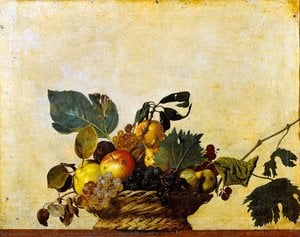
Få en utskriftsklar fil som går langt utover forhåndsvisningen på nett. Hvert digitale bilde vi selger er hentet fra en høyoppløselig master i vår database – vanligvis mellom 5 000 og 15 000 piksler bred – slik at du kan trykke stort, beskjære tett eller gjenskape fine detaljer med full trygghet.
Ingen filer forlater studioet vårt uten å bli bearbeidet. En digital ekspert kontrollerer fargene mot det originale maleriet og korrigerer dem ved behov, for deretter å forbedre klarhet og detaljrikdom med profesjonelle retusjeringsverktøy — alltid tro mot kunstnerens penselstrøk og stil. Resultatet er et bilde som fremstår som selve maleriet, ikke som en skann med filter.
Du godkjenner før ferdigstilling: vår ekspert sender bildet på e-post til din vurdering innen 72 timer. Ikke fornøyd? Be om forbedringer eller korrigeringer, eller be om refusjon dersom kvaliteten ikke svarer til forventningene.
Dette er kvaliteten forlag, designstudioer, gallerier og trykkerier stoler på.
Last ned en høyoppløselig fil til personlig bruk, utskrift og kreative prosjekter. ( Bytt til trykk Kjøp håndmalt maleri)
Når du velger WahooArt.com, får du ikke bare et bilde – du mottar et profesjonelt etterbehandlet digitalt kunstverk, skapt med presisjon og med en garantert tilfredshetsgaranti. Her er alt som automatisk følger med din bestilling:
Din høyoppløselige digitale bildefil sendes til din e-post innen 72 timer etter bestilling – klar til umiddelbar bruk.
Ditt kunstverk blir profesjonelt optimalisert ved hjelp av avanserte AI-verktøy og manuell redigering, noe som sikrer maksimal detaljrikdom, klarhet og fargegjengivelse.
Har du ved et uhell slettet eller mistet filen din? Ingen bekymring – vi sender den på nytt når som helst, helt gratis.
Nyt ditt kunstverk umiddelbart uten toll, avgifter eller leveringskostnader – digitale nedlastinger er alltid avgiftsfrie.
Vi sikrer at det digitale bildet gjenspeiler de originale fargene så nøyaktig som mulig ved hjelp av profesjonelle verktøy og fargehåndtering.
Hvis du ikke er fornøyd med ditt digitale bilde, vil vi revidere det eller refundere 100% innen 100 dager – uten spørsmål.
Ikke fornøyd? Få full refusjon innen 100 dager etter at du har mottatt din digitale fil – uten spørsmål.
Kjøp 3 bilder, spar 10% - Kjøp 5, spar 15% - Kjøp 10+, spar 20%. Ideelt for kreative prosjekter, gallerier og byråer.

Lee Wen, born in Singapore in 1957, was far more than a mere practitioner of the arts; he was a transformative force who reshaped the landscape of Asian contemporary performance. His life was a profound journey of self-discovery, moving from the structured world of finance to the raw, visceral realm of experimental expression. Before finding his true calling, Wen navigated the pragmatic corridors of banking and logistics, yet the creative spirit within him remained restless. This restlessness eventually led him to the Lasalle-SIA College of the Arts and later to the City of London Polytechnic, where he refined a voice that would eventually resonate far beyond the borders of his home nation. His early years were marked by a deep connection to the textures of Singaporean life, a childhood spent amidst the lush, swampy landscapes of his neighborhood, which provided a fertile ground for the imaginative seeds he would later sow in his performance pieces.
The evolution of Wen’s artistry was deeply intertwined with the emergence of The Artists Village, a seminal collective in Singapore that served as a crucible for experimentalism. Influenced by the legendary Tang Da Wu and fellow visionaries like Amanda Heng, Wen embraced the idea that art could be an ephemeral, living experience rather than just a static object on a wall. He was a man who found poetry in the rain and strength in vulnerability, often using his own body as the primary canvas for his explorations of identity and existence. This period of his life was characterized by a fearless pursuit of the "new," pushing against the boundaries of what was socially acceptable or artistically recognized in a rapidly modernizing Singapore.
Perhaps no creation is more synonymous with Lee Wen’s legacy than his iconic "The Journey of a Yellow Man" series. Initiated in 1992, this ambitious undertaking began as a sharp, provocative critique of racial and ethnic stereotypes. By painting his skin with bright, unmistakable yellow poster paint, Wen transformed himself into an exaggerated symbol of ethnic identity, forcing viewers to confront their own preconceived notions of race and belonging. What started as a confrontation with the external gaze—a response to critics who dismissed his work as mere mimicry of Western trends—gradually deepened into something much more spiritual and introspective.
As the years progressed, the Yellow Man persona underwent a metamorphosis. The performance moved away from purely political commentary toward a meditative exploration of freedom, humility, and the human condition. The bright yellow pigment became a vessel for exploring the individual's relationship to community, environment, and even religious practice. Through this series, Wen achieved a rare feat in contemporary art: he utilized a highly visible, almost cartoonish visual trope to discuss the most delicate and nuanced aspects of human vulnerability. His work was not merely seen; it was felt, as he navigated the complexities of being a citizen of a multicultural society through the lens of a painted, yet deeply human, protagonist.
The impact of Lee Wen’s career is measured not just in the applause of international festivals, but in the enduring shifts he caused within the global art dialogue. His work has graced prestigious stages at the Fukuoka Asian Art Museum in Japan and the National Gallery Singapore, proving that performance art, often dismissed as fleeting, can leave an indelible mark on the historical record. For his monumental contributions to the local and international arts scene, he was rightfully honored with the Cultural Medallion for Visual Arts in 2005, a testament to his status as a pillar of Singaporean culture.
Even as his performances concluded, the echoes of his creativity remained through his paintings and mixed-media installations. He leaves behind a legacy defined by:
Though he passed away in 2019, the vibrant, yellow spirit of Lee Wen continues to inspire new generations of artists to look inward, to challenge the status quo, and to find the extraordinary within the ordinary rhythms of life.

1957 - 2019 , Singapore
 Forhåndsvisning
 Send
Send Del
Del
 Vis detaljer
 Utskriftsvennlig guide

 Last ned bilde
 Liknende objekter
 Røntgenundersøkelse
 Lysbildefremvisning
 Spørsmål og svar
 Statistikk
 Vis hele teksten