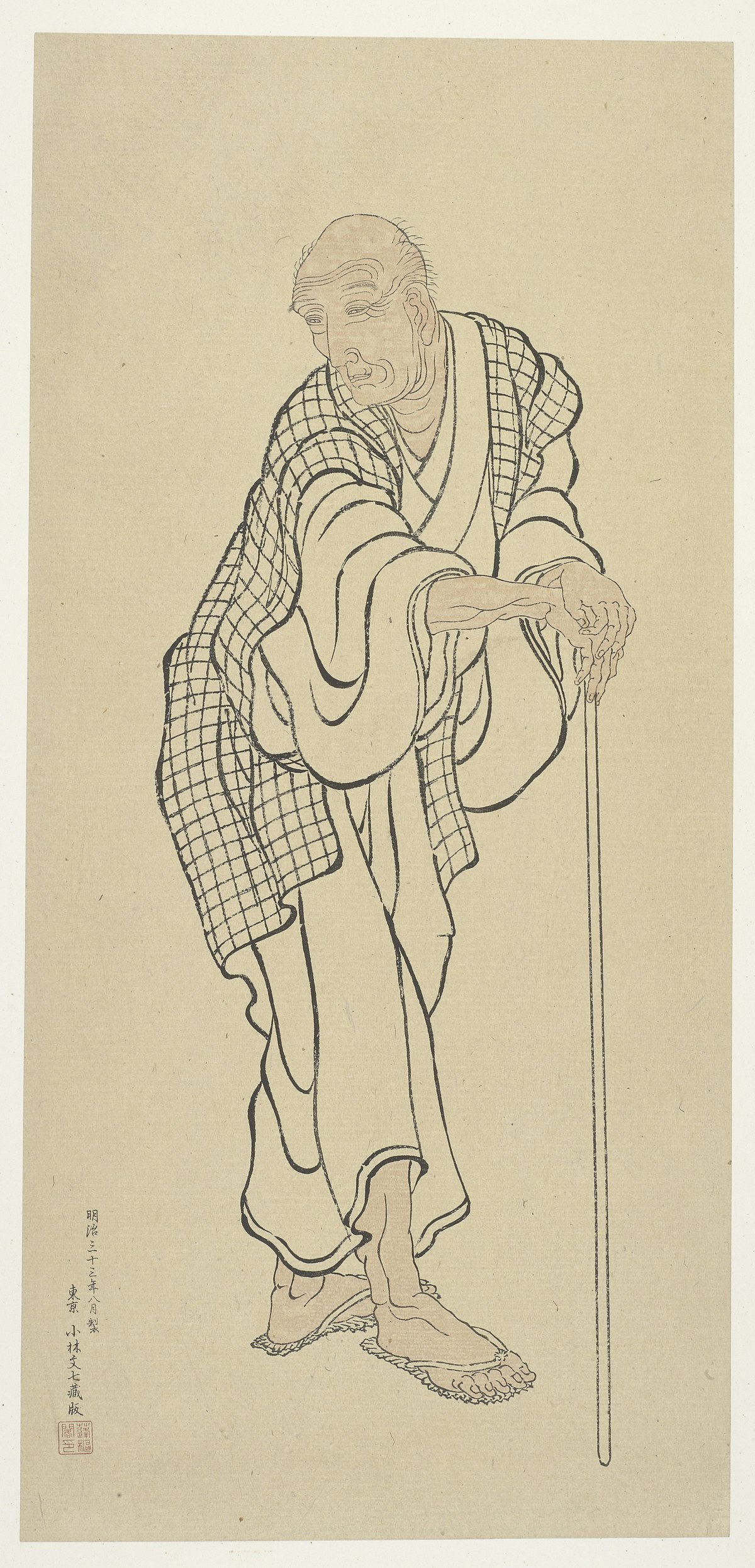
Katsushika Hokusai: En Livsstil Tegnet i Blekk
Katsushika Hokusai, et navn synonymt med japansk kunst og det ikoniske bildet *Den store bølgen ved Kanagawa*, var langt mer enn bare en trykker. Født i Edo (moderne Tokyo) rundt 1760, var livet hans en rastløs søken etter kunstnerisk mesterskap, en konstant evolusjon preget av skiftende navn og en grenseløs nysgjerrighet. Fra ydmyke begynnelser som sønn av en speilmaker, ble Hokusais tidlige tilbøyelighet mot kunst ikke umiddelbart oppmuntret; likevel utholdt han seg i sin dedikasjon, rapporteres det at han begynte å tegne allerede i seksårsalderen. Denne engasjementet definerte en karriere som spennte over nesten ni tiår, og etterlot seg et arv som fortsatt resonerer med publikum verden over. Hans far, Nakajima Ise, selv ikke en kunstner, erkjente og kanskje fremmet denne spirende talentet, og la grunnlaget for en reise som ville transformere japansk visuell kultur. Hokusais tidlige liv var ikke preget av privilegier, men snarere en gradvis stigning drevet av ambisjon og en dyp kjærlighet til å fange essensen av verden rundt ham.
Fra Læreverksted til Innovasjon: Blomstringen av en Stil
Hokusais formelle kunstneriske opplæring begynte ved tolv år da han gikk inn i studioet til Katsukawa Shunshō, en ledende mester av *ukiyo-e* – «bilder av den flytende verden». Denne sjangeren, populær under Edo-perioden, skildret scener fra hverdagen: skuespillere, kurtisiner, landskap og glimt inn i den pulserende urbane kulturen. Under Shunshōs veiledning mestret Hokusai teknikkene til treblokktrykk, en krevende prosess som krever presisjon og kunstnerisk dyktighet. Likevel var han ikke fornøyd med bare å reprodusere sin lærerstil. Selv i sine tidlige arbeider var det et rastløst sinn åpenbart, et ønske om å presse grensene og utforske nye uttrykksveier. Han eksperimenterte med forskjellige motiver, fra bokillustrasjoner til enkeltarktrykk, forbedret kontinuerlig ferdighetene sine og utviklet et unikt visuelt språk. Denne perioden så også de første av mange navneendringer – en vanlig praksis blant *ukiyo-e*-kunstnere som signaliserte nye perioder i kunstnerisk utvikling eller tilknytning til forskjellige skoler. Han begynte opprinnelig med å illustrere bøker, noe som ga ham et stabilt arbeidsliv og mulighet til å utvikle komposisjonsevner. Men det var hans overgang til enkeltarktrykk som virkelig løsnet hans kreative potensial.
Fuji-fjellet og den Flytende Verden: Definerende Mesterskaper
Hokusais kunstneriske utbytte var bemerkelsesverdig produktiv; tusenvis av treblokktrykk, malerier og illustrerte bøker bærer hans signatur. Mens han utforsket et bredt spekter av motiver, ble serien *Trettiseks syn på Fuji-fjellet* (ca. 1831) hans mest kjente verk, og cementerte hans rykte. Denne samlingen, som inkluderer det nå ikoniske *Den store bølgen ved Kanagawa*, var ikke bare en representasjon av et landskap; det var en mesterlig utforskning av perspektiv, komposisjon og naturens kraft. Bølgene selv, en truende kraft om å sluke små båter og mannskap, forkyndte både skjønnhet og terror ved havet. Ut over *Fuji* viste verk som *Pyrotekniske fyrverkerier på Ryōgoku Bridge* (1790) hans evne til å fange dynamiske scener fra hverdagen med bemerkelsesverdig energi og detalj. Hans *Hokusai Manga* – en samling skisser og studier som omfattet mennesker, dyr, landskap og fantasiskapninger – var banebrytende i sin omfang og innflytelse, forutstod utviklingen av moderne manga som et kunstform. Disse verkene var ikke isolerte prestasjoner; de var milepæler i en kontinuerlig kunstnerisk reise, hver bygget på den forrige for å skape et verk som er dypt forankret i japansk tradisjon og likevel bemerkelsesverdig innovativt.
En Arv Utover Grenser: Hokusais Varige Innflytelse
Hokusais innflytelse utvidet seg langt utenfor Japan. I det sene 1800-tallet, da Japan åpnet sine dører for Vesten, strømmet *ukiyo-e*-trykk til europeiske markeder, og utløste et fenomen kjent som *Japonisme*. Kunstnere som Claude Monet, Edgar Degas og Vincent van Gogh ble betatt av Hokusais dristige komposisjoner, livlige farger og ukonvensjonelle perspektiver. Van Gogh, spesielt, var dypt påvirket av *Den store bølgen ved Kanagawa*, og gjengivet den i sine egne malerier. Hokusais innflytelse var ikke begrenset til impresjonismen; den permeerte en rekke moderne kunstbevegelser, og formet måten kunstnere nærmet seg komposisjon, farge og motiv. Hans evne til å fange øyeblikk av flyktighet, hans dristige bruk av linjer og hans evne til å finne skjønnhet i hverdagen resonerte med en generasjon kunstnere som søkte nye former for uttrykk. Selv i dag fortsetter Hokusais verk å inspirere og utfordre kunstnere over hele verden, og etablerer ham som en av de viktigste figurene i kunsthistorien. Han fortsatte å male til sin død i 1849, i en alder av 89 år, og etterlot seg et enormt kunstnerisk verk som vitner om hans urokkelige dedikasjon og kunstneriske geni.
- Viktigste innflytelser: *Ukiyo-e*-tradisjoner, kinesisk landskapsmaling, hverdagsliv i Edo.
- Nøkkelegenskaper: Dristige linjer, livlige farger, dynamiske komposisjoner, skarpt observasjon av naturen.



 Forhåndsvisning
 Bytt til trykk
 Send
Send Del med andre
 Vis detaljer
 Veiledning

 Last ned bildet
 Liknende objekter
 Røntgenundersøkelse
 Lysbildefremvisning
 Statistikk

 Vis hele teksten