Om kunstneren
A Roman Beginning: The Early Life and Influences of John William Waterhouse
John William Waterhouse, et navn synonymt med den romantiske sjarmen til Pre-Raphaelite maleriet, begynte sin kunstneriske reise langt fra de tåkelagte landskapene som ofte er assosiert med bevegelsen. Han ble født i Roma i 1849 til engelske foreldre, og hans tidligste år var fylt av den klassiske skjønnheten i Italia – et miljø som dypt ville forme hans estetiske sanser. Denne formative perioden la grunnlaget for en dyp forståelse for antikkens romersk kunst og mytologi, temaer som skulle gjentas gjennom hele hans produktive karriere. Waterhouses familie returnerte til England i 1854 og etablerte seg i South Kensington, London – et sted strategisk plassert nær det spirende Victoria and Albert Museum. Her ble den unge John utsatt for en utenomordinær samling av klassiske skulpturer og dekorative kunstverk, noe som ytterligere pleide hans fascinasjon for antikken. Hans tidlige opplæring var konvensjonell, inkludert studier ved Royal Academy Schools, hvor han perfeksjonerte sine tekniske ferdigheter i tegning og maleri, men det var atmosfæren av intellektuell nysgjerrighet og kunstnerisk innovasjon som virkelig tente hans lidenskap. Selv tidlige verk avslører en metrikk presisjon og et engasjement for historisk nøyaktighet, kvaliteter som skulle bli kjennetegn på hans stil.
Embracing the Pre-Raphaelite Brotherhood
Selv om Waterhouses tidlige arbeid viste klassiske tendenser minneverdige av kunstnere som Alma-Tadema og Frederic Leighton, graviterte han gradvis mot idealene til Pre-Raphaelite Brotherhood. Denne kunstneriske kollektivet, grunnlagt i 1848, fremmet en tilbakevending til detaljert observasjon av naturen og den livlige fargen funnet i tidlig italiensk renessansemaleri – før hva de oppfattet som den stilistiske nedgangen initiert av Raphael. Waterhouse sluttet ikke seg til brotherhood selv, men omfavnet hjertelig dets prinsipper, og innlemmet sine malerier med en poetisk skjønnhet og emosjonell dybde som resonerte dypt hos publikum. Hans 1874-maleri, *Sleep and his Half-Brother Death*, utstilt ved Royal Academy, markerte et vendepunkt, demonstrerende hans økende mestring av symbolsk narrativ og atmosfæriske effekter. Dette suksess bidro til å etablere ham som en stigende stjerne i det London kunstmiljøet. Han kopierte ikke bare Pre-Raphaelite teknikker; han tolket dem gjennom sitt eget unike perspektiv, og blandet klassisk presisjon med romantisk sanselighet.
Mythological Visions and Arthurian Echoes
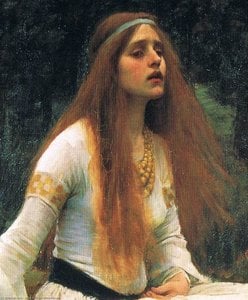
Waterhouses mest berømte verk er de som henter inspirasjon fra mytologi og Arthurian legender. Han hadde en bemerkelsesverdig evne til å gi liv til gamle historier, og fremstille gudinner, nymfer og tragiske heltinners med en utsøkt blanding av skjønnhet og patos. *The Lady of Shalott*, kanskje hans mest ikoniske maleri, eksisterer i tre versjoner (1888, 1894 og 1916), hver et vitnesbyrd om hans vedvarende fascinasjon for Tennyson’s dikt. Bildet av den dømt damen, svevende på sin elvebåt, ble et symbol på viktoriansk romantikk og den tragiske skjebnen til kunstnerisk isolasjon. På samme måte er hans fremstillinger av Ophelia, som fanger øyeblikket før hennes tragiske død, preget av en hjerteskjærende melankoli. Han illustrerte ikke bare disse fortellingene; han utforsket deres psykologiske dybder, og fokuserte på følelsesmessige tilstander hos sine motiver. *Hylas and the Nymphs*, *Ariadne* og *Penelope and the Suitors* er ytterligere eksempler på hans evne til å transformere klassiske narrativer til visuelt slående og emosjonelt resonnerende kunstverk. Hans malerier var ikke bare vakre; de var fylt med en følelse av fortellingskraft, og inviterte seerne til å reflektere over kompleksiteten i menneskelig erfaring.
Legacy and Lasting Influence
John William Waterhouse fortsatte å male produktivt frem til sin død i 1917, og oppnådde bred anerkjennelse og ære under hans levetid. Han ble valgt inn som full Academician i 1895 og dedikerte tid til undervisning ved St. John’s Wood Art School, og pleiet neste generasjon kunstnere. Selv om hans popularitet avtok noe etter første verdenskrig, har det vært en betydelig renessanseinteresse for hans arbeid de siste tiårene. I dag er Waterhouse feiret som en av de viktigste figurene i Pre-Raphaelite bevegelsen og en mester av viktoriansk maleri. Hans malerier fortsetter å fange publikums oppmerksomhet med sin utsøkte skjønnhet, emosjonelle dybde og tidløse appell. Han etterlot seg et arv av romantiske visjoner, mytologiske tolkninger og tragiske heltinners som inspirerer kunstnere og kunstelskere i dag. Hans verkets vedvarende kraft ligger i dets evne til å transportere seerne inn i en annen verden – et rike av myte, legende og dyp menneskelig følelse.



 Forhåndsvisning
 Kjøp håndlaget maleri
 Send
Send Del med andre
 Vis detaljer

 Last ned bildet
 Liknende objekter
 Røntgenundersøkelse
 Lysbildefremvisning
 Statistikk


 Vis hele teksten






































 Glassalternativet er kun tilgjengelig i størrelser under 110 cm