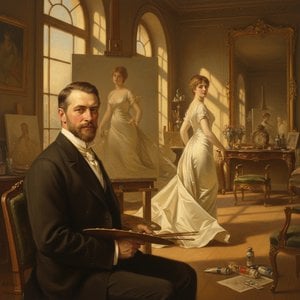
A Life Immersed in Light and Society
John Singer Sargent, et navn synonymt med den gullede æra og dens skinnende portrætter av eleganse, var en amerikansk kunstner som brukte mesteparten av livet sin på å dyrke sin håndverk i det europeiske kunstmiljøet. Han ble født i Firenze, Italia, i 1856 til amerikanske utlendingforeldre, Fitzwilliam og Mary Newbold Sargent, og hans barndom var langt fra konvensjonell. Familieens vandrende eksistens – konstant reise gjennom Frankrike, Tyskland, Italia og Sveits – la grunnlaget for en kosmopolitisk sanselighet og tidlig eksponering for Europas kunstneriske skatter. I stedet for formell utdanning, ble hans utdannelse utfoldet i museer og gamle kirker, noe som fremmet en visuell forståelse som dypt påvirket hans kunstneriske visjon. Denne vandrende barndommen, selv om den manglet tradisjonell struktur, ga et rikt tapet av kulturelle opplevelser som drev hans utviklende talent. Hans far, en lege, og hans mor, en amatørkunstner, oppmuntret hans tilbøyeligheter, gjenkjente tidlig på den bemerkelsesverdige presisjonen i hans observasjonsevne. Det var tydelig fra ung alder at Johns vei lå ikke i medisin eller konvensjonelle sysler, men innenfor kunstens rike.
Fra Paris Atelier til Portrettmester
I 1874, i en alder av åtteeen, seilte Sargent inn i et avgjørende kapittel av sin kunstneriske utvikling ved å gå inn i Carolus-Durans atelier i Paris. Denne veiledningen viste seg transformativ. Durans vektlegging av *direkte maleri* – en teknikk som avviste forarbeidsutkast til fordel for umiddelbar påføring av maling på lerretet – skarpnet Sargents allerede imponerende tekniske ferdigheter og la grunnlaget for hans bemerkelsesverdige evne til å fange sitters essens med fart og presisjon. Det var en revolusjonerende tilnærming som oppmuntret mot, spontanitet og ble et kjennetegn på Sargents stil. Han absorberte Durans leksjoner helhjertet, mestret kunsten å fange ikke bare fysisk likhet, men også sitters sjel. Samtidig meldte han seg inn i École des Beaux-Arts, ytterligere forfint sine ferdigheter i tegning fra former og levende modeller. Imidlertid var det påvirkningen av spanske mestere som Velázquez, oppdaget under en formell reise til Spania i 1879, som virkelig tenkte Sargents kunstneriske fantasi. Han ble fascinert av Velázquez's mektige bruk av lys, penselstrøk og psykologisk innsikt – kvaliteter han ville strebe etter å emulere gjennom hele sin karriere.
Navigering i Omdømme, Skandale og Kunstnerisk Utvikling
Sargent etablerte raskt seg som en ettertraktet portrettist i Paris, tiltrakk seg bestillinger fra byens elite. Likevel var hans oppstigning ikke uten utfordringer. Åpningen av *Madame X* (Portrett av Madame Pierre Gautreau) på Salonen i 1884 utløste en skandale som truet med å ødelegge hans blomstrende karriere. Portrettets dristige representasjon av den sosieteten Virginie Amélie Avegno Gautreau – med hennes bleke hudtone, antydende holdning og falt stropp – ble ansett som provoserende og skandaløs av det franske samfunnet. Selv om Sargent senere malte om stroppen, var skaden allerede gjort. Skuffet over kontroversen, flyttet han til London i 1886, hvor han fant et mer mottagelig publikum for sine talenter. I London fortsatte han å male portretter av de rike og fremtredende, fanget den overdådigheten og sosiale dynamikken i Edwardiansk samfunn med uovertruffen dyktighet. Likevel strekte Sargents kunstneriske ambisjoner seg utover bestilte portretter. Han lengtet etter større kreativ frihet og dedikerte stadig mer energi til landskapsmaling og plein-air studier, omfavnet en impresjonistisk stil preget av løse penselstrøk, livlige farger og fokus på å fange flyktige øyeblikk av lys og atmosfære. Disse landskapene avslører en annen side av Sargent – en mindre opptatt av sosial status og mer oppmerksom på naturens skjønnhet.
Et Varig Arv: Ut over Portretter
Selv om han ble feiret som «den ledende portrettmaleren i sin generasjon», strekker Sargents kunstneriske arv seg langt utover hans mesterskapelige representasjoner av samfunnsfigurer. Hans viktigste verk, som *El Jaleo*, en dynamisk fremstilling av spanske flamenco-dansere, og *Carnation, Lily, Lily, Rose*, en rolig scene for to unge jenter i en engelsk hage, demonstrerer hans allsidighet og tekniske dyktighet. Senere i livet satte han seg utfordrende oppdrag som murmalerier, inkludert den monumentale syklus på Boston Public Library, og viste sin evne til å overføre sin kunstneriske visjon til et storslått format. Hans innflytelse kan sees i arbeidet til etterfølgende generasjoner av kunstnere som beundret hans tekniske ferdigheter, hans dristige penselstrøk og hans evne til å fange både fysisk likhet og psykologisk dybde. Oppdagelsen av hans tidligere oversette mannlige nudes på 1980-tallet utvidet ytterligere vår forståelse av Sargents kunstneriske rekkevidde og avslørte en mer kompleks og nyansert kunstner enn tidligere anerkjent. *Hans malerier fanger fortsatt publikums oppmerksomhet over hele verden*, og tilbyr et fascinerende innblikk i en forgangens æra samtidig som de overskrider tid gjennom sin vedvarende skjønnhet og tekniske mesterskap. Han er ubestridelig en av de mest betydningsfulle amerikanske kunstnerne i sin generasjon, hvis verk fortsetter å inspirere og provosere beundring.
Innflytelser og Kunstneriske Kinninger
- Carolus-Duran: Hans lærer, som la vekt på en direkte maleri teknikk og oppmuntret til spontanitet.
- Diego Velázquez: Sargent ble dypt beundret av Velázquez's mektige bruk av lys, penselstrøk og psykologisk innsikt, spesielt tydelig i hans spanske verk.
- Impressionisme: Impressionistenes vektlegging av å fange flyktige øyeblikk og atmosfæriske effekter påvirket hans landskapsmalerier dypt, noe som førte til en løsere, mer uttrykksfull stil.
- James Abbott McNeill Whistler: Sargent delte med Whistler et interesse for estetikk og jakten på «kunst for kunstens skyld», som påvirket hans tilnærming til komposisjon og fargebruk.



 Forhåndsvisning
 Kjøp håndlaget maleri
 Send
Send Del med andre
 Vis detaljer

 Last ned bildet
 Liknende objekter
 Røntgenundersøkelse
 Lysbildefremvisning
 Statistikk


 Vis hele teksten






































 Glassalternativet er kun tilgjengelig i størrelser under 110 cm