Gratis kunstkonsultasjon

x
Bestill maleri Bestill maleriKjøp digitalt bilde Kjøp digitalt bilde SendSend
DetaljerDetaljer Legg til i favoritter Legg til i favoritter Last ned bildetLast ned bildet Liknende objekterLiknende objekter RøntgenRøntgen LysbildefremvisningLysbildefremvisning

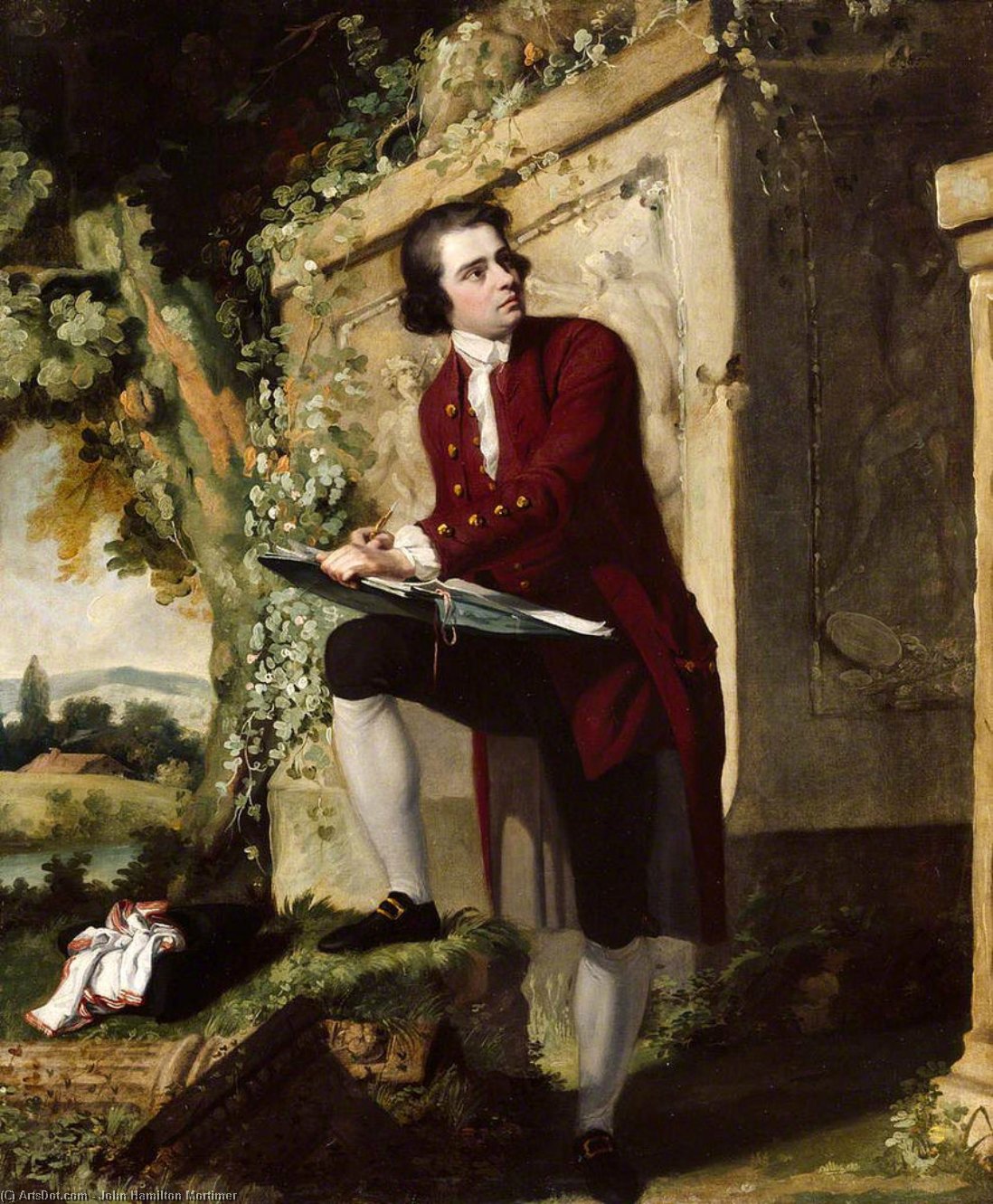
Self Portrait

John Hamilton Mortimer (1740-1779) var en britisk maler kjent for romantiske italienske landskap, dramatiske krigsscener inspirert av Salvator Rosa og historiebilder. Han ble president i kunstforeningen og utforsket både klassiske og mer dristige temaer i sitt arbeid.

Giclée / Kunsttrykk

Giclée- eller lerretsprint av museumskvalitet med rask produksjon og fleksible valgmuligheter for etterbehandling.

Standard
custom
CM
INCH

Velg mellom våre forhåndsdefinerte størrelser som bevarer kunstverkets opprinnelige proporsjoner.

bredde
høyde

Du kan oppgi egne mål for å tilpasse en spesifikk ramme eller et bestemt område. Dersom den valgte størrelsen ikke samsvarer med det originale bildets proporsjoner, vil vi enten beskjære kunstverket eller utvide bildet med en speilet eller ensfarget kant. En digital mockup vil bli sendt til din godkjenning før produksjonen starter.
Vennligst merk at forhåndsvisningen på skjermen ikke gjenspeiler den faktiske beskjæringen eller utvidelsen. Kun mockuppen vil vise den endelige komposisjonen nøyaktig.
Selv om tilpassede størrelser er tilgjengelige, anbefaler vi å velge et mål fra den forhåndsdefinerte listen for å bevare de originale proporsjonene.

Verdensomspennende levering () på 2 uker i stedet for standard 4/5 uker. (2 July)

why_choose_icon
Gratis ekspressfrakt over hele verden
why_choose_icon
Lerretsduk av høykvalitets lin
why_choose_icon
Full forsikring under transport
why_choose_icon
Garanti for refusjon av toll og importavgifter
why_choose_icon
Garantert korrekt fargegjengivelse
why_choose_icon
60 dagers returrett (kun ved feil)
why_choose_icon
100% pengene tilbake-garanti
why_choose_icon
Rabatt ved flere kjøp

Totalpris for bestilling

-

reproduction

Self Portrait

Giclée / Kunsttrykk

Størrelse på reproduksjon

-

Endelig pris

-


Om kunstneren

John Hamilton Mortimer (1740–1779): A Life Painted in Romantic Hues

John Hamilton Mortimer, a name perhaps less instantly recognizable than his contemporaries like Reynolds or Wright of Derby, nevertheless occupies a significant and fascinating niche within the landscape of 18th-century British art. Born in Eastbourne, Sussex, on September 17th, 1740, Mortimer’s brief but intensely productive life—he died at just thirty-nine years old—was marked by artistic ambition, a restless spirit, and an evolving style that mirrored the shifting tastes of his era. His father, Thomas Mortimer, was a customs officer with mercantile interests, providing a stable if unremarkable background for a young man destined to pursue a path steeped in creativity. By 1757, Mortimer had already gravitated towards London, enrolling at the Duke of Richmond’s Academy, where he forged a lifelong friendship with Joseph Wright, a bond that would prove mutually supportive throughout their careers. This early immersion into the artistic milieu fostered not only technical skill but also an awareness of the burgeoning intellectual currents shaping British art—the fascination with classical ideals juxtaposed against the stirrings of Romanticism.

Early Training and Artistic Foundations

Mortimer’s formative years were spent honing his craft under the tutelage of masters such as Hudson and Cipriani at St Martin's Lane Academy. He demonstrated an exceptional aptitude for drawing, securing prize-winning studies after Michelangelo’s *Bacchus* and mastering life drawings with remarkable precision. These foundational skills would serve as bedrock for his subsequent explorations into historical painting and landscape artistry. His dedication to classical principles—particularly the meticulous observation of anatomy and perspective—was evident in every piece he produced, establishing him as a student worthy of admiration amongst his peers. The Academy’s influence extended beyond technique; it instilled within Mortimer a profound appreciation for narrative storytelling and dramatic composition – qualities that would become central to his artistic vision.

From History to Bandits: The Evolution of a Style

Mortimer swiftly gained recognition for his historical canvases, notably *St Paul Preaching to the Ancient Druids in Britain*, which remains housed in the Guildhall at High Wycombe. These works showcased his ability to capture pivotal moments in British history with palpable emotion and theatrical flair. However, Mortimer wasn’t content with merely replicating established styles; he possessed a keen sensitivity to changing aesthetic preferences—a characteristic that would foreshadow the Romantic movement's ascendancy. Around 1770, a distinct stylistic shift occurred within his oeuvre. He began to delve into more masculine themes, moving away from the prevailing elegance of portraiture towards depictions of rugged landscapes populated by bandits and soldiers. This fascination with darker subjects resonated deeply with the artistic sensibilities of Salvator Rosa—the Neapolitan painter celebrated for his wild, untamed scenes of outlaws and dramatic vistas—inspiring Mortimer to embrace a bolder visual language.

Collaboration and Artistic Leadership

Mortimer’s career wasn't solely defined by solitary endeavors; he actively engaged in collaborative projects with fellow artists. He frequently contributed figure work to compositions by others, notably assisting Thomas Jones on ambitious canvases like *A Land Storm, with the Story of Dido and Aeneas*, *The Death of Orpheus*, and a pair of paintings inspired by Milton’s *Allegro* and *Penseroso*. These collaborations underscored his versatility and willingness to contribute his skills to larger artistic undertakings—a testament to his collaborative spirit. Furthermore, Mortimer played a crucial role in the decoration of Brocket Hall, Hertfordshire, working alongside Francis Wheatley and James Durno on the opulent saloon’s interior design. His election as President of the Society of Artists in 1774 solidified his position within the artistic community—a recognition of his influence and prestige during a period of transformative change.

A Legacy Tempered by Early Loss

Despite achieving considerable success, Mortimer’s life was tragically curtailed by illness on February 4th, 1779, at the young age of thirty-nine. His marriage to Jane Hurrel seemed to impact his artistic output, and his premature demise prevented him from realizing his full potential—a poignant reminder of the fragility inherent in creative brilliance. Though he exhibited at the Royal Academy in 1778 showcasing five works including *Sir Arthegal* and bandit scenes, and was elected an Associate shortly before his death, Mortimer’s artistic legacy remains remarkably vivid. His paintings—characterized by their dramatic compositions, expressive brushwork, and exploration of complex themes—offer a compelling glimpse into the artistic sensibilities of his time—bridging the gap between classical tradition and Romantic idealism. He secured his place in art history as an artist who dared to venture beyond convention, capturing the spirit of an era on canvas with unforgettable power.
John Hamilton Mortimer

John Hamilton Mortimer

1740 - 1779 , Storbritannia

Kort om kunstneren

  • Artistic Movement Or Style: Romantikk
  • Artists Or Movements Influenced By This Artist: ['Romantikk']
  • Artists Who Influenced This Artist: ['Salvator Rosa']
  • Date Of Birth: 1740
  • Date Of Death: 1779
  • Full Name: John Hamilton Mortimer
  • Nationality: Britisk
  • Notable Artworks: ['St Paul Preaching to the Ancient Druids i Britannia']
  • Place Of Birth: Eastbourne, Storbritannia