Om kunstneren
A Life Immersed in Masks and Shadows: The World of James Ensor
James Sidney Edouard Ensor, kjent som Baron Ensor, ble født i Ostend, Belgia, i 1860. Hans liv og kunst var dypt forankret i denne kystbyen, men også preget av en kompleks arv – hans far var engelsk, mens moren var belgisk. Denne dualiteten kan ha bidratt til den evige fascinasjonen han hadde for masker og dissimulering, temaer som ville bli sentrale i hans ofte urovekkende, men likevel fengslende kunstverk. Oppveksten ved havet, omgitt av en pulserende atmosfære av karnevaler og eksotiske gjenstander, la grunnlaget for hans unike visuelle språk. Foreldrenes souvenirbutikk, fylt med skjell, masker og merkelige artefakter, fungerte som et levende museum – en kilde til inspirasjon som ville forme hans kunstneriske utvikling. Selv om han i utgangspunktet nølte med å følge tradisjonelle akademiske veier, meldte han seg inn på Koninklijke Academie voor Schone Kunsten i Brussel, men fant den strenge strukturen hindrende for hans spirende visjon. Han innså raskt at han måtte skape sin egen vei, en som ville føre ham langt utover konvensjonelle grenser.
Fra Dyster Realisme til Groteske Synspunkter
Ensor’s tidlige malerier reflekterte en mer tradisjonell tilnærming, med scener fra hverdagen gjengitt i dype, melankolske toner. Verk som *Russisk Musikk* (1881) og *Ruslerne* (1883) viser et ungt talent som kjemper med realisme, men selv her er det antydninger til den urovekkende billedverdenen som skulle komme. Et vendepunkt inntraff da Ensor’s fargepalett ble lysere og hans motivikk ble stadig mer bisarre. Han begynte å populisere sine lerreter med karnevaler, bein, dukkefolk og allegoriske figurer – en verden preget av fantasi og ofte grenset til det groteske. Dette var ikke bare en stilistisk endring; det var en bevisst utforskning av de mørkere aspektene ved menneskelig eksistens, et oppgitt mot det sosiale normen og en omfavnelse av det irrasjonelle. Hans stil ble umiddelbart gjenkjennelig for sin dristige penselstrøk, levende farger og teateraktige kvalitet – et visuelt språk unikt hans eget.
Masker, Død og Samfunnskritikk
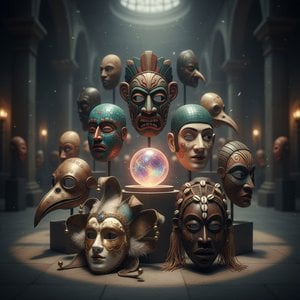
En av de mest karakteristiske elementene i Ensor’s kunst er bruken av masker. Disse opprinnelig fra morens souvenirbutikk i Ostend, ble de raskt et symbol på skjulte identiteter, sosial kritikk og den flyktige naturen til virkeligheten. Masker dukker opp igjen og igjen i hans verk, ofte i kombinasjon med andre bisarre elementer som bein, dukkefolk og groteske figurer. Ensor var spesielt fascinert av døden, og dette temaet gjennomsyrer mange av hans arbeider. *Skeletter som kjemper om en henrettet mann* (1891) er et eksempel på denne dype undersøkelsen av livets forgjengelighet. Samtidig var Ensor en skarp kommentator på det belgiske samfunnet, og hans kunst var ofte preget av en underliggende kritikk av borgerskapet og dets verdier. Han utfordret konvensjonene med sin provoserende stil og sine urovekkende bilder.
Innflytelser og Arv
Selv om Ensor nektet å bli kategorisert, er hans kunstneriske arv kompleks og fascinerende. Han anerkjente innflytelse fra mestere som Pieter Bruegel den Eldre, hvis travle scener og moralske fortellinger resonerte med hans egen visjon, samt Francisco Goya, hvis mørke humor og ufortikede fremstilling av menneskelig lidelse etterlot et varig inntrykk. James Abbott McNeill Whistler’s vektlegging på estetikk spilte også en rolle i å forme Ensor’s kunstneriske sanser. Likevel var Ensor ikke bare en imitator; han syntetisere disse innflytelsene til noe helt nytt og originalt. Han er nå bredt anerkjent som en sentral figur i overgangen fra 1800-tallets symbolisme til tidlig 2000-tallets ekspresjonisme og surrealisme – en ekte pioner innen moderne kunst. Hans dristige utforskning av det underbevisste, hans omfavnelse av groteske bilder og hans avslag på akademiske konvensjoner banet vei for fremtidige generasjoner kunstnere som turde utfordre kunstneriske normer.
Viktigste Verk og Historisk Betydning
Ensor produserte en rekke verk som fortsetter å fascinere og sjokkere publikum i dag. *Christ’s Entry into Brussels* (1888-1889) er kanskje hans mest berømte maleri, og det henger i Getty Museum i Los Angeles. Det viser et karnevalsaktig og anarkistisk mylder av mennesker og figurer, samlet i en flaggparade under et banner som sier «Vive la sociale». Maleriet er en kraftfull satire over religiøs hykleri og sosial likegyldighet. *Skeletter som kjemper om en henrettet mann* (1891) er en dyp meditasjon over dødelighet, forfall og livets absurditet. *Tribulationer av St. Anthony* (1887) utforsker komplekse allegoriske temaer rundt fristelse, synd og åndelig kamp. James Ensor ble tildelt tittelen Baron i 1929, og hans kunst har blitt anerkjent som et viktig bidrag til moderne kunsthistorie. Hans verk fortsetter å utfordre oss til å se verden med nye øyne.



 Forhåndsvisning
 Kjøp håndlaget maleri
 Send
Send Del med andre
 Vis detaljer
 Veiledning

 Last ned bildet
 Liknende objekter
 Røntgenundersøkelse
 Lysbildefremvisning
 Statistikk

 Vis hele teksten






































 Glassalternativet er kun tilgjengelig i størrelser under 110 cm