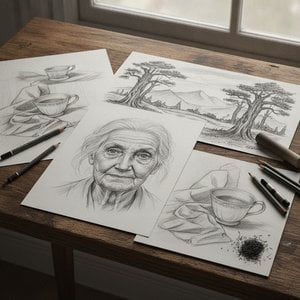
A Life Shaped by Aestheticism: The World of James Abbott McNeill Whistler
James Abbott McNeill Whistler, født i Lowell, Massachusetts i 1834, var en kunstner som alltid befant seg i konflikt med konvensjonene – en maler som kjempet for “kunst for kunstens skyld” i en æra der moraliserende fortellinger ble høyt verdsatt. Hans tidlige liv, preget av hyppige flyttinger på grunn av farens jernbaningeniørvirksomhet, la til grunn for ham en følelse av tilpasningsevne og eksponering mot mangfoldige miljøer. Et kort, ulykkelig opphold ved West Point ble mislykket i å passe hans kunstneriske temperament, etterfulgt av arbeid med den amerikanske kyst- og geodetiske undersøkelsen – selv om dette forsinket ham, sluknet det ikke hans voksende lidenskap for kunst. Disse formative årene var preget av en iboende talent for tegning og et bestemt ønske om å skape en karriere som kunstner, en streben som til slutt førte ham over Atlanteren og inn i hjertet av den europeiske avantgarden. Frøene til Whistlers kunstneriske opprør ble sådd tidlig, pleiet av et sinn som motsto konformitet og omfavnet estetisk utforskning fremfor alt annet.
Parisian Beginnings and the Cultivation of Style
Det avgjørende øyeblikket i Whistlers kunstneriske reise kom med hans flytting til Paris i 1855. Her, under veiledningen av Sébastien Bouré, finslipet han sine ferdigheter i olje, akvarell og trykkteknikker, absorberte innflytelsene fra fransk realisme og Barbizon-malerne. Likevel overgikk Whistler raskt å bare etterligne, og utviklet en distinkt stil preget av tonale harmoni og atmosfæriske effekter. Han var ikke interessert i å reprodusere virkeligheten; heller søkte han å fange dens *essens*, dets flyktige stemninger og subtile nyanser. Denne perioden markerte et avgjørende skifte fra representasjonell nøyaktighet mot en utforskning av ren estetisk form. Hans tidlige verk antydet allerede den delikate balansen mellom observasjon og abstraksjon som ville definere hans modne stil. Det var i Paris at Whistler begynte å artikulere sin tro på at kunst burde dømmes utelukkende basert på sine estetiske kvaliteter, fritt fra didaktiske eller moraliserende begrensninger – en filosofi som skulle bli grunnsteinen for hans kunstneriske praksis og en definerende egenskap ved den estetiske bevegelsen.
Nocturnes, Portraits, and the Pursuit of Harmony
Whistlers kunstneriske visjon ble tydeliggjort i flere nøkkeltemer og stilvalg. Han fremmet konseptet “kunst for kunstens skyld”, avvisende fortellinger belastet med moralske eller sosiale kommentarer. Hans verk ble en øvelse i å fange subtile nyanser av lys, farge og atmosfære – en streben som førte til hans ikoniske *Nocturnes*. Disse atmosfæriske maleriene av skumringsscener, ofte som viser Themsen-elven om natten, var ikke ment som bokstavelige representasjoner, men heller som evokende inntrykk, studier i tonale harmoni og stemning. Han brukte ofte begrensede paletter og delikat pensling, og skapte en følelse av åndelig skjønnhet og stille kontemplasjon. Portretter okkuperte også en sentral plass i hans praksis, selv om han nærmet seg dem med en unik sans for estetikk. Whistler var ikke opptatt av å fange perfekte likheter; heller fokuserte han på kompositoriske arrangementer og tonale forhold, og behandlet sine sittere som komposisjonselementer innenfor et nøye konstruert estetisk rammeverk. Verk som *Arrangement in Grey and Black No. 1* – bedre kjent som *Whistler’s Mother* – demonstrerer dette tilnærmingen perfekt, transformerer et familieskildring til et ikonisk bilde av viktoriansk morlighet gjennom sin mesterskapelige bruk av form og tone.
Controversy, Influence, and Lasting Legacy
Whistlers karriere var ikke uten kontrovers. Den berømte søksmålet mot ham fra kritikeren John Ruskin i 1878, utløst av *Nocturne in Black and Gold – The Falling Rocket*, ble et milepæl i kunsthistorien. Whistler vant saken og argumenterte at hans malerier ikke var ment å være bokstavelige representasjoner, men heller estetiske arrangementer av farge og form. Denne saken hevet hans profil og utløste viktige debatter om naturen til kunstkritikk og kunstnerisk frihet. Ut over denne juridiske kampen spredte Whistlers innflytelse seg vidt. Han var dypt inspirert av japanske trykk (ukiyo-e), som informerte hans kompositoriske prinsipper og vektlegging av dekorative mønstre, samt den tonale mesterstanden til spanske malere som Velázquez. Hans forsvar for “kunst for kunstens skyld” påvirket dypt den estetiske bevegelsen i England og Amerika, og banet vei for modernismen og utfordret konvensjonelle oppfatninger om kunstners formål. Han etterlot seg et uutslettelig preg på amerikansk kunst, inspirerte generasjoner av kunstnere til å omfavne formalistiske tilnærminger og utforske den uttrykksfulle potensialet til farge og komposisjon.
- Nøkkelverk: *The Forge* (1861), *Portrett av Charles Lang Freer* (1873), *Brown and Gold: The Gold Girl—Connie Gilchrist* (1876-77), *Arrangement in Grey and Black No. 1 (Whistler’s Mother)* (1871), *Nocturne in Black and Gold – The Falling Rocket* (1875).
- Inspirasjoner: Japanske trykk, Velázquez.



 Forhåndsvisning
 Kjøp håndlaget maleri
 Send
Send Del med andre
 Vis detaljer

 Last ned bildet
 Liknende objekter
 Røntgenundersøkelse
 Lysbildefremvisning
 Statistikk


 Vis hele teksten






































 Glassalternativet er kun tilgjengelig i størrelser under 110 cm


![The Margrave, The Prince[ss] And The Hermit (from Sketchbook) — James Abbott Mcneill Whistler, Tonalism](/media/artworks/images-thumb/ca/c1/cac1d2c8d42dd7a426afaca856231573.jpg)