


 Oil On CanvasWallArtSurrealism
 2005
2005 59.0 x 47.0 cm
Håndmalt olje på lerret i din valgte størrelse og ramme, laget på bestilling av våre kunstnere. ( Kjøp trykk Kjøp bilde)





























Velg mellom våre forhåndsdefinerte størrelser som bevarer kunstverkets opprinnelige proporsjoner.

Du kan angi egne mål for å tilpasse en spesifikk ramme eller plass. Dersom den valgte størrelsen ikke samsvarer med originalbildets proporsjoner, vil vi enten beskjære kunstverket eller utvide maleriet med ytterligere håndmalte elementer. En digital mockup vil bli sendt til din godkjenning før produksjonen starter.
Vennligst merk at forhåndsvisningen på skjermen ikke gjenspeiler den faktiske beskjæringen eller utvidelsen. Kun mockuppen vil vise den endelige komposisjonen nøyaktig.
Selv om tilpassede størrelser er tilgjengelige, anbefaler vi å velge et mål fra den forhåndsdefinerte listen for å bevare de originale proporsjonene.
Verdensomspennende levering () på 3–4 uker i stedet for standard 5 uker. (6 September). Ingen kompromisser med kvaliteten.


The Angels' Kitchen
Størrelse på reproduksjon
Jacek Yerka’s “The Angels’ Kitchen,” painted in 2005, is more than just a depiction of a domestic scene; it’s an immersive journey into a meticulously crafted surrealist dream. Measuring 59 x 47 cm, this artwork immediately captivates with its juxtaposition of the familiar – a kitchen brimming with everyday objects – and the extraordinary – a fully-fledged angel engaged in culinary activities amidst an orchard bursting with life.
Yerka’s artistic lineage is profoundly influential, drawing inspiration from figures like Hieronymus Bosch and Hugo van der Goes. This influence manifests in the painting’s slightly unsettling yet undeniably beautiful depiction of fantastical elements – a blend of recognizable objects and imaginative additions that invites contemplation on themes of creation, nourishment, and perhaps even spiritual grace.
“The Angels’ Kitchen” is replete with symbolic meaning. The angel itself represents purity and divine intervention, yet it's presented in an utterly ordinary setting – preparing food. This deliberate contrast elevates the painting beyond a simple still life; it prompts us to consider the intersection of the sacred and the secular. The kitchen, traditionally associated with nourishment and earthly pursuits, becomes imbued with spiritual significance within Yerka’s vision.
The overall effect is one of serene contemplation, inviting viewers to lose themselves in Yerka’s meticulously rendered world. The diffused lighting and soft edges contribute to a sense of dreamlike tranquility, further enhancing the painting's emotional impact.
Yerka employs a predominantly watercolor or gouache technique on paper, evidenced by the painting’s subtle blending, soft edges, and delicate textures. This approach lends the artwork a luminous quality, capturing light with remarkable sensitivity. The artist’s attention to detail is breathtaking, from the individual strands of grass in the foreground to the polished surfaces of the kitchen implements.
"The Angels’ Kitchen" stands as a testament to Jacek Yerka’s artistic vision – a bold exploration of surrealism that seamlessly blends reality with fantasy. Exhibited across continents, including Poland, Germany, Monaco, France, and the United States, Yerka's work has garnered significant recognition within the art world. This piece is not merely a beautiful image; it’s an invitation to embrace the unexpected, question conventional perceptions, and discover beauty in the most unlikely of places.

Yerka’s artistic journey began before formal education, fueled by an innate fascination with visual expression. His parents' dedication to art instilled in him a lifelong appreciation for meticulous craftsmanship and imaginative storytelling. From the outset, he demonstrated a preference for introspection—creating artwork independently rather than engaging in conventional social activities—a characteristic that would continue to define his artistic persona.
Initially considering careers in astronomy or medicine – pursuits driven by intellectual curiosity – Yerka ultimately prioritized fine art and graphic design. During his studies at Nicolaus Copernicus University in Toruń, he resisted pressure to adopt prevailing stylistic trends, steadfastly upholding the classic Flemish technique that became synonymous with his artistic identity. This unwavering commitment to detail and traditional methods distinguished him from many of his contemporaries.
Yerka’s artistic vision draws heavily upon the legacy of masters past. He cites Hieronymus Bosch, Pieter Bruegel, Cagliostro, Jan van Eyck, and Hugo van der Goes as pivotal influences. These artists instilled in him a profound appreciation for intricate detail, symbolic imagery, and fantastical narratives—elements that permeate his oeuvre.
Yerka’s paintings are firmly rooted in the surrealist tradition, seamlessly blending reality with dreamlike visions. He employs a meticulous and detailed painting style reminiscent of the Flemish masters, characterized by an astonishing level of realism achieved through painstaking observation and execution. Recurring motifs include fantastical landscapes populated with bizarre creatures and extraordinary architecture—a testament to Yerka’s boundless imagination.
Yerka's portfolio boasts numerous acclaimed pieces, notably “The Angels’ Kitchen” and “Wegener’s Theory,” which have garnered international recognition. His collaborative effort with Hollywood producer Renee Daalder on designs for the science fiction film “Strawberry Fields” further solidified his reputation as a versatile artist.
Yerka's distinctive style—a harmonious blend of scientific precision and surreal fantasy—has cemented his place in contemporary art history. He continues to inspire artists worldwide with his captivating creations, demonstrating an enduring commitment to artistic excellence and imaginative exploration.

1952 - , Polen
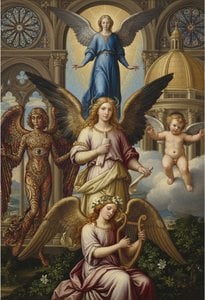
Explore the profound beauty of angelic figures in art history. From Renaissance masterpieces to celestial symbolism, our expert guide offers a sophisticated journey through the divine imagery of the Old Masters for discerning collectors and art enthusiasts.

Embark on a visual journey through the most captivating Surrealist masterpieces. From Dalí's dreamscapes to symbolic enigmas, discover expert insights for the discerning collector looking to acquire museum-quality fine art reproductions and bespoke commissions.

Explore the profound depths of Surrealism. Discover how masters like Dalí and Ernst unlocked the subconscious through dreamlike imagery, and learn to integrate these evocative, museum-quality masterpieces into your private collection with expert art historical insight.

Embark on a visual journey through the subconscious. Explore our expert guide to Surrealist landscapes, uncovering the dreamlike techniques of masters like Dalí to deepen your appreciation for this captivating art movement.

Explore the dramatic brilliance of the Flemish Baroque movement. Discover how masters like Peter Paul Rubens utilized chiaroscuro and dynamic composition to redefine art history through light, shadow, and unparalleled emotion.

 Forhåndsvisning
 Send
Send Del med andre
 Vis detaljer

 Last ned bildet
 Liknende objekter
 Røntgenundersøkelse
 Lysbildefremvisning
 Vis hele teksten







 Glassalternativet er kun tilgjengelig i størrelser under 110 cm


