ForhåndsvisningForhåndsvisning Se i ARSe i AR Bytt til trykk Bytt til trykkBytt til digitalt bilde Bytt til digitalt bilde SendSend
Vis detaljerVis detaljer Legg til i favoritter Legg til i favoritter Last ned bildetLast ned bildet Liknende objekterLiknende objekter RøntgenundersøkelseRøntgenundersøkelse LysbildefremvisningLysbildefremvisning StatistikkStatistikk

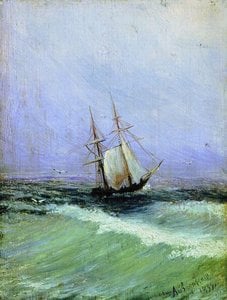
Shipwreck.

Experience Ivan Aivazovsky’s dramatic Romantic seascape masterpiece—'Shipwreck,' capturing turbulent seas and heroic riders amidst a devastating maritime disaster. Explore this iconic 1876 painting and discover exquisite handmade oil reproductions at WahooArt.

Ivan Aivazovsky (1817-1900) var en russisk maler kjent for sine fantastiske haveskildringer og maritime kunstverk, preget av romantikk og et dypt forhold til havet. En pioner innen marin kunst!

Håndlaget oljereproduksjon

Håndmalt olje på lerret i din valgte størrelse og ramme, laget på bestilling av våre kunstnere. (Bytt til trykk Bytt til trykkBytt til digitalt bilde Bytt til digitalt bilde)

P118B $10
P118H $10
P118W $10
P438Z $10
P508JH $12
P508YH $12
P805H $10
P805Z $10
P919BZ $10
P919G $10
P919XJ $10
P959ZH $10
P968JZ $12
W106C $8
W218G $10
W218JH $8
W218Y $10
W307PJ $10
W316G $10
W316PJ $8
W316Y $10
W398PJ $8
W4111J $10
W500HY $15
W500JH $15
W692G $12
W849H $8
W940BG $15
W953PJ $8

Standardformat
skreddersydd
CM
INCH

Velg mellom våre forhåndsdefinerte størrelser som bevarer kunstverkets opprinnelige proporsjoner.

bredde
høyde

Du kan angi egne mål for å tilpasse en spesifikk ramme eller plass. Dersom den valgte størrelsen ikke samsvarer med originalbildets proporsjoner, vil vi enten beskjære kunstverket eller utvide maleriet med ytterligere håndmalte elementer. En digital mockup vil bli sendt til din godkjenning før produksjonen starter.
Vennligst merk at forhåndsvisningen på skjermen ikke gjenspeiler den faktiske beskjæringen eller utvidelsen. Kun mockuppen vil vise den endelige komposisjonen nøyaktig.
Selv om tilpassede størrelser er tilgjengelige, anbefaler vi å velge et mål fra den forhåndsdefinerte listen for å bevare de originale proporsjonene.

Eksempler på hva som kan endres: Erstatt ansikt med bilde av kunden; Legg til kjæledyr (f.eks. bytt ut katt med hund); Inkluder en skjult melding i bakgrunnen; Endre bakgrunnslandskap eller elementer.
Etter bestilling vil WahooArt.com-teamet sende e-post til kunden for instruksjoner og sende et utkast (mockup) som forhåndsvisning.

Verdensomspennende levering () på 3–4 uker i stedet for standard 5 uker. (11 September). Ingen kompromisser med kvaliteten.

why_choose_icon
Gratis ekspressfrakt over hele verden
why_choose_icon
Lerretsduk av høykvalitets lin
why_choose_icon
Full forsikring under transport
why_choose_icon
Garanti for refusjon av toll og importavgifter
why_choose_icon
Garantert korrekt fargegjengivelse
why_choose_icon
100 dagers returrett (kun ved mangler)
why_choose_icon
100% pengene tilbake-garanti
why_choose_icon
Rabatt ved flere kjøp

Totalpris for bestilling

$ 272

reproduction

Shipwreck.

Teknikk for reproduksjon

Størrelse på reproduksjon

-

Endelig pris

$ 272

Kort om verket

  • Notable elements or techniques: Translucent water rendering
  • Influences: Romanticism
  • Subject or theme: Maritime disaster
  • Medium: Oil on canvas
  • Title: Shipwreck.
  • Dimensions: 136 x 170 cm
  • Year: 1876

Kunstighetsquiz

Det er kun ett riktig svar på hvert spørsmål.

Spørsmål 1:
What artistic movement is Ivan Aivazovsky’s Shipwreck primarily associated with?
Spørsmål 2:
The painting depicts a dramatic maritime scene featuring what prominent element?
Spørsmål 3:
What technique is Aivazovsky particularly known for when portraying water?
Spørsmål 4:
Where can visitors see a significant collection of Aivazovsky's artworks?
Spørsmål 5:
What is a key characteristic that contributes to the painting's sense of movement and urgency?

A Symphony of Storm and Resilience: Exploring Ivan Aivazovsky’s Shipwreck

The painting “Shipwreck,” executed by Ivan Konstantinovich Aivazovsky in 1876, transcends mere depiction; it embodies the Romantic spirit itself. Measuring a monumental 136 x 170 cm, this canvas isn't simply a seascape—it’s an immersive experience of turbulent emotion and breathtaking visual grandeur. Created during a period marked by burgeoning scientific inquiry yet simultaneously captivated by imaginative storytelling, Aivazovsky’s masterpiece speaks to the enduring fascination with nature’s power and humanity’s vulnerability.

The Artist’s Vision: Romanticism Defined

Aivazovsky's artistic approach firmly rooted in Romanticism distinguishes him from earlier academic styles. Rejecting precise realism, he prioritized conveying feeling—a palpable sense of drama and awe—above meticulous detail. This stylistic choice reflects the broader cultural currents of his time, where artists sought to express profound psychological states alongside grand narratives of heroism and adventure. Like Turner before him, Aivazovsky skillfully utilized light and color not merely to represent reality but to evoke emotion, creating an atmosphere thick with apprehension and exhilaration.

Technique: Mastering Water’s Illusion

Aivazovsky's mastery lies particularly in his ability to capture the elusive quality of water—a feat achieved through painstaking observation and innovative brushwork. He employed a technique known as “alla prima,” applying paint directly onto the canvas without underpainting, allowing for immediate tonal variation and capturing the dynamism of the storm. The artist’s layering of translucent glazes builds up depth and luminosity, mirroring the shimmering surface of the sea and conveying its deceptive beauty. Notice how the sunlight dances on cresting waves—a testament to Aivazovsky's dedication to rendering the ephemeral effects of light upon water.

Historical Context: Crimea Under Imperial Rule

“Shipwreck” was painted during a time when Crimea held significant strategic importance for Russia under Tsar Alexander II, bolstering its naval defenses and projecting power across the Black Sea region. The painting’s subject matter—a shipwreck—served as a poignant reminder of maritime perils and underscored the vulnerability of human endeavors against the forces of nature. Furthermore, it reflects the Romantic fascination with heroic narratives and portrays individuals confronting adversity with courage and determination.

Symbolism: Resilience Amidst Chaos

Beyond its visual splendor, “Shipwreck” carries symbolic weight. The shipwreck itself represents fragility—the inevitable collision between ambition and circumstance. Yet, amidst this chaos, figures riding horses symbolize resilience and perseverance—a defiant assertion of human spirit in the face of overwhelming odds. The rocky cliff overlooking the scene serves as a grounding element, emphasizing the immensity of the sea and highlighting humanity’s precarious position within its dominion.

Emotional Impact: Capturing Sublime Beauty

Ultimately, “Shipwreck” succeeds in transporting viewers to the heart of the storm—eliciting feelings of awe, terror, and exhilaration. Aivazovsky's masterful composition draws the eye upwards towards the turbulent sky while simultaneously anchoring it to the dramatic unfolding below. The painting’s emotional resonance persists today, reminding us of the sublime beauty inherent in confronting nature’s raw power and celebrating the enduring human capacity for courage and fortitude. It remains a cornerstone of Romantic art and continues to inspire admiration for its artistic brilliance.

Om kunstneren

A Life Embraced by the Waves

Ivan Konstantinovich Aivazovsky, born Hovhannes Aivazian in 1817, was more than a painter of seascapes; he was a conduit to the ocean’s soul. His very existence seemed inextricably linked to the Black Sea—a vast, unpredictable expanse that would forever dominate his artistic vision and fuel an extraordinary career spanning nearly six decades. Born in the Crimean port city of Feodosia, Aivazovsky didn't merely observe the sea; he felt it – its raw energy, sublime beauty, and inherent danger becoming the very essence of his art. From a young age, this connection was nurtured, initially by local architect Jacob Koch who recognized the boy’s talent, then blossoming within the rigorous academic environment of the Imperial Academy of Arts in Saint Petersburg. Yet, formal training alone couldn't account for the depth of Aivazovsky’s understanding; it was the constant presence of salt-laced air and the cries of gulls that truly shaped his artistic sensibility. His Armenian heritage also played a significant role, as he was baptized at the St. Sargis Armenian Church in Feodosia and maintained strong cultural ties throughout his life, occasionally incorporating Armenian themes into his expansive body of work.

The Early Years and Artistic Foundations

Aivazovsky’s early years were steeped in the maritime traditions of Feodosia, a bustling port city with deep roots in trade and seafaring. His family, originally from Western Armenia, had migrated to Crimea centuries earlier, establishing themselves as merchants and artisans. This exposure to the sea – its rhythms, its dangers, and its beauty – undoubtedly shaped his artistic sensibilities from an early age. Recognizing his exceptional talent, Jacob Koch, a local architect, encouraged Aivazovsky’s artistic pursuits, providing him with initial instruction. Later, he received formal training at the Imperial Academy of Arts in Saint Petersburg, where he honed his skills under the guidance of established masters. However, despite this rigorous academic education, Aivazovsky's true artistic voice emerged from his direct engagement with the natural world – specifically, the Black Sea. He spent countless hours observing ships, studying weather patterns, and capturing the ever-changing moods of the ocean on canvas. This intimate connection to the sea became the cornerstone of his unique style.

The Rise as a Naval Painter

A pivotal moment in Aivazovsky’s career arrived with his appointment as the main painter of the Russian Navy in 1843. This wasn't merely a prestigious title; it was an unparalleled opportunity—access to ships, sailors, naval battles, and firsthand observation that profoundly influenced his work. He became intimately acquainted with maritime life, documenting ship movements, capturing the drama of naval engagements, and portraying the lives of those who served on the Russian fleet. This role provided him with a constant stream of subject matter and allowed him to develop a highly realistic and technically proficient style. His paintings of naval battles – such as *The Battle of Navarino* (1846) – became iconic representations of these historical events, capturing both the chaos and the heroism of war at sea. The patronage of the Russian Imperial family further elevated his status and provided him with resources to continue his artistic endeavors.

A European Journey and Artistic Refinement

In the early 1840s, Aivazovsky embarked on a journey through Europe, seeking inspiration and broadening his artistic horizons. Italy proved particularly formative, immersing him in new landscapes and light, refining his skills, and developing a distinctive style characterized by dramatic compositions and masterful use of color. He spent time studying the works of masters like Turner and Friedrich, absorbing their techniques for capturing atmospheric effects and conveying emotion through landscape painting. His travels also exposed him to different artistic traditions, enriching his own creative vision. He returned to Russia with a renewed sense of purpose and a deeper understanding of the principles of art.

Style and Legacy: The Romantic Sea

Aivazovsky’s paintings are instantly recognizable for their romantic sensibility and technical brilliance. He wasn't simply recording what was seen, but rather conveying what was felt – the power, the mystery, and the sublime beauty of the sea. His use of color—particularly his mastery of light and shadow—created a sense of drama and movement that captivated viewers. Works like *The Ninth Wave* (1850) exemplify this ability to evoke both terror and awe, capturing the raw energy of a storm at sea. He often worked en plein air, directly from nature, capturing fleeting light effects. His prolific output – around 6,000 paintings—is remarkable and demonstrates his unwavering dedication to his craft. Aivazovsky’s legacy extends far beyond his artistic achievements; he is remembered as a symbol of Russian maritime pride and a pioneer in the development of marine art. His paintings continue to inspire awe and wonder, reminding us of the enduring power of nature and the human spirit.
  • Key Techniques: Aivazovsky’s distinctive style was characterized by his use of loose brushstrokes, layering of paint, and masterful manipulation of light and shadow.
  • Subject Matter: He primarily focused on seascapes, naval battles, and scenes of maritime life.
  • Influence: Aivazovsky profoundly influenced subsequent generations of Russian landscape painters.

Ivan Aivazovsky

Ivan Aivazovsky

1817 - 1900 , Russland

Kort om kunstneren

  • Artistic Movement Or Style: Romantikk, sjøkunst
  • Artists Or Movements Influenced By This Artist: Russisk landskapsmaleri
  • Artists Who Influenced This Artist: Ingen kjent
  • Date Of Birth: 1817
  • Date Of Death: 1900
  • Full Name: Ivan Konstantinovich Aivazovsky
  • Nationality: Russisk-armensk
  • Notable Artworks:
    • Niende bølge
    • Skip i stormfullt hav
  • Place Of Birth: Feodosia, Russland
Utforsk kunstverk organisert etter temaer, stiler og kjennetegn.