ForhåndsvisningForhåndsvisning Se i ARSe i AR Bytt til trykk Bytt til trykkKjøp håndlaget maleri Kjøp håndlaget maleri SendSend
Vis detaljerVis detaljer Legg til i favoritter Legg til i favoritter Last ned bildetLast ned bildet Liknende objekterLiknende objekter RøntgenundersøkelseRøntgenundersøkelse LysbildefremvisningLysbildefremvisning StatistikkStatistikk

The Drama

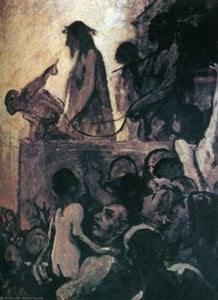
Honoré Daumier's "The Drama" captures a vibrant theatrical scene with intense emotion and dramatic figures. A captivating glimpse into 19th-century performance art, rendered in oil on canvas.

Oppdag Honoré Daumier (1808-1879), den franske mesteren av realisme & satire. Utforsk hans kraftfulle litografier, malerier og skulpturer som kritiserer 1900-tallets samfunn og påvirker moderne kunst.

Kjøp et høyoppløselig, forbedret digitalt bilde som er langt bedre enn forhåndsvisningen på nettet.

Hver fil er omhyggelig klargjort av våre egne spesialister ved hjelp av avanserte verktøy og profesjonell manuell retusjering. Vi sørger for at hvert bilde har eksepsjonell klarhet, presis fargegjengivelse og fine detaljer.

Den endelige filen leveres via e-post innen 72 timer, optimalisert for umiddelbar bruk i profesjonelle, redaksjonelle og trykte miljøer. Dette er den samme kvaliteten som benyttes av ledende designstudioer, utgivere og gallerier.

Digitalt bilde

Last ned en høyoppløselig fil for personlig bruk, utskrift og kreative prosjekter. (Bytt til trykk Bytt til trykkKjøp håndlaget maleri Kjøp håndlaget maleri)

Totalbeløp

$ 24.90

Inkludert i alle bestillinger av digitale bilder

Ekspert digital levering, garantert

Når du velger WahooArt.com, får du ikke bare et bilde – du mottar et profesjonelt forbedret digitalt kunstverk, skapt med presisjon og med en garantert tilfredshetsgaranti. Her er alt som automatisk følger med din bestilling:

shipping_icon
Rask digital levering

Din høyoppløselige digitale bildefil sendes til din e-post innen 72 timer etter bestilling – klar til umiddelbar bruk.

canvas_icon
KI-forbedret digital fil

Ditt kunstverk blir profesjonelt optimalisert ved hjelp av avanserte AI-verktøy og manuell redigering, noe som sikrer maksimal detaljrikdom, klarhet og fargegjengivelse.

insurance_icon
Gratis livslang nyutlevering

Har du ved et uhell slettet eller mistet filen din? Ingen bekymring – vi sender den på nytt når som helst, helt gratis.

tax_icon
Ingen importavgifter – noen gang

Nyt ditt kunstverk umiddelbart uten toll, avgifter eller leveringskostnader – digitale nedlastinger er alltid avgiftsfrie.

color_icon
Garantert fargenøyaktighet

Vi sikrer at ditt digitale bilde gjenspeiler de originale fargene så nøyaktig som mulig ved hjelp av profesjonelle verktøy og fargehåndtering.

return_icon
100 dagers tilfredshetsgaranti

Hvis du ikke er fornøyd med ditt digitale bilde, vil vi revidere det eller refundere 100% innen 100 dager – uten spørsmål.

guarantee_icon
100% Penggaranti

Ikke fornøyd? Få full refusjon innen 100 dager etter at du har mottatt din digitale fil – uten spørsmål.

discount_icon
Rabatt ved storkjøp

Kjøp 3 bilder, spar 10% - Kjøp 5, spar 15% - Kjøp 10+, spar 20%. Ideelt for kreative prosjekter, gallerier og byråer.

Kort om verket

  • Movement: Realism
  • Dimensions: 98 x 90 cm
  • Artist: Honoré Daumier
  • Year: 1860
  • Notable elements: Dramatic scene, crowd
  • Subject or theme: Social unrest, rebellion
  • Title: The Drama

Kunstighetsquiz

Det er kun ett riktig svar på hvert spørsmål.

Spørsmål 1:
What is the primary subject depicted in Honoré Daumier’s ‘The Drama’?
Spørsmål 2:
In what year was Honoré Daumier's ‘The Drama’ painted?
Spørsmål 3:
What historical event is alluded to in the title ‘The Drama’?
Spørsmål 4:
Which artistic movement is most closely associated with Honoré Daumier’s style?
Spørsmål 5:
What does the phrase ‘Behold the Man’ (Ecce Homo) represent in the painting?

A Stage of Emotion: Honoré Daumier’s “The Drama”

Honoré Daumier's "The Drama," painted in 1860, isn’t merely a depiction of a theatrical performance; it’s a visceral exploration of human interaction, power dynamics, and the very essence of spectacle. The painting immediately commands attention with its dynamic composition – a swirling vortex of figures caught in a moment of intense action, frozen mid-gesture as if plucked from the heart of a dramatic scene. It's a work that transcends simple illustration, becoming a potent commentary on social hierarchies and the performative nature of life itself.

Daumier’s style is instantly recognizable: a masterful blend of realism and expressive draftsmanship. He eschews idealized forms in favor of capturing the raw energy and emotional truth of his subjects. The figures are rendered with quick, confident brushstrokes, conveying a sense of immediacy and urgency. Notice how he utilizes chiaroscuro – the dramatic contrast between light and shadow – to heighten the theatricality of the scene, drawing our eyes to key moments of interaction and creating an atmosphere of suspense and intrigue. The palette is rich and earthy, dominated by browns, ochres, and deep reds, lending a sense of both drama and groundedness to the composition.

A Glimpse into 19th-Century Parisian Life

To fully appreciate “The Drama,” it’s crucial to understand its historical context. Painted during the tumultuous years following the French Revolution, Daumier was a keen observer of social and political life in Paris. He used his art as a powerful tool for satire and critique, exposing the corruption and hypocrisy he witnessed within the established order. This particular scene likely depicts a performance at the Théâtre Français, a prominent venue during that era, reflecting the vibrant yet often fraught cultural landscape of the city.

The painting’s subject matter – a man dramatically lifting a woman from the stage – speaks volumes about the power dynamics at play. The central figure, bathed in light, embodies authority and control, while the woman, caught mid-fall, represents vulnerability and perhaps even resistance. The surrounding figures, some watching with detached amusement, others actively participating in the performance, further underscore this complex interplay of roles and relationships. Daumier wasn’t simply documenting a theatrical event; he was dissecting the social rituals and power structures that shaped Parisian society.

Symbolism and Theatricality

Beyond its immediate narrative, “The Drama” is laden with symbolic meaning. The stage itself becomes a metaphor for life – a constructed space where roles are played, identities are performed, and power is asserted. The act of lifting the woman can be interpreted as both an act of dominance and a gesture of care (though the ambiguity leaves room for interpretation). The overall composition evokes the conventions of melodrama, with its heightened emotions, dramatic gestures, and focus on spectacle. Daumier was acutely aware of these theatrical tropes and skillfully employed them to convey his critical message.

The inclusion of a diverse audience – some observing passively, others actively engaged – highlights the role of spectatorship in shaping social reality. We are invited to consider our own position within this scene, questioning our complicity in the performance and reflecting on the power dynamics that govern our interactions with one another.

A Timeless Masterpiece: Reproduction Possibilities

“The Drama” remains a remarkably powerful and enduring work of art. Its dramatic intensity, evocative composition, and insightful social commentary continue to resonate with viewers today. Reproductions offer an accessible way to bring this masterpiece into your home or office, allowing you to experience its captivating beauty and thought-provoking themes firsthand. When selecting a reproduction, consider the quality of materials used – a fine art print on archival paper will ensure that the colors and details remain vibrant for years to come. This painting is more than just an image; it’s a window into a bygone era and a timeless meditation on the complexities of human experience.


Om kunstneren

A Life Etched in Satire: The World of Honoré Daumier

Honoré-Victorin Daumier’s life unfolded against the backdrop of a rapidly changing France, a nation grappling with revolution and social upheaval. Born in Marseille in 1808, his early years were shaped by a lineage steeped in artistic tradition—his father, a poet and glazier, and his grandfather, a sculptor—instilling within him an appreciation for both visual and literary expression. However, Daumier’s path diverged from the expected, driven not by a desire for poetic acclaim but by a profound empathy for the plight of ordinary people and a burning need to expose societal injustices. His father's relocation to Paris in 1814 exposed young Honoré to the vibrant artistic atmosphere of the capital, a crucible where classical influences mingled with nascent Romantic ideals. Despite initial plans for a legal career, Daumier’s heart belonged to art, an inclination nurtured through apprenticeships under Alexandre Lenoir, absorbing the techniques and sensibilities of the old masters, particularly Rubens and Titian. His training at the Académie Suisse provided a formal foundation, but it was his innate sensitivity—a keen awareness of human suffering and political corruption—that truly defined his artistic vision.

The Sharpened Pen: Caricature and Social Commentary

Daumier’s career ignited with explosive force in the wake of the 1830 Revolution, a watershed moment that unleashed a torrent of social and political change. He quickly established himself as a master lithographer, initially working anonymously for various publications before gaining recognition through his provocative work with *Le Charivari*, a fiercely independent comic journal founded by Charles Philipon. It was within this radical publication that Daumier’s genius truly blossomed. His caricatures weren't mere humorous illustrations; they were biting critiques of the bourgeoisie, the legal system, and the political establishment—a relentless assault on hypocrisy and corruption. He fearlessly lampooned King Louis-Philippe, a figure he viewed as detached from the realities of his people, earning himself a six-month imprisonment in 1832 for a particularly stinging caricature. This act of defiance, far from silencing him, solidified his commitment to using art as a weapon against oppression. His lithographs became visual manifestos, capturing the spirit of dissent and offering a stark portrayal of the social ills plaguing France. The sheer volume of his output during this period is staggering—thousands of images that served as both popular entertainment and potent political statements. Daumier’s work was not simply satirical; it possessed a raw emotional honesty, reflecting the hardships faced by the working class and the inequalities inherent in French society.

Beyond Caricature: Painting and Sculptural Visions

While Daumier is most celebrated for his lithographs, to reduce him solely to caricature would be a profound oversight. He was also a dedicated painter and sculptor, though recognition for these works came later in his life. His paintings, often depicting scenes of everyday Parisian life—the cramped third-class carriages, the weary laundresses, the pompous lawyers—are imbued with a remarkable sense of realism and empathy. Unlike idealized depictions of nobility or heroism, Daumier’s subjects were ordinary people, struggling to survive in a world dominated by wealth and privilege. He masterfully employed loose brushwork and dramatic lighting to convey emotion and atmosphere, foreshadowing some of the techniques later embraced by the Impressionists—a subtle shift towards capturing fleeting moments and subjective impressions. His sculptural work, largely created in clay during his lifetime (many pieces remaining unbaked), reveals a similar commitment to capturing the human form with honesty and emotional depth. These sculptures, rediscovered after his death, demonstrate a remarkable talent for modeling and an ability to convey psychological complexity through physical gesture—a testament to his profound understanding of the human condition.

A Lasting Legacy: Influence and Historical Significance

Honoré Daumier’s impact on art history is undeniable. He bridged the gap between Romanticism and Realism, laying the groundwork for future generations of artists who sought to depict the world as it truly was—warts and all. His unflinching social commentary influenced artists like Gustave Courbet and Édouard Manet, both of whom embraced a more direct approach to portraying social realities. Daumier’s innovative use of lithography revolutionized printmaking, transforming it from a primarily decorative medium into a powerful tool for political expression and social critique. His work continues to resonate today, reminding us of the enduring power of art to challenge authority, expose injustice, and bear witness to the human condition. The Musée d'Orsay in Paris houses a significant collection of his paintings and sculptures, offering visitors a poignant glimpse into the world he so vividly portrayed. Furthermore, his lithographs are widely accessible through collections like those found on WahooArt, ensuring that his satirical genius continues to provoke thought and inspire dialogue across generations. Daumier wasn’t merely an artist; he was a chronicler of his time—a visual poet who used his talent to give voice to the voiceless and hold power accountable. His legacy endures as a testament to the enduring relevance of art as a force for social change, a reminder that even a single image can spark revolution.
Honoré Daumier

Honoré Daumier

1808 - 1879 , Frankrike

Kort om kunstneren

  • Artistic Movement Or Style: Realisme, Satire
  • Artists Or Movements Influenced By This Artist:
    • Impressionisme
    • Moderne kunst
  • Artists Who Influenced This Artist:
    • Alexandre Lenoir
    • David
  • Date Of Birth: 26. februar 1808
  • Date Of Death: 10. februar 1879
  • Full Name: Honoré-Victorin Daumier
  • Nationality: Fransk
  • Notable Artworks:
    • Rue Transnonain
    • Les gens de justice
  • Place Of Birth: Marseille, Frankrike